In the world of dance, our bodies are our instruments. They must be resilient, responsive and ready to serve artistry, athleticism and longevity. The International Association for Dance Medicine & Science (IADMS) emphasises that good fitness is “key to reducing the risk of injury, enhancing performance, and ensuring longer dancing careers.” Strength training doesn’t simply mean “bigger muscles” – for dancers, it means better function, control and readiness.
Variability is essential.
One of the core principles of effective training is variability – exposing the tissues and nervous system to a range of movement directions, loads and speeds. Rather than doing the exact same two exercises every session, training with variation helps prepare the body for the unpredictable demands of dance. In fact, the Institute of Motion’s 4Q model (see below) notes that variability is specificity.
The 4Q system from Institute of Motion
The 4Q model classifies training into four quadrants:
- Unloaded Linear Training (ULT) – bodyweight, movement in one direction (sagittal plane)
- Loaded Linear Training (LLT) – external load, one direction (saggital plane)
- Unloaded Movement Training (UMT) – bodyweight, multi-directional
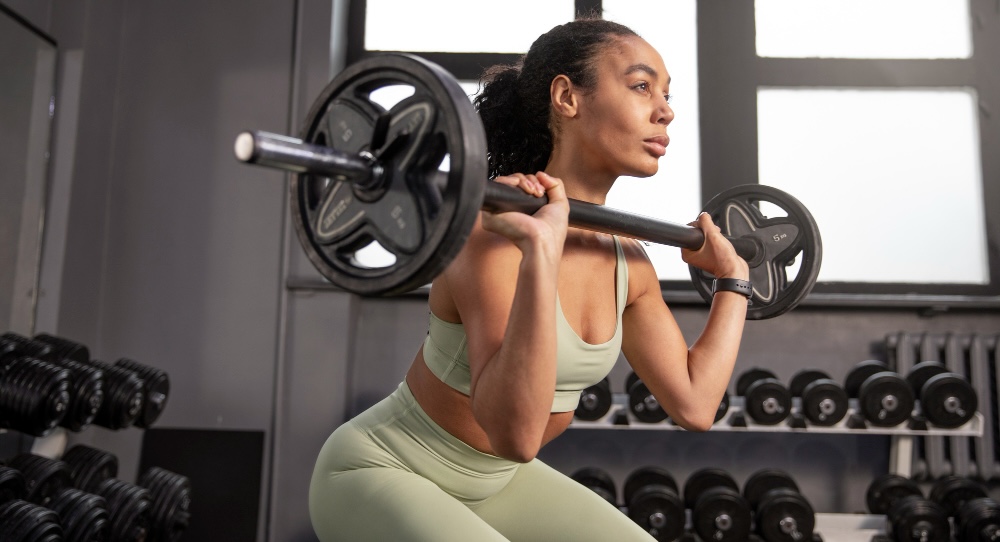
- Loaded Movement Training (LMT) – external load, multi-directional
By designing strength work in all four quadrants, dancers develop not only “straight-ahead” strength but also the multi-planar, dynamic, load-versatile capacity that the art demands.
Tissue needs variability in direction, load and speed.
Tendons, fascia, muscle and nervous system respond to how they’re used. If training always looks the same (same plane, same speed, same load), adaptation can plateau, and injury risk may increase. Variability in direction (frontal, sagittal, transverse), load (bodyweight to external) and speed (slow control to dynamic) allows tissues to become more robust, versatile and resilient.
Specificity: Train how you dance
The principle of specificity reminds us that we become strong in the positions and contexts we train. If most conditioning happens lying on the back, we’ll get better at that – not at standing, balancing, or moving through space. Dance is a vertical art form, rooted in gravity and ground reaction forces. Therefore, much of a dancer’s strength work should occur with the feet on the floor, feeling the ground, transferring force through the kinetic chain, and cultivating postural control in upright positions. Grounded, gravity-based strength translates directly into performance.
Set good base foundations in movement before training specifics like tricks, pointe and high elevations.
Before a dancer embarks on the highly demanding technical work of pointe, aerials or extreme elevations, the body must have a strong base of movement competency: alignment, control, muscular strength, neuromuscular awareness. IADMS’s “Guidelines for Initiating Pointe Training” emphasize that core stability, leg alignment, foot-ankle strength and frequency of dance training all need to be assessed before advancing to pointe. Teaching strength work and full-body foundation builds injury prevention and performance capacity. IADMS also emphasises that off-studio strength and conditioning can enhance dance performance.
Putting it together: For the dancer and teacher
As a dance teacher or dancer yourself, integrate strength training not as a “side item” but as part of your core training plan. Use the 4Q model as a framework: for example, body-weight lunges in 3d or single-leg glute bridges (ULT/UMT), then loaded squats (LLT), then multi-directional lunge with twist with load (LMT), etc. Mix directions, speeds and loads within a session or across the week. This variety will help build a foundation that supports harder choreography, more time en pointe, higher jumps and longer careers.
In summary
Strength training for dancers is not just extra gym time, it’s foundational movement work. Incorporate variability, use the 4Q model systematically, respect tissue by varying direction, load and speed, and ensure movement foundations are solid before layering in higher-level dance skills. With this approach, dancers and teachers can foster healthier, more resilient bodies that are ready for artistry and endurance. This concept is the basis of Strength4Dance and my book Your Body, Your Tool, Your Career.
Supporting videos:
Designing a training plan with 4Q:
What is strength? Ep 3 with MDM:
PT training plan example with 4Q:
Resistance band PT session:
By Sally Harrison, BSc (Hons) Physiotherapy, Corrective Exercise Coach, Personal Trainer, Pilates Educator, of Band-ITS & Strength4Dance.
Share this: