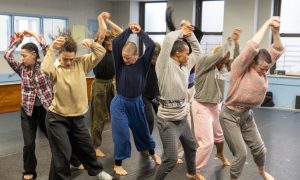
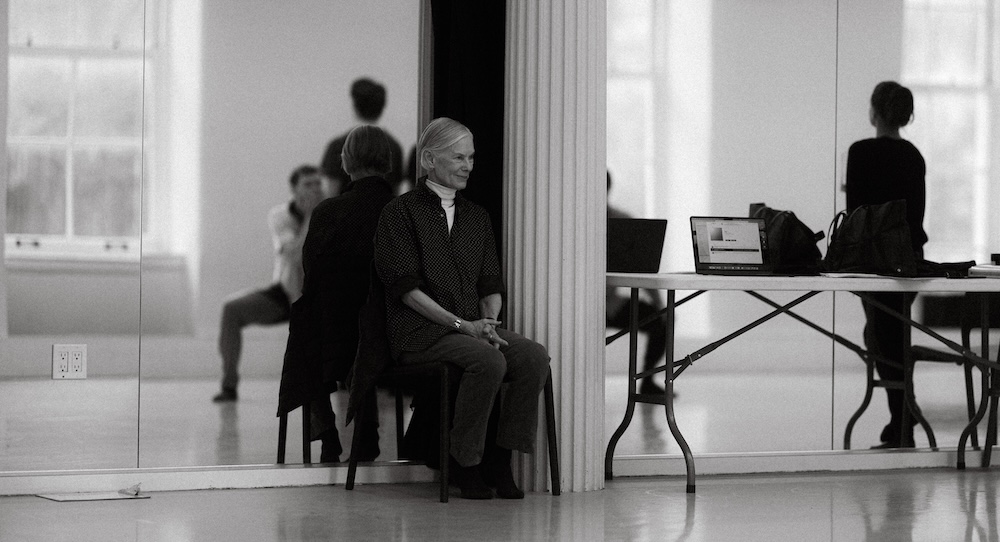
High-level dance art doesn’t happen in a vacuum – it can’t. It requires the bodies, minds, and spirits of various individuals and entities…not to mention the practical supports that all of those parties can, and do, offer. These movers and shapers come together through various synchronicities, chance meetings, and communities that lead to fruitful connections. Sometimes creative partnerships just feel right, and the involved parties just go for it.
World-acclaimed choreographer Lucinda Childs recently established a five-year residency (2026 to 2030) with Gibney Company, and it’s a stellar example of such a synchronous process of creative parties forming a partnership.
Dance Informa recently spoke with Childs as well as Gina Gibney, Gibney Company Founder and Artistic Director, to learn more about the residency and the larger partnership: one based in mutual regard, ongoing conversation, and an openness to following where creative alchemy leads. Let’s jump in to hear more about how it came together, where it has the potential to lead, the guiding values, and much more.
The moving relationship forms: Childs and Gibney
A first step toward this residency was Gibney Company approaching Childs about restaging an existing work on the Company. Instead, she proposed creating a new work with the Gibney dancers from the outset. “Many choreographers begin with a restaging to get to know a company. Lucinda preferred to start in creation,” Gibney explains.
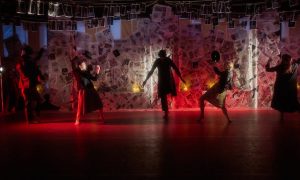
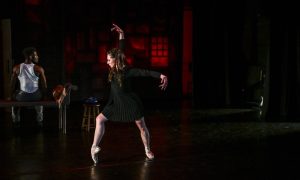
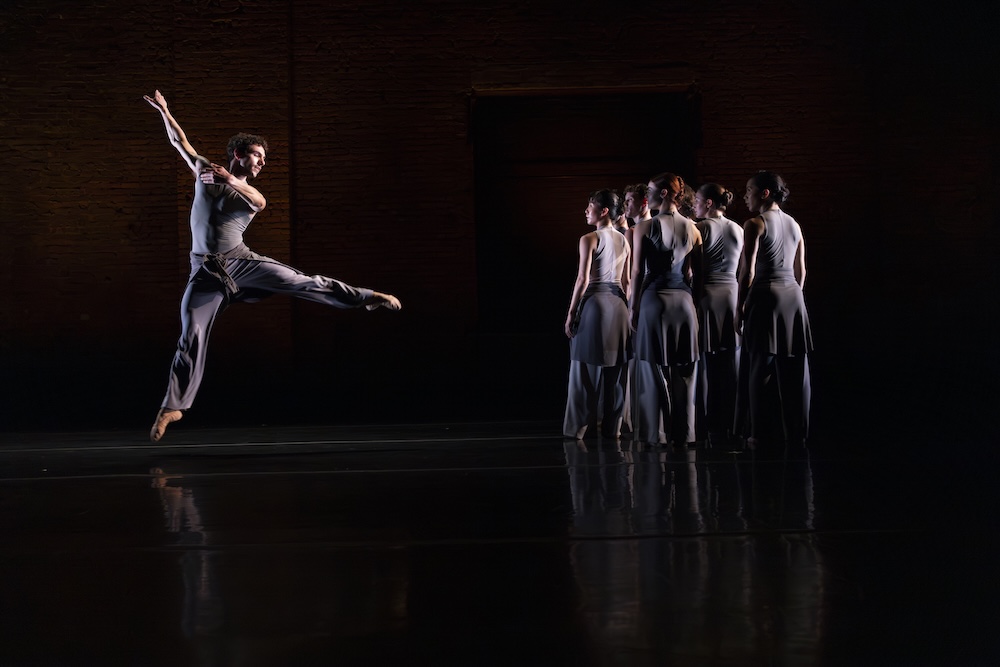
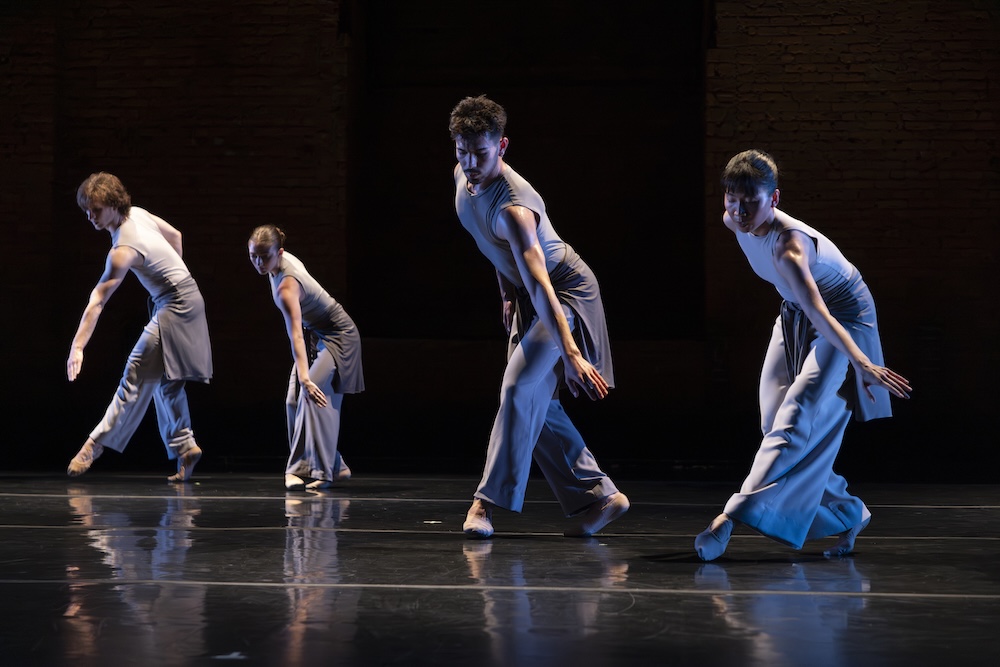
This led to Three Dances (for prepared piano) John Cage, which premiered in 2025. “I was very impressed with them,” Childs recounts. She also greatly appreciates what Gina Gibney has accomplished with a full-time contemporary dance company in New York City, regularly creating and presenting groundbreaking work from a variety of strong choreographic voices. “It’s needed,” she affirms.
With such mutual respect and admiration established, the next question was “what’s next?” – a question that was the seed for this residency. All of that has “thrilled” Gibney, because she’s greatly admired Childs and her work for many years.
“She’s not only iconic, but she’s laced her career with integrity, rigor, and care,” Gibney believes. “So many of the factors that have limited many artists’ careers have been challenges for her, too; she’s never found the support or durable infrastructure here in the U.S. that her work requires and deserves. Her having a grounding and a base here in the U.S. through this residency…there’s a sort of poetic justice to it.”
A grounding that Childs has had – for over 50 years – is her company, Lucinda Childs Dance Company. She notes the enduring relationships within and through the company, with some company artists having stuck by her and her work through all those years. “They’re incredible people who have really preserved her work here in the U.S.,” Gibney says.
She explains that the company will continue to support Childs’ work through, and “move alongside,” this residency. “[Childs] has this singular process that she’s honed for decades, with an aesthetic mechanism of relaying movement, creating a certain continuity. We’re creating a certain kind of continuity for her work, as well,” Gibney affirms.
As for Gibney Company, the other company in play here, Childs similarly sings its praises. “They learn so quickly and just take over in a wonderful way. I’m quite excited to keep working with them!” Gibney agrees; “I often tell the company that they’re a once-in-a-lifetime group. They’re beautifully commanding dancers, and also wonderfully kind. They have deep care and regard for each other.” She thinks that working with Childs can only enhance those capacities and ways of working. “There’s something about the way she works that’s generative and elevating. She’s just totally in command of every aspect of her craft.”
The work: From Three Dances to Canto Ostinato to a Philip Glass birthday piece
Indeed, Gibney knew that she wanted to work with Childs again after Three Dances; “it’s just such a gorgeous work: the visual design, the precision with which the dancers interact, the luminosity of the lines and background movement…it has so many glittering elements.” It’s a ballet piece, it requires true “technical chops” to perform, but there’s also an easy flow to it, Gibney adds. “My work has a classical layer, with pedestrian and athletic layers as well, but I don’t have a specific vocabulary. It’s all found material and a style of putting all of that together,” Childs explains.
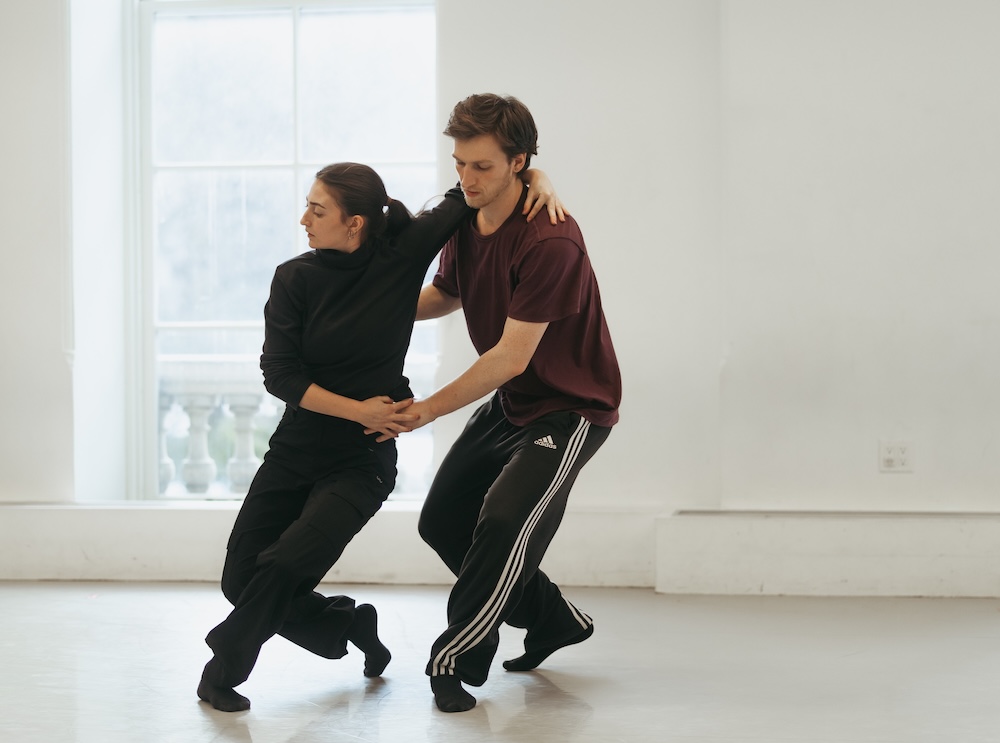
For Three Dances, Childs came in with “everything mapped out” in her head, which isn’t the norm of how choreographers work these days. “It was a bit unsettling for the dancers at first, but then they realized there was something powerful at work in what we were doing. All in all, they handled it quite well,” Childs recounts with a smile.
“It’s a truly complex and difficult piece; the patterning and sense of each other in space has to be so precise. But there’s also a lot of room for individual expression for the dancers, within constraint. It showed us what they’re capable of,” she adds. The result? Some audience members told Childs that it helped them see the John Cage score in a whole new way. “I’m happy with how it turned out,” Childs says with another small smile.
Next for Childs and the company has been a restaging of Childs’ 2015 work Canto Ostinato. It’s a relatively short work (twelve minutes long), but rich and meaningful in its own way, Gibney says. Childs notes the design as something she appreciates. “The decor is so careful. There’s intense projection, but you sort of don’t even notice it, it’s more like it just belongs there. It subtly ties into the choreography and score.”
Farther into the future, premiering in 2027, will be a full-length work set to a Philip Glass score, as a celebration of Glass’ 90th birthday. “I’d only do this in a full-length work,” Childs confirms, because that’s what it would take to adequately explore and represent such a score.
Gibney explains how this work, and all works of Childs’ that they’ll present, will be well-integrated with other choreographic voices that they’ll be programming: all of it in dynamic and mutually-beneficial conversation. “The residency will provide a weaving and grounding for [Childs’] work”, as well as work of all other artists they present, she confirms.
The residency: A fluid and ongoing conversation
What might such artist exchange look like? Offerings such as open rehearsals, talkbacks, youth outreach and other community action initiatives are all on the table. “There are infinite possibilities!” Gibney confirms. Childs enjoys such dialogue with students and other artists, she shares. “I’m someone who locks into the work and doesn’t talk too much about it. It’s nice to have some exchange.” Gibney is delighted at the thought of what Childs can confer through that kind of exchange; “I’m honestly relieved that this generation of young dancers will have her tutelage,” she affirms.
Ongoing conversations between Childs and Gibney will shape what all of that looks like, and nothing is set in stone. “It’s not about quotas, like a pre-planned number of lectures or anything like that. It’s about what [Childs] wants to do, at her own cadence, while we also feature other works and voices,” Gibney explains.
“It’ll be a back-and-forth conversation as we go along, and [Gina Gibney] is great to work with in that way,” Childs attests. “It’s nothing transactional, but about a mutual respect and shared value system,” Gibney, for her part, affirms.
By Kathryn Boland of Dance Informa.
Share this: