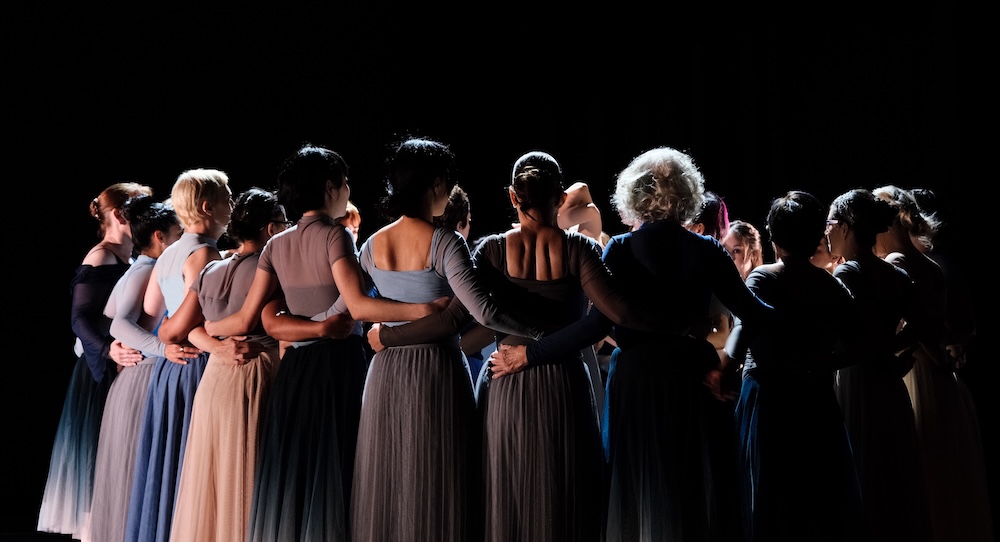
Anna Wassman-Cox was a professional ballerina who exited the stage career because of injury. She was diagnosed with breast cancer at 25 years old, then had a recurrence four years later – but found healing by returning to dance. “It helped me feel like me again,” she recounts.
Those experiences led her to create Onco-Ballet™, which offers free or low-cost ballet classes and performance opportunities for those going through cancer treatment, in various locations in the U.S.
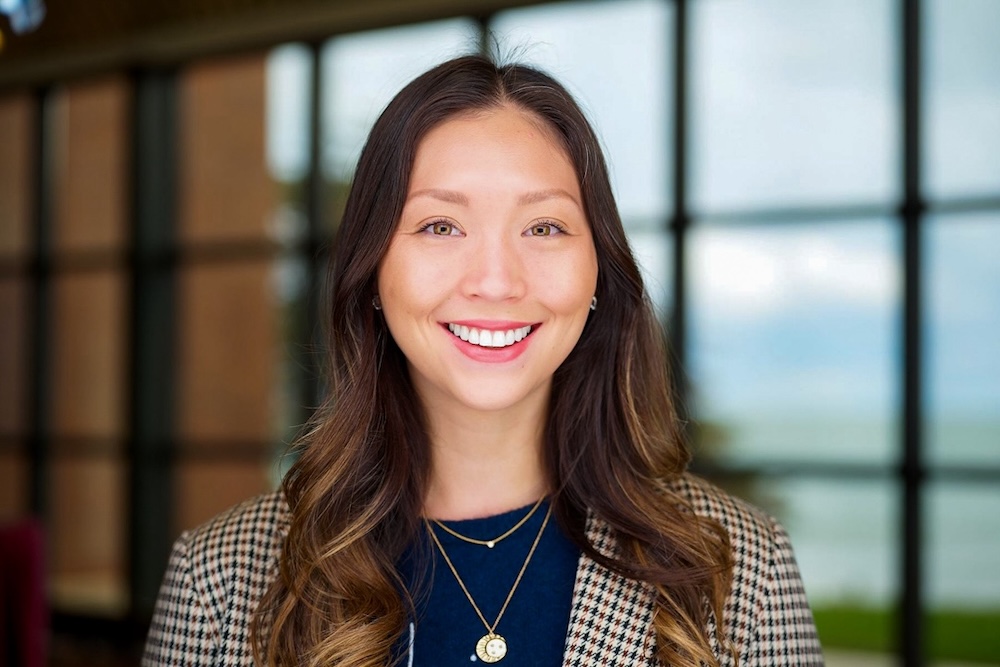
Dance Informa speaks with Wassman-Cox about how it started, how it’s going and where it could go from here. Abigail Simon, a former professional ballerina now part of the Onco-Ballet™ community, also shares what it’s been like to be involved.
The mission: Origins and continued service
Wassman-Cox also realized just how uniquely positioned she was to create something like Onco-Ballet™: having felt that sort of healing from dance after the cancer treatment process, being certified as a Pilates instructor, and having gone through a good deal of physical therapy to address those injuries. She describes an “ah-ha” moment when she offered a class for cancer patients, in a method close to what the organization now offers, and realized that this approach could really work.
Some Onco-Ballet™ students are trained dancers. A few, like Simon, have even danced professionally. “Our classes are a way for them to regain confidence and return to that part of themselves,” Wassman-Cox explains. Some, however, have never danced a day in their lives – and the method is accessible to them, too. Regardless of experience level or technical ability, Onco-Ballet™ believes that ballet movement can “spark joy.”
How it works: A gentle approach shaped by expertise
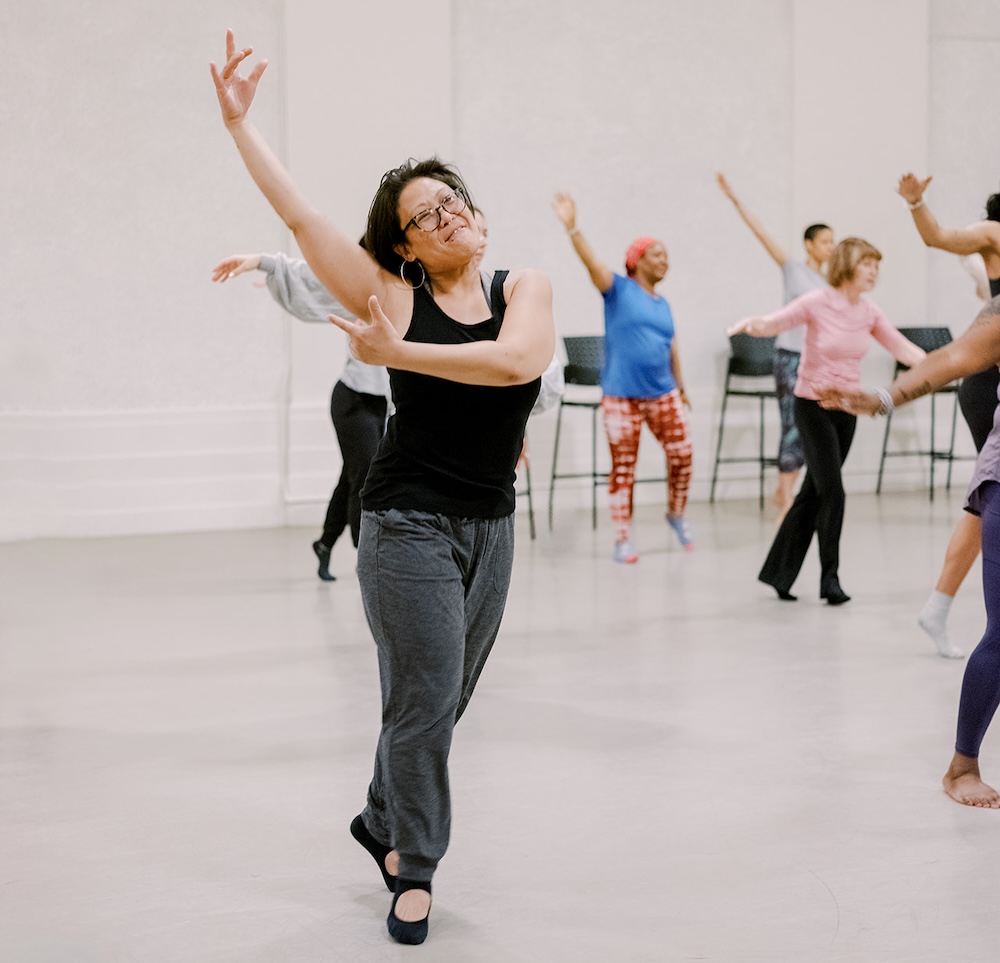
The Onco-Ballet™ approach starts with a few key values. First is inclusivity, the belief that ballet movement should be open to all bodies. “In its most basic form, anyone can do it,” Wassman-Cox affirms. Second: expression over perfection, and all movement is good movement. Showing up and being part of the experience is what matters most. “We don’t really give corrections…the idea to just show up and move,” she notes. Third is safety and trust. All teachers work from a trauma-informed approach, she explains.
Given those values, Onco-Ballet™ classes are very similar to any other ballet class, with a few notable differences. These classes start with a moment to connect with the body and mind. “Maybe students just came from radiation, maybe they’re facing other stressors of life with cancer,” and this opening approach allows students to come back to feeling present, Wassman-Cox explains.
Mindfulness, breathwork and creative movement – more specifically, Anne Green Gilbert’s “BrainDance” – form this opening “check-in” moment. “It’s something grounding before ‘oh goodness, I’m at the ballet barre,’” Wassman-Cox notes with a smile. She adds that this check-in also begins all of their rehearsals and warm-ups before performances.
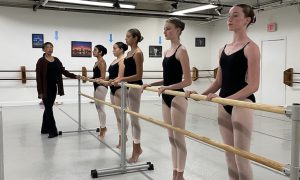
Then it’s to the barre! Onco-Ballet™ barres are the same each time, across locales, in order to offer consistency and familiarity. Then comes a moment for self-expression. Each student has a turn to share a movement, which all other students “mirror” (repeat, in a call-and-response structure).
Next is one to two basic progressions across the floor. Even simple locomotion like walking can help with balance and coordination, which can become challenging during cancer treatment, Wassman-Cox says.
A bit of choreography closes out the class, such as a divertissement from Swan Lake – modified to make attainable for the students in the room. “It’s really about bringing students into the world and art of dance,” she explains. All of this is taught in six-week cycles, sometimes at sites such as hospitals.
Onco-Ballet™ very intentionally built this approach with the expertise of a board of medical advisers – such as in the “same barre each time” approach. “They helped us understand the importance of that, the psychological safety that consistency offers,” Wassman-Cox explains.
That board includes oncologists, surgeons, psychologists, physical therapists — a variety of medical professions involved with the cancer treatment process. They’ve been with the organization from the beginning, and meet with its team once to twice a year.
The board has also been very helpful with teacher training, Wassman-Cox notes; they’ve helped convey just how “sensitive it is to teach an Onco-Ballet™ class.” They also contributed to teacher training videos that explain the organization’s “why”.
About half of them have ballet experience, which is great, Wassman-Cox explains. The half that does not, she adds, fully supports the approach – for example, a surgeon who says that the range of motion that ballet calls for is great for these students. “There’s a lot of port de bras, and it really lubricates the joints…it’s very healing for the body,” Simon shares.
Curtain up!: The significance of performing
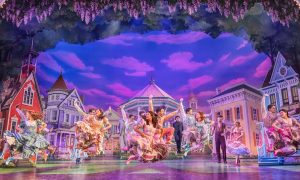
Onco-Ballet™ students also have opportunities to perform – which many of them probably never expected to experience as adults, Simon notes. “The rehearsal process is a bit of a commitment, which can be challenging for someone experiencing cancer, so we’re very flexible with absences and the like,” Wassman-Cox explains. “We’re also flexible when it comes to choreography. ‘This doesn’t work for you, let’s modify.’” Professionals who have also experienced cancer, like Simon, choreograph pieces.
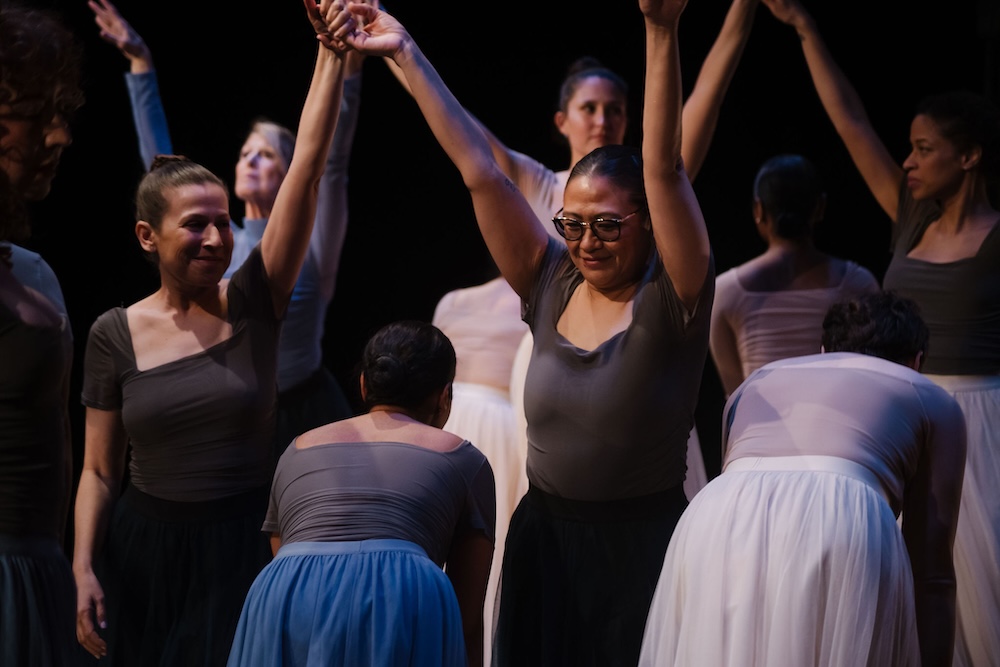
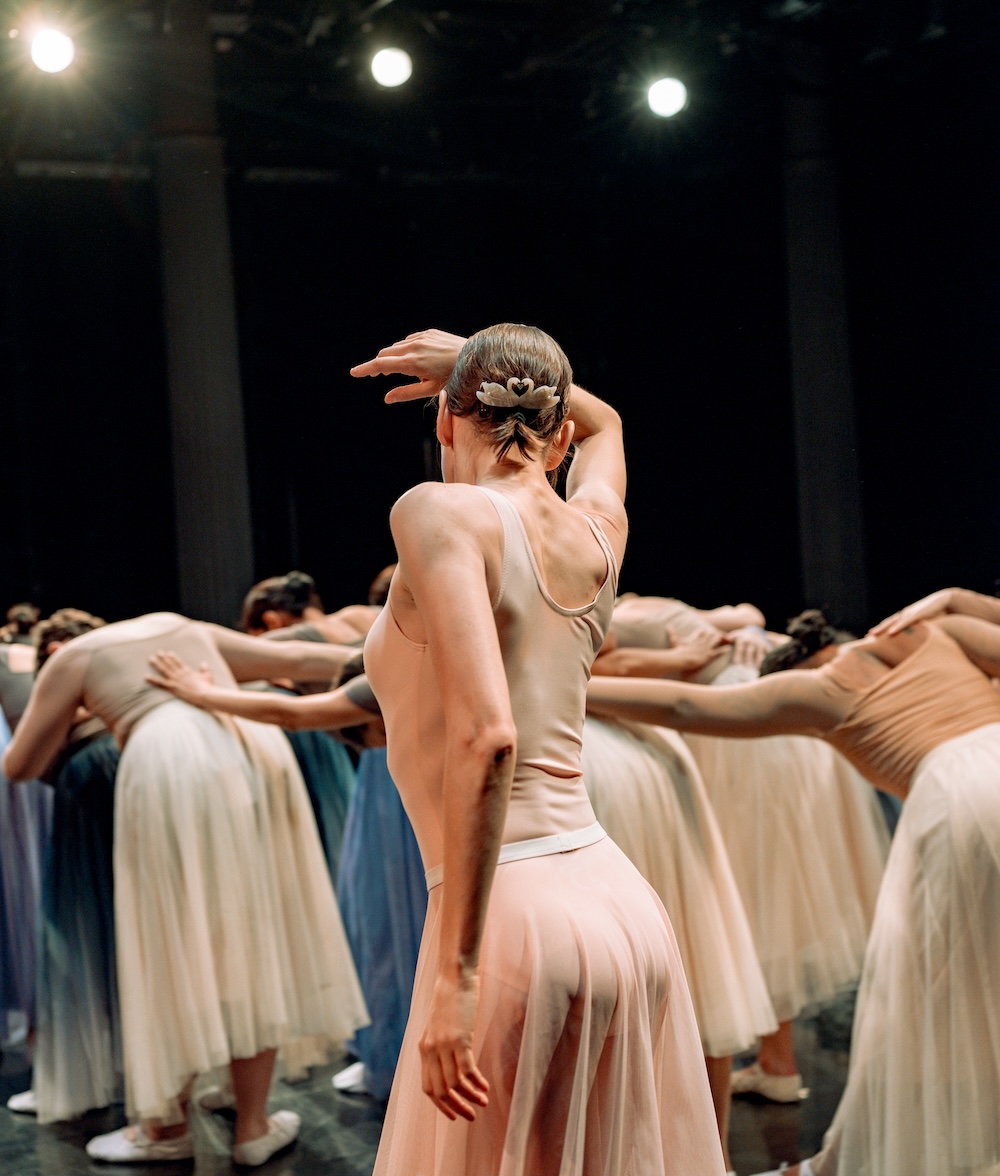
The whole process is the intended experience, Wassman-Cox explains – from rehearsals to performances where dancers get to wear a beautiful costume and have their makeup done by a professional. “We pride ourselves on presenting a full-scale artistic production.”
Each Onco-Ballet™ program has also had a theme relevant to the cancer experience: last year, the path from diagnosis through treatment, and this year about survivorship. “We want to show that there’s no finish line, and to honor the full spectrum of survivorship,” explains Wassman-Cox.
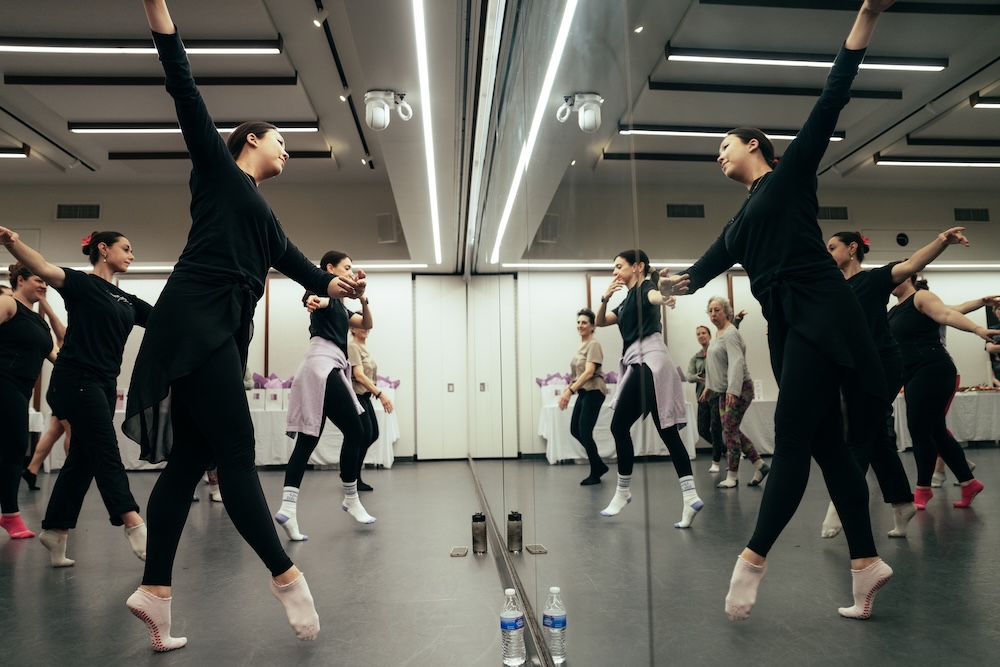
Everyone onstage is a patient or survivor and thriver, Wassman-Cox says – so these themes are hugely significant to the performers’ own experiences.
“There’s a unique bond that forms during the performance process, as well,” Wassman-Cox adds. “There’s a community that’s grown. There’s unspoken understanding, to have people who’ve experienced the same thing,” Simon says.
“It’s really beautiful to see it unfold. These performers might not have perfect technique, but we honor the age-old tradition of ballet as storytelling,” Wassman-Cox says.
Impact: What it means to move
“We’re seeing it really make a difference in people’s lives!” Wassman-Cox affirms. “It’s a way through the cancer experience. Many realize just how impactful it’s been for them only after the whole class cycle and/or rehearsal experience.”
Anecdotally speaking, they’ve seen students experience less anxiety and depression. Surveys they run have also validated that effect. The fact that many students come back for additional six-week cycles also points to positive impact.
Wassman-Cox shares one particular student’s story, a story that’s very special and memorable to her. This woman came into class using a walker. The teacher modified class exercises for her accordingly, and she did great.
Just after surgery, she wanted to rehearse and perform – and the Onco-Ballet™ team said yes, we can absolutely make that work. Right when her doctors approved it, she was in rehearsals doing all she could.
In last year’s performance, she had a walk-on role of 16 counts of movement. She treasured the whole experience, of rehearsing and getting performance-ready and being part of the community of dancers.
This year, she’ll be dancing in a full piece, dancing the whole piece. “Her progression is just incredible to see, her desire to dance and how she’s just shown up throughout – because she wants to be a part of it, to be part of the community,” Wassman-Cox says.
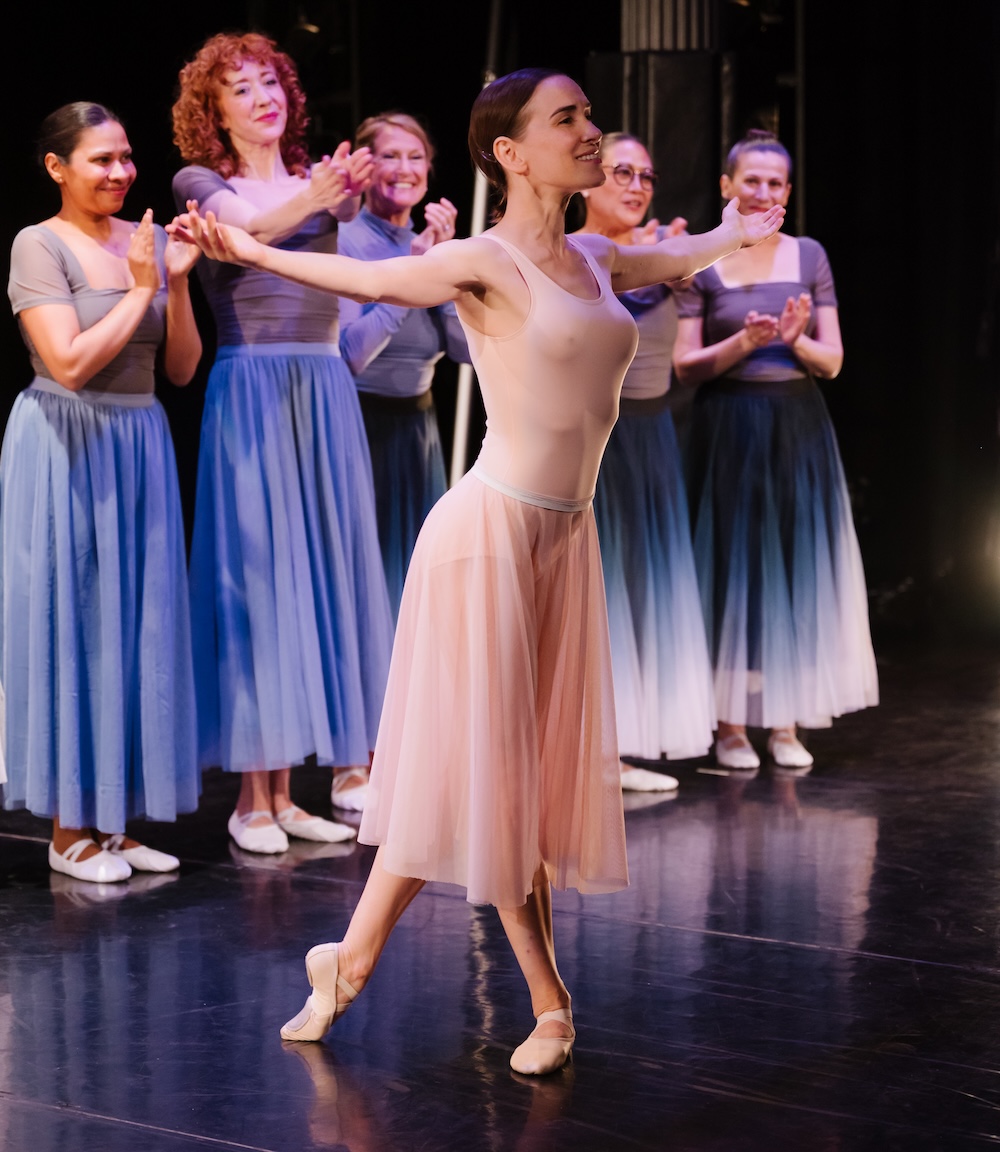
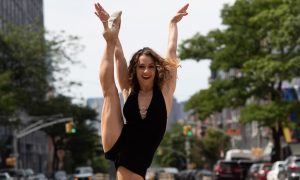
Simon’s story is also one of persistence and fortitude. A native New Yorker, she danced with American Ballet Theatre, The Joffrey Ballet and on Broadway. She was diagnosed with breast cancer at 37 years old.
“I had quite the treatment journey, including severe depression – which I didn’t quite know how to talk about with loved ones. It felt like the cancer was all there was,” she shares. Having to stop dancing for a time was a big part of what was so hard, she explains. “Dance has just felt as much a part of my existence as eating and sleeping!” she recounts with a little laugh.
She found Onco-Ballet™ through meeting Wassman-Cox, which offered an avenue for her to dance and feel ready for the stage again. Her first time performing after treatment was Dance Against Cancer at New York City Center, and she’ll be performing again this October through Onco-Ballet™. “I dance and perform for those still living and struggling with cancer,” she says.
Simon is back in pointe shoes and also teaching a lot, which she loves. “What I went through with cancer has made me a better teacher, I really think,” she says. Overall, Onco-Ballet™ has opened up doors for her that she never expected. “It feels natural and right.”
Forward: Gathering data, virtual offerings and more
“We’re a young organization, and there’s a lot more possibility for what we can do,” Wassman-Cox believes. In the near future, they’d love to expand beyond the cities where they currently offer classes: Seattle, Irvine, Los Angeles and New York City. They’re working on offering classes in Houston and Chicago, for example. They’d also love to hold virtual classes and even virtual rehearsal processes – which they’ve piloted.
“We’ve been a bit hesitant about that because we want to make sure it really works; there’s nothing worse than a class over Zoom where the tech is wonky! And of course, working in-person is ideal, because of that extra level of connection. But we do also recognize the benefits of virtual offerings, particularly for those going through cancer treatment,” she explains.
Onco-Ballet™ also wants to partner with a hospital to do a full-scale study on the impact of ballet for cancer patients. “There is piecemeal data out there, and we dancers know the healing benefits of dance, but it would be great to get that empirical data – especially with the mental health benefits, since we’ve really seen those.”
The post-performance blues are part of that mental and emotional landscape, and for that reason, Onco-Ballet™ is holding a wellness day following the coming performances. They’re even considering creating a longer dance wellness retreat. “Sometimes it helps to step away from daily life and have that reset,” Wassman-Cox believes.
She also underscores the importance of comprehensive support for those experiencing cancer, and these sorts of events and offerings could allow Onco-Ballet™ to work with other experts and clinicians to provide that for those partaking. “Ballet and dance is our main vehicle, but we’re just one of many resources out there to help with this experience,” Wassman-Cox says.
Simon, for her part, will stay the course: teaching, performing, healing, sharing her art and experiences. “My goal is to inspire women, through openness about what I’ve experienced, to get back out there. I want to trailblaze for the next set of dancers who have to go through something like this,” she shares.
For more information about the Onco-Ballet Foundation, visit oncoballet.org.
By Kathryn Boland of Dance Informa.
Share this: