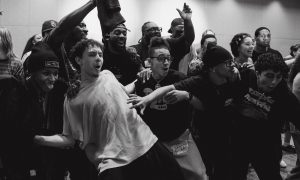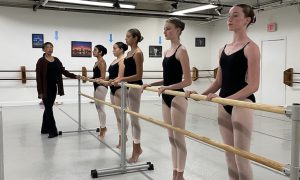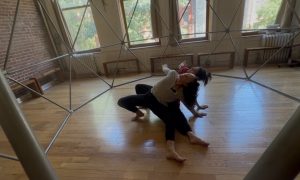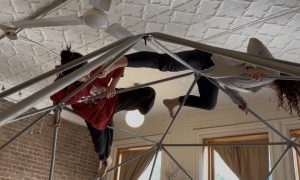
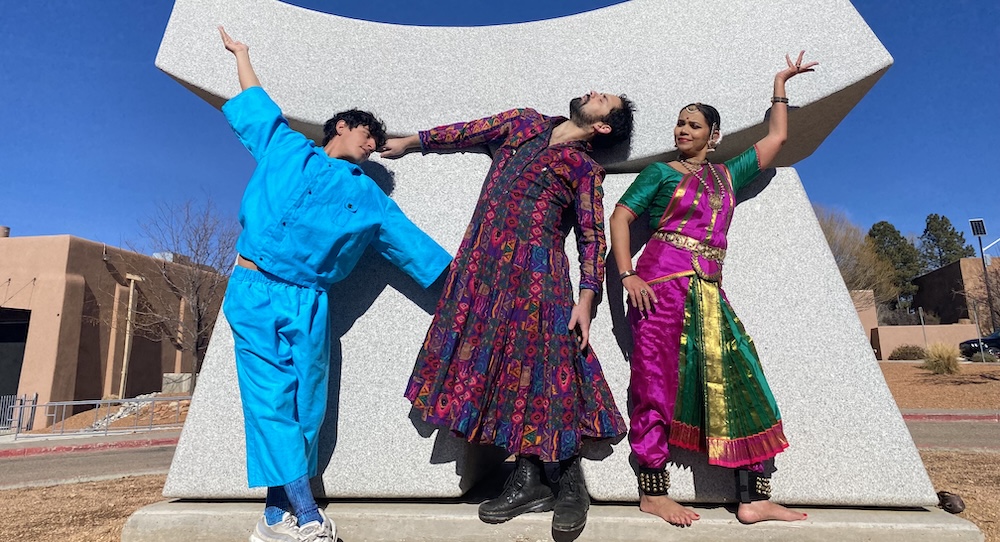
Walk with me for a moment, dear reader, and imagine.
You enter a museum designed for moving bodies, and it is like nothing you have ever experienced before. Nothing sits behind glass. Nobody tells you, “Please don’t touch the art.” The first instruction you get is to move.
A score is already playing and a choreographer is urging dancers on, and you are watching the work being made in real time.
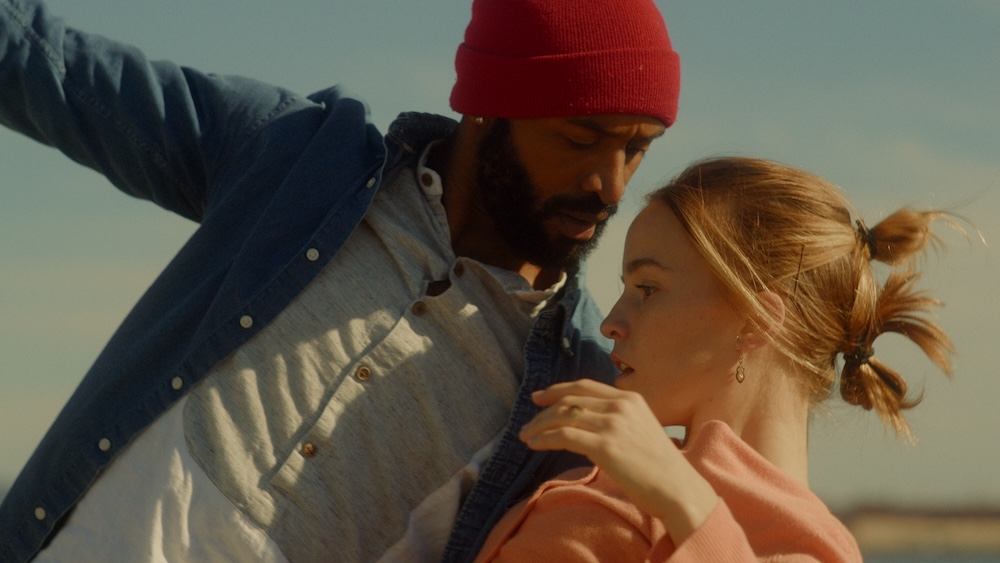
A tactile, five-senses exhibit sharing the life and legacy of Jock Soto and his journey from the Navajo Nation to the New York City Ballet invites you to immerse yourself in an experiential, mind-blowing design. Sound shifts as you cross the room. The floor answers your weight. You learn his story through your whole body.
Constellation Hall, built with ACMI in Melbourne, is a moving map of every dance you have ever wondered about and thousands you have not. Follow a step from street dance in the Bronx to a stage in Paris to a ceremony on the Navajo Nation and see how they connect. Then open a single star. Inside is a whole world: film, audio, photographs, oral histories, curated with the repository or the family or the legacy that holds them. Not scraped from somewhere. Given, deliberately, by the people it belongs to.
Light and sound teaches you dance styles from around the world, something like Dance Dance Revolution but for every form there is, and simply for the joy of moving.
Walls hold dance films played at the scale they deserve. Dance artists are physically next to you, before you, and even.. above you.
With enough time, you could experience some of it all, or return to revel in the endless storytelling, and in such a way that you forget to be on your phone. It’s an experience that asks you to be present.
This is the vision that dance artist Hilary Palanza, along with an extensive team of advisory board members, dance artists and collaborators, is working toward. It’s the International Museum of Dance (IMOD).
It isn’t built yet, but it’s on the way. In the meantime, the organization has been learning and offering a great deal through events and experiences in the Philadelphia area, Northern New Mexico, Bay Area and Los Angeles.
Dance Informa speaks with Palanza, IMOD’s founder, about the organization’s past, present and future. Without further ado.
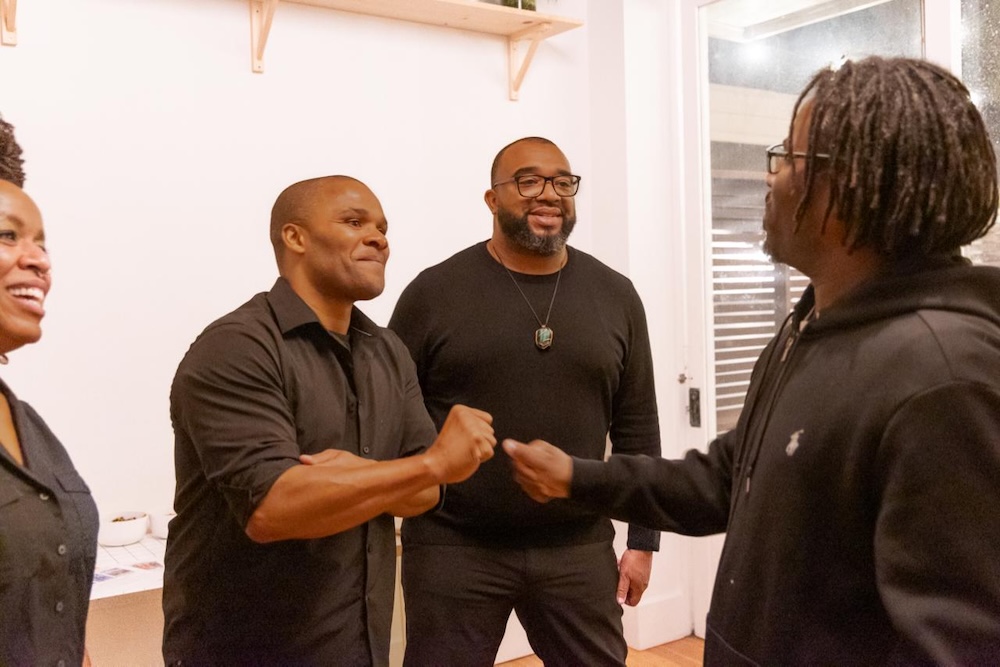
What is IMOD’s ‘origin story’? How did the vision begin?
“Fifteen to 20 years ago, I was training as a dancer in San Francisco. I visited the Los Angeles Contemporary Museum of Art with a friend and was inspired by the volume of people entering the museum, hungry for art. “Where is this for dance? Where is the Museum of Dance?” I asked. My friend suggested that I should build one, to which I responded with a feeling of “haha, that’s funny.” But I kept thinking about it and started to research who’s doing what in the museum sector.
I put it down for a few years, but me being me, I remained curious and started investigating again. I began having conversations about where dance and museums meet, and don’t meet…and the question of should they meet. After about six to seven years of gaining both institutional and non-institutional knowledge, I noticed interesting queries and outdated practices ripe for change in both dance and museums.
Those in both disciplines are also willing to have those conversations and work toward that sort of change. There’s so much rapid change out there in the world, and we’re all bracing ourselves. Many – in both dance and museum sectors – are thinking deeply and with great courage about response to, and leadership in the face of, that change. The vision for IMOD began, and has grown, with that backdrop.”
‘If it moves people, it belongs here,’ IMOD’s website affirms. It’s clear that the organization is inclusive of dance across style, culture, nation of origin, context, et cetera. Why is that broad vision of ‘dance’ part of your mission?
“Yes, that’s our vision – and when I say ‘our vision,’ I mean decades of conversations with people in and out of the dance field who really want to see this happen. I think the humanity of dance is at the heart of all this dreaming, as we face great isolation and that big unknown.
Fundamentally, I believe, dance seeks to understand what moves us. Is it music, beauty, the natural world, emotions and experiences like grief? IMOD can be a collective space for that inquiry – that which can go beyond spoken language.
The language of dance, on the other hand, holds endless possibilities. What is said and unsaid? How do we speak to each other? It can say so much more than words. As a choreographer, that always fascinates me.
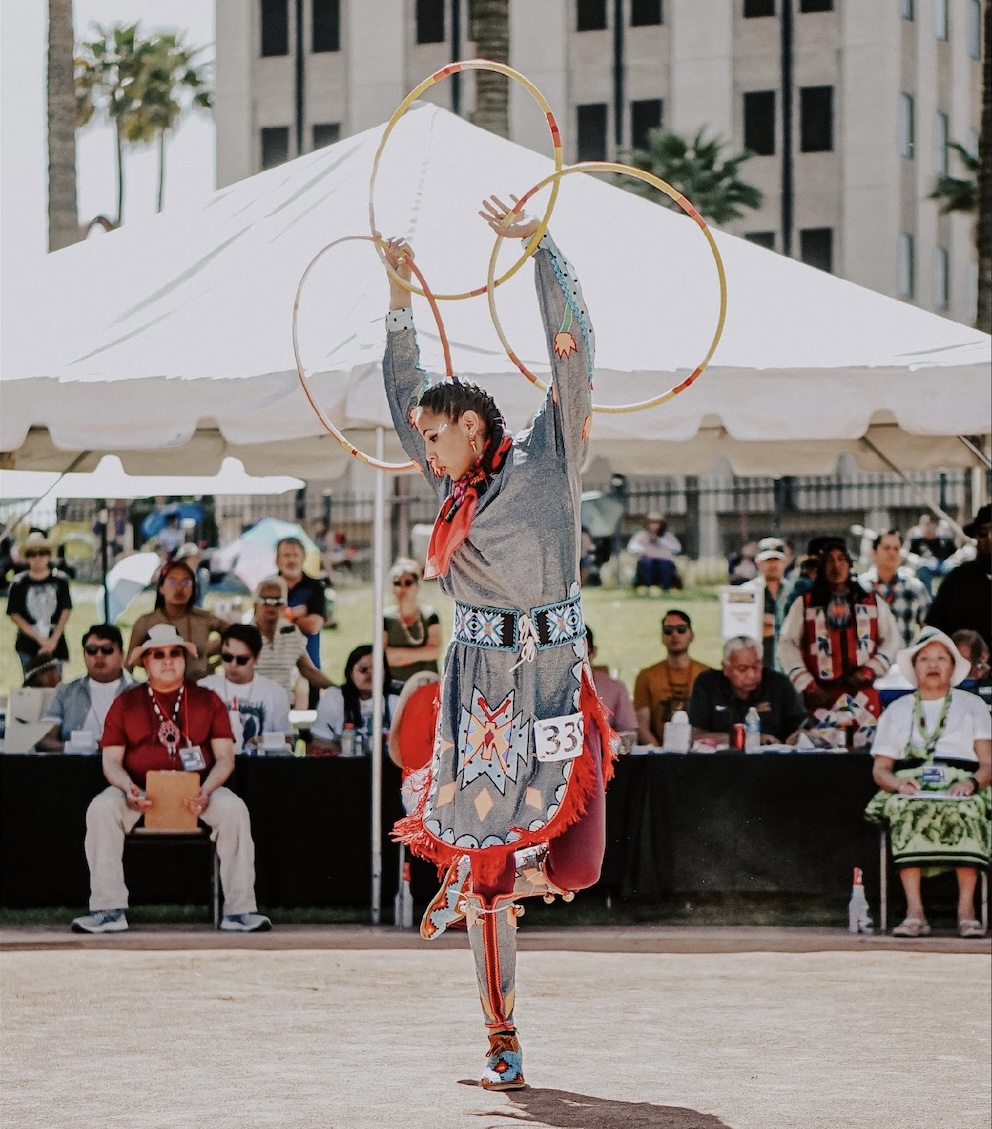
A great example of this we can see in many Indigenous dance practices. There is ceremony, but it’s not academic or intellectualized. Rather, it is body-based prayer, felt and witnessed – and a great reminder of what we all share, versus what divides us.”
IMOD has been offering events across various locales, but is also seeking to create a central site: where events can happen, exhibits can run, and archives can be housed. What other benefits does such a central site confer, that transient events do not? Conversely, are there benefits to going out into communities – those that you might seek to maintain even when you have a site?
“With working in different locales, we’ve wanted to feel out the needs of different sites, and how different communities respond to our concept. And we’ve learned a lot. Across the board, we’ve seen so much enthusiasm and energy about what we’re building.
For me as a dancer, it’s been a practice of patience; we’re used to things happening faster than this has. But I’ve tried to keep an attitude of ‘let’s just keep asking the questions and working toward the goal.’
Additionally, in the museum world, it’s been a challenge for some to financially and operationally maintain a central site. So there have been questions about what we are building, how we’ll maintain it and how we anchor dance at a site – versus we’re everywhere, so we’re really nowhere. That’s not what we want.
But just months ago, we began to speak with a modular architecture firm called LOT-EK that builds both central sites and annexes. Their design team asked us some really important questions. We’ve seen that, yes, we need a centralized ‘mothership’ space, and from there, we can branch out to partner spaces. IMOD central, that ‘mothership,’ can branch out to places all over the world. For example, a partner site could hold an archive or small library or rehearsal space. Then we’re somewhere and everywhere!
We’ve discerned that’s what we want to do, to work with value-based partners and elevate what they’re already doing, as well as share resources (to the benefit of all!). From a new, future-forward museum perspective, that’s not acquisition, but elevation. It’s exciting to envision this new model of leadership.”
How is the work toward that central site going? What can you tell us about that?
“We’ve made a big swing for the ‘mothership’ in San Francisco. We’re diving in there to see if it’s right and putting our best foot forward in that. But we’re also open-minded, if by chance other opportunities emerge elsewhere. We’re going for pretty rigorous grants either way!
Our team – including myself, our board and around 500 artists we’ve worked with – everything we’ve done together has helped us get to where we are now.”
Can you speak a bit about the ‘Constellation’ project? It seems like an innovative way to contextualize dance history, globally, accessible to anyone with an internet connection.
“In the past five years or so, many people in the dance world have realized the critical moment in digitizing and safeguarding our stories. We had a really great conversation about that with Linda Murray at The New York Public Library for the Performing Arts, which helped us to better understand the dynamics around that work. It’s rigorous and intensive.
Speaking with a close advisor to the museum and the work, I shared, ‘I feel like it needs to be how this dance artist connects with this dance artist,’ and made a gesture of a line connecting different dots. This board member astutely recognized this gesture as a constellation!
My advisor, Jim Spadiccini (who helped shape the Exploratorium in San Francisco and ED of Ideum), connected us to Seb Chan at the ACMI, or Australia’s national museum of screen culture, who has built an absolutely brilliant digital constellation field, a discoverable tool, for seeing how film is connected across time, space and people.
We had the opportunity to talk with Seb’s team about creating something like this for IMOD, and through months of conversations, ACMI has very generously agreed to build this same concept for IMOD! We are in the process of raising funds to develop its first phase by early next year. Check out the extensive and incredible museum work here!
Here’s how it works in practice. We could partner with the Navajo Nation, and we’d sit down together and decide how that story gets told, in their words, on their terms. Then IMOD works with ACMI to build it into a single star. Jock Soto, the former New York City Ballet principal, could be another. And because Jock is Diné, those two stars connect. One thread now runs from the Navajo Nation to the stage at Lincoln Center, and it’s there because both parties agreed it should be. Nobody uploads into a void and nobody gets collected without a say. Every star is made in collaboration, then built properly.
We’ll begin with dance archivists building out the essential historical figures, the movers and shapers, and let it extend outward from there. The hardest entries will be the legacies, the artists no longer with us to speak for themselves. We’ll work carefully with families and estates on those.
What excites me most is what the constellation reveals once it’s dense enough. That Michael Jackson loved Fred Astaire and was shaped by him. That a step in one place came from a step somewhere else. Those lines exist already. Most people just never get to see them. And at our eventual site, I want every family who visits to make their own star. Not for public consumption. Something they take home with them, because they were here and they are part of this, too.”
What can readers do to help make this vision a reality?
“If you believe in it, please sign the ledger on our website! Please also follow us on social media (@internationalmuseumofdance), and stay in touch! It’s going to be exciting as it all unfolds in the coming months.
In terms of donations, if you have small amounts to donate, we’d encourage you to put that toward your local arts organizations. If you have the means to be a financial partner and elevate not only us, but all of our partners, please reach out to us; now is the time to elevate our work.”
Please share with us anything else you’d like us to know. Thanks so much for your time and insights, and for what you’re doing with this organization!
“I want dancers to know about this project and understand IMOD is truly a team of artists building a new museum that centers all that dancers are! It can be really hard in these times to just dance and not worry about the funding and social media metrics, et cetera. I urge dancers to remember why you do what you do – sometimes that might mean simply putting on some music and moving – without any end goal in mind. We bring light and joy.
Dancers are incredibly generous people: the sweaty hugs, the dressing room conversations, the way they give so much more than they have to give to every performance. Their strength, attunement to others, kindness and tenacity…the world has a lot to learn from the world and life of dance artists.
I had my six-year-old daughter sign the ledger, and she wrote: ‘It would be nice to see all the dances. Because I really like dancers.’ I really like dancers, too. And, the more I think about it and tell you about the museum space we are building, I would really like to go, too!
Dance is an amazing art form that deserves great respect and celebration. Because it matters for our world. I’m excited to see what change the arts will catalyze.
For more information on the International Museum of Dance, visit museumdance.org.
By Kathryn Boland of Dance Informa.
Share this: