McCaw Hall, Seattle, WA.
January 30, 2026 (accessed virtually).
I’m not sure about you, dear reader, but one thing I love about classical ballet is how it brings me into another world: of mysticism, fantastical happenings and the wildest possible dreams coming true. For me to enter that new world, however, I need to believe – not necessarily in strange creatures or undead spirits, but in the conceivability of such a world. Naturalistic interactions, emotions, and aesthetics can help there.
Pacific Northwest Ballet’s Cinderella (from Kent Stowell) used such tools in ways that left me no disbelief to suspend. I was only intrigued, immersed and enchanted. Through stellar theatricality, historically honest design and pitch-perfect characterization in movement qualities, the program offered the makings of a world that could be real – one I was overjoyed to enter for a short time. A theme of nature’s power and wisdom only deepened that sense of the organic and authentic.
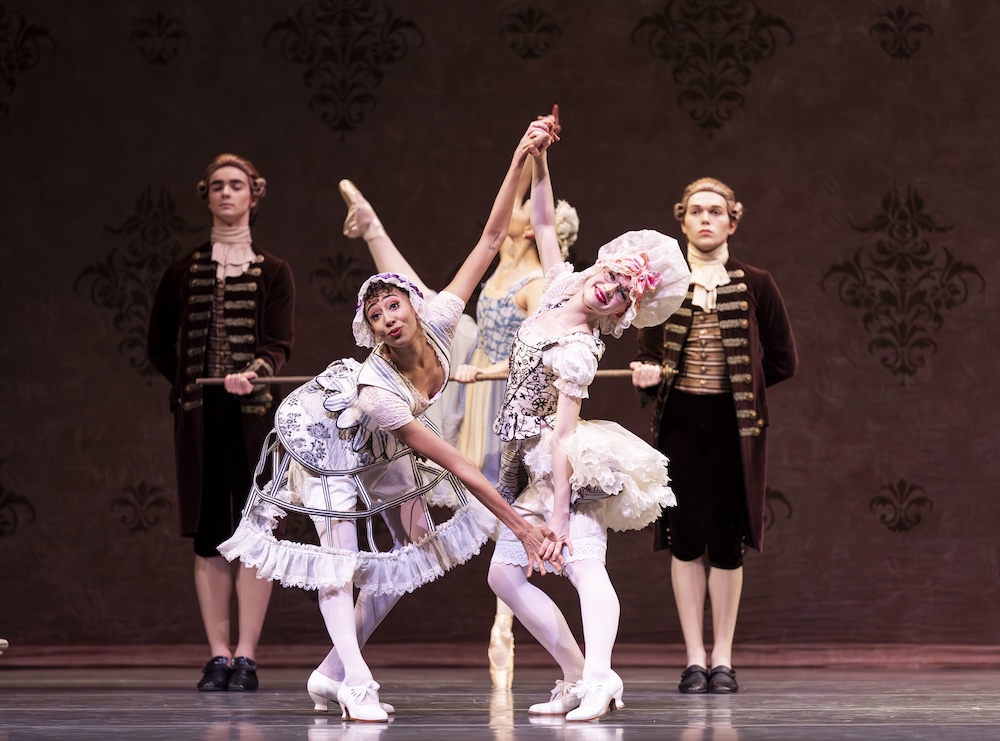
The overture (from Sergei Prokofiev) set up the fantastical: drama in its sweeping tones, both mystery and brightness. The backdrop offered the same fairytale feel, but with historical verisimilitude. Lights came up on an elegant pas de deux, which held ease and grace above high-flying athleticism – a soft and sweet opening to the ballet, ending in a tender embrace. Action escalated, and then we met the goofy, highly self-focused stepsisters (Amanda Morgan and Kali Kleiman) and stepmother (Elle Macy).
Portraying them as comical rather than malicious kept a lighter, more family-friendly feel to the program. Their theatricality was exquisite, bringing truly vibrant life to scenes such as when they got their ballgowns and accessories ready. The dancing master was similarly comical, in an over-the-top sense that just worked in context.
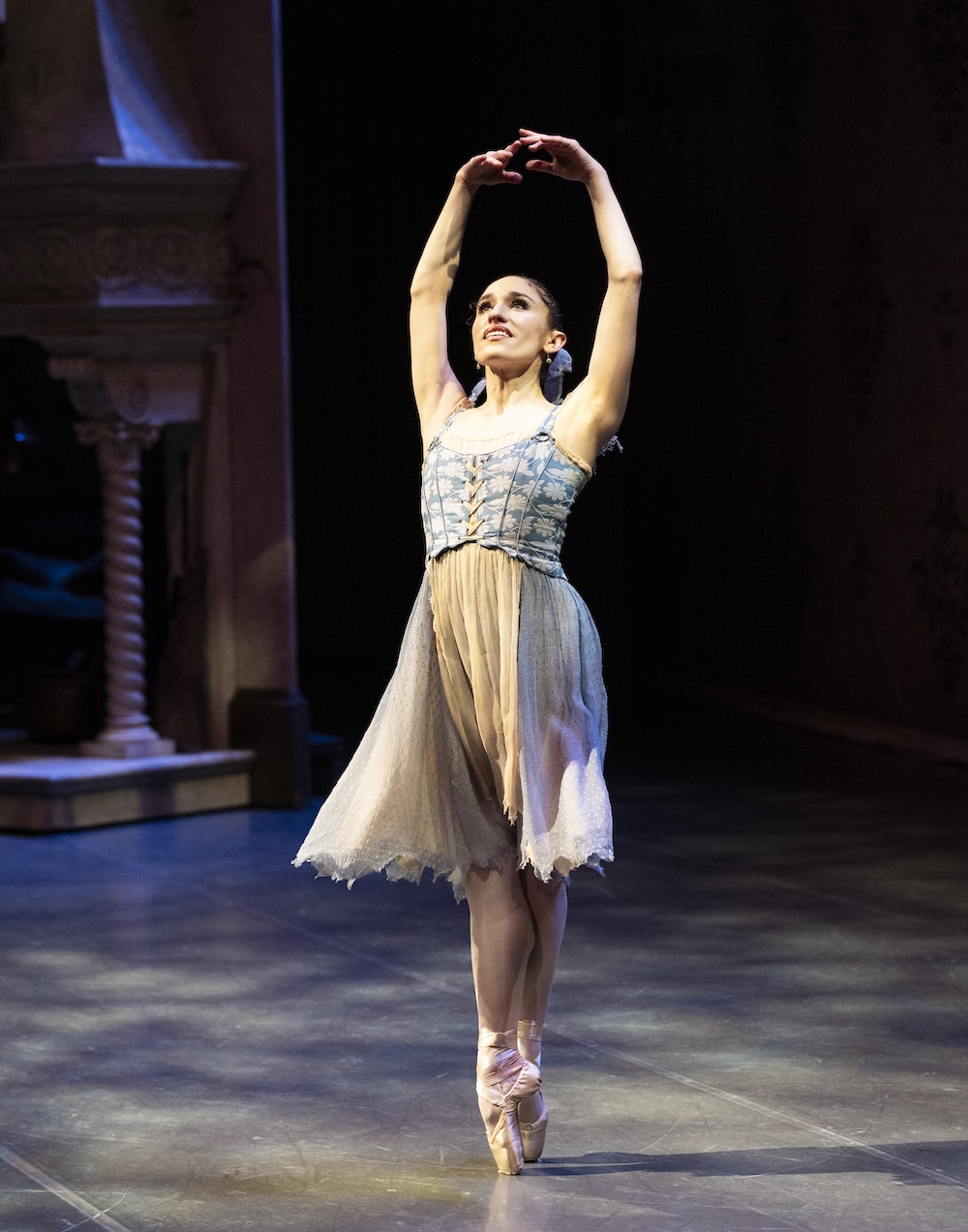
Cinderella (Leta Biasucci) danced a lovely solo of lines energetically expanding past their end as well as a breezy ballon. There was a true sweetness and joyfulness to her character, which she especially showed with her father (Ryan Cardea). Yes, there was sadness – such as when she was left out of ball preparations (and so many of us know what it’s like to feel excluded like that). Yet she didn’t wallow there; she was soon dancing lightly and sweetly again, in a spotlight – like she was in her own little world of dancing joy.
Then it was back to sweeping; her life as it was continued. A mysterious visiting figure – cloaked and remaining in the dark – soon injected something different into her world, however. By caring for this shadowy figure, Cinderella demonstrated kindness as well as wisdom; the most benevolent forces can at first appear to be something different.
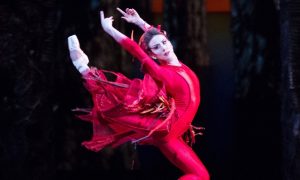
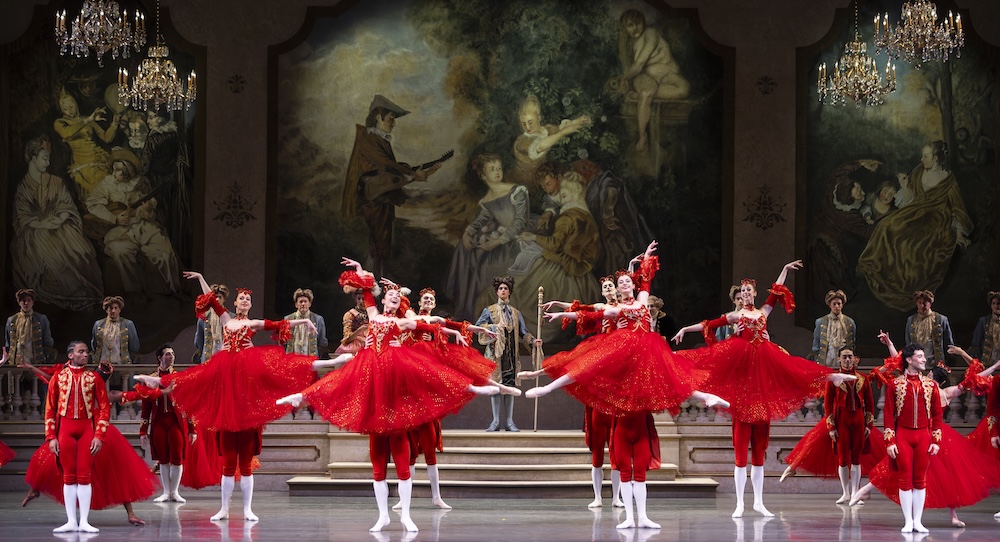
We then cut to the royal palace, with a true nobility in the ether. The design aesthetic remained enticingly dim and dark, here in dark red tones: that fairytale feel of both peril and majesty (scenic design by Tony Straiges, lighting design by Randall G. Chiarelli and costume design by Martin Pakledinaz). Indeed, the majesty soon came, the Fairy Godmother’s (Melisa Guilliams) lone spotlight diffusing to blues and purples across the stage as she and her attendants expanded Cinderella’s world and its possibilities.
The Fairy Godmother moved with command and power, yet a welcoming air to her. One could see how Cinderella would trust her. The attendants circled the young woman in an effervescent menage, enveloping her in their enchanted grace. Student dancers as little butterflies reflected her innocent brightness.
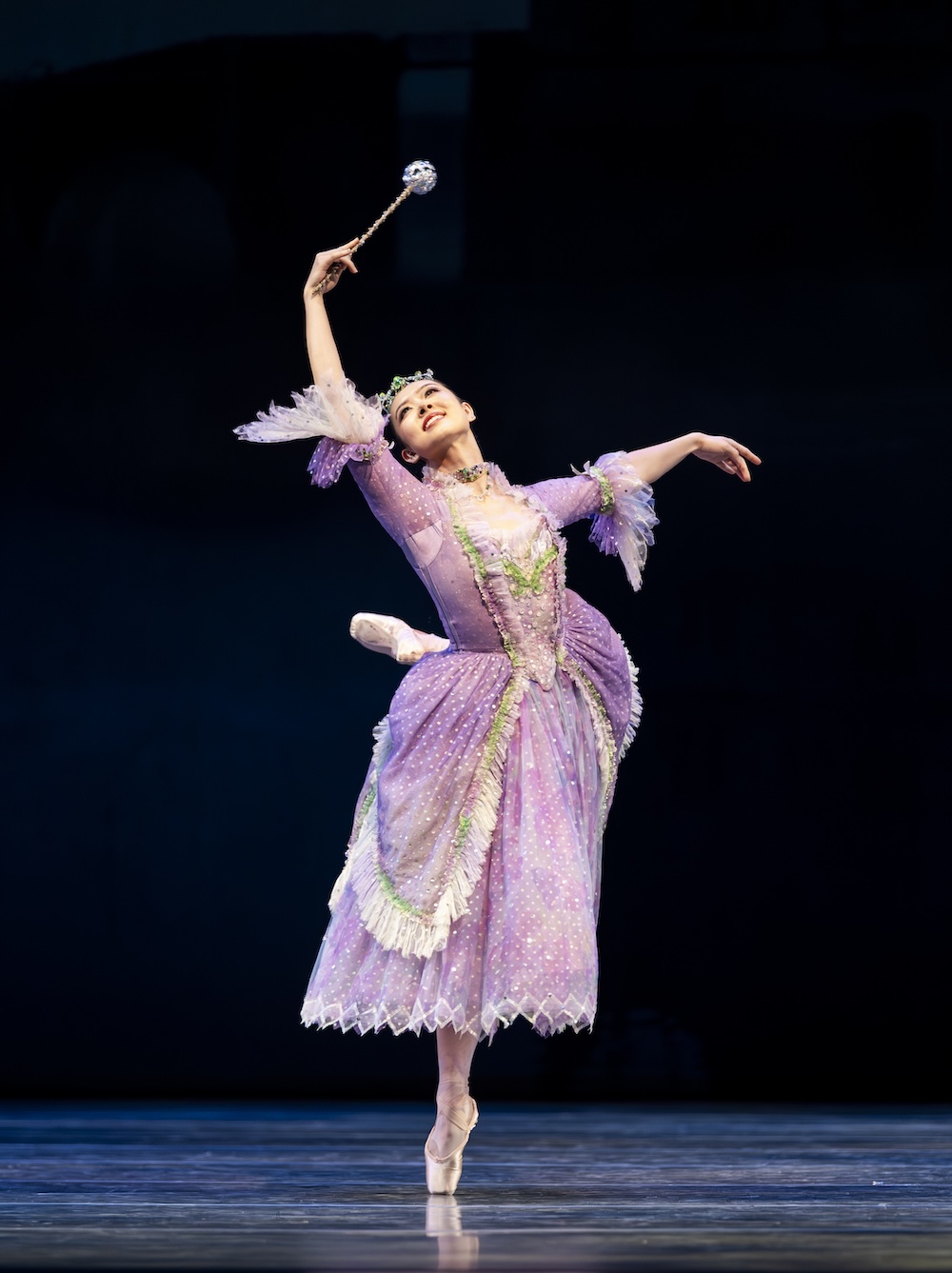
Four soloists embodied the seasons through inspired interpretations. Yuki Takahashi danced the boundless, blossoming life of spring with zippy jumps and a bright smile. The hazy ease of a sultry summer day came through Ashton Edwards’ performance, the languid contentment of warmth on skin and light breeze on face. The energetic freneticism of nature in autumn was in Juliet Prine’s dancing, with all creatures busily preparing for a long sleep. Madison Rayn Abeo danced the chilled beauty of winter, life more limited yet with its own magic if we can see it.
The idea that the Fairy Godmother’s enchantment lay in nature and its cycles felt poignant, grounded in ancient wisdom. All of them danced together in explosive unison, the magic of nature as one grand, highly interdependent entity. These magical entities also together prepared Cinderella for the royal ball, with gentleness and care in their assistance. The corps exemplified such breathing together in the harmony of their shifting lines moving in canon, gesturing to Cinderella to see her off.
Act II brought us into the ball, replete with regal opulence, in that bright red color palette of high nobility. On offer was also the delightful interplay of the Jester (Kuu Sakuragi), Prince (Lucien Postlewaite) and Cinderella’s stepsisters. Later, masked dancers – moving with enticingly animalistic qualities – gave a sense of the cultural life at court, this world where Cinderella had found herself. The theatricality remained top-notch; the action felt like a play told in movement rather than a ballet loosely telling a story, it was that specific and clear.
Cinderella, for her part, glittered and gleamed down to her pointe shoes – yet also maintained her accessibility, warmly greeting all she encountered. The prince was immediately drawn to all of that warmth and sparkle. After some coy dancing around the situation, literally and metaphorically (with her waltzing around the space in a relay with a few of the stately men attending), they danced together.
He lifted her with floating lightness, and they danced around the space as if they were the only ones there. The pair moved together with notable attunement and unspoken understanding. Cinderella also danced alone as a young woman floating on the clouds, in disbelief that girlish fantasies were actually playing out right before her. The Prince, in his solo, danced with such height, power, and spriteliness that it seemed the same was true for him.
A final pas de deux for the two of them was tender, harmonious, and seemingly as natural as could be; the electricity in the air between them just felt right. Continuing with the stellar theatrical authenticity of this program, Biasucci and Postlewaite brought that to life with utmost emotional honesty.
The clock struck midnight, and the movement became much more mechanized, angular, and accented: reflecting the unforgiving, unyielding nature of the time at hand. Then Cinderella was off, with the Prince distraught to see her leaving in such haste. To start Act III, we saw Cinderella back to that single spotlight in her home, her world and its possibilities shrunken and small.
Yet, in her joy and optimism, rather than appearing weighed down, she smiled wide and danced in memory of that shining night that was hers – for a short time – before time ran out. She held the one shoe she had then worn (the other lost) as tangible memory. More action ensued, portraying some family tension in the midst of everything happening after the ball.
The exceptional theatricality of the whole production peaked in the climactic scene of the shoe fitting only Cinderella. This version framed her father as stepping up in her defense (perhaps finally, after a long time, which had maybe allowed the stepmother and sisters to domineer).
We know how the story ends, the prince and the humble maiden uniting and living together happily ever after. Yet in this ballet, we also returned to the Fairy Godmother and her agents of nature before the end: dancing in canon like independently swaying branches of a grand tree, then coming together in lines to embody that unified whole. Returning to this theme reinforced the importance of nature and commitment to its enduring wisdom.
Steeped in its grace and protection, the happy new couple once again danced like nothing could be more natural and right. Sparkles fell on them as he turned her and the curtain fell – lasting enchantment bestowed upon them. I felt this magic too – my spirit enlivened from it, from this classic story told in a way that felt less like a fantasy and more like a world I only hadn’t yet discovered. What a treasure!
By Kathryn Boland of Dance Informa.
Share this: