Tag Archive | "dancewear"

Capezio: Serving dancers for over 125 years


By Grace Edwards.

A dancer’s shoes are their best friend; they minimise weaknesses, showcase strengths, anticipate stresses and adapt to the dancer’s whims. When it’s time to move on to another pair, they remain as a testament to a unique onstage partnership, every move literally etched into their soles.

International dance shoe label Capezio understands first-hand why dancers tend to be staunchly loyal to their chosen brands and styles of shoes. The celebrities and dance legends who have championed Capezio over the years make for a veritable roll call of dance royalty: Fred Astaire, Gene Kelly, Sammy Davis Jr., Charles “Honi” Coles, Alicia Alonso, Bob Fosse, Mick Jagger, Liza Minelli, Gregory Hines, Tommy Tune, Ann Reinking, Debbie Allen, Ben Vereen, Charo, Merrill Ashley, Rob Marshall, Ashley Tuttle, Fatima, Savion Glover, Brian Friedman, Madonna, Gwen Stefani, Justin Timberlake, Britney Spears, Katy Perry and Lady Gaga.

Capezio Fizzion,

The Fizzion, a shoe that gives dancers that intimate connection when they interact with the floor, without sacrificing any of the protection, hygiene or functionality.

Among the brand’s most well-known patrons was prima ballerina Anna Pavlova. Her high, weak arches were a source of angst and inspiration at a time when the increasingly strenuous demands of pointe work put great strain on the prevailing styles of pre-modern pointe shoes. Pavlova became so enamoured with Capezio shoes — made in New York by Italian-born founder Salvatore Capezio — she bought Capezio shoes for herself and the entire cast on her first tour to the United States in 1910.

Graeme Taylor, President of Capezio Australia and New Zealand, considers Capezio’s connection to the “greats” one of the most alluring aspects of wearing Capezio shoes. “Dancers, particularly young dancers, who are still discovering who they are as artists, spend as much time practicing in the studio as they do studying other dancers, dance in film and the lives of dancers. It is not just about learning the techniques of dance, but also about defining who you are as a dancer,” he says.

“Choosing a Capezio product literally links them to the history of dance. It makes them a part of the tradition, and the exclusive family of dancers who have worn Capezio over the years. It connects them to the famous dancers they have studied and idolized. The energy of that cannot be replaced by anything.”

Today, third and fourth generation family members continue Salvatore Capezio’s legacy of craft, innovation and commitment, striving to sustain the values which have made Capezio one of the world’s leading dance shoe brands. The most important of these is maintaining a direct connection with dancers.

Capezio kids

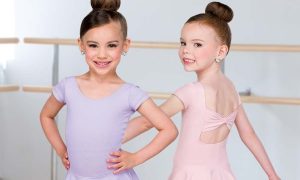
All That Glitters, Capezio Kids Showing off their new range.

“When the needs of dancers change, we have to listen and respond,” says Taylor. “We do a lot of research to see what the trends are, and what dancers are doing now. For example, there has been an ongoing movement of barefoot dancing. Dancers want that unrestricted connection when they interact with the floor. This was a motivating trend behind FIZZION, a shoe that allows for that intimate connection without sacrificing any of the protection, hygiene or functionality.”

Innovation, it seems, can also come from less obvious sources. The Love Ballet shoe was inspired in part by demand for a shoe that could grow with a young dancer’s foot and fit all the way throughout the dance season. “This was the demand of many dance mums,” Taylor informs me. “Those demands are just as important to us.  That shoe also addresses the demands of dance teachers — no more elastic ties to have to stop and tie in the middle of class, and better foot shaping for more accurate corrections at the foundational level.”

So, what then are the qualities of the “perfect shoe”? According to Taylor, “It is the one that acts as an extension of the dancer’s body. It is the shoe that best allows for that dancer’s individual, personal movement.”

Jared Grimes in his Capezio tap shoes

Professional Dancer, Jared Grimes taps out in his Capezio shoes.

“It should help the dancer carry the energy of that movement first to the dance floor and then to the audience. It should always enhance, and never detract, from the dancer’s ability to showcase emotion and technique.”

Until a few years ago, Capezio shoes were not easy to access for Australians and New Zealanders, and had to be ordered from the USA. They also proved quite expensive compared to other brands in the market. In 2007, however, Capezio decided to establish a new warehouse in Australia and reviewed its prices. Demand for Capezio shoes has been growing exponentially ever since. “As Capezio in Australia and New Zealand grew, we then had to build a brand new state of the art warehouse, offices and retail store about two years ago. This new warehouse is currently being extended already,” says Taylor.

As Capezio shoes become more and more visible in shop windows across Australasia, they bring with them their international dance heritage, the lessons learned from over a 100 years helping dancers realise their potential, and the values which originally inspired the creation of the shoe brand.

“Salvatore Capezio’s dedication to providing dancers with technologically advanced, quality tools for their art continues to inspire our innovations,” says Taylor. “Just like in the days of old, the company still remains a fixture in the dance community, relying on dancers’ feedback to continue to bring the best dance products to market.”  

Capezio“The team at Capezio believes that dance is about emotion, passion, movement, beauty, hard work, personal interpretation and sacrifice, and the brand is dedicated to serving all genres of dance now more than ever.” 

To view Capezio’s range and find out more about the products visit Capeziodanceanz.com

Photo (top): Capezio Founder, Salvatore Capezio.

Posted in Dance News Australia, FeaturesComments (0)

Sarah Lamb – Ballet Royalty


By Deborah Searle.

Bloch Star and Royal Ballet Principal Sarah Lamb is an inspiration to all. The Royal Ballet is world renowned and the opportunity to see the company perform is a treat, let alone dance in its ranks. After growing up in Boston and becoming a Principal dancer for the Boston Ballet, Sarah moved to London in 2004 to join the Royal Ballet, being promoted to Principal just two years later.

On being a Principal ballerina Sarah says, “The best part of my job is that I love what I do. I dance in many ballets, for many different choreographers and in many different styles.  I love working and rehearsing, and in the end I perform onstage in the leading role. It is the most wonderful position.”

Being a Principal dancer is a dream come true for the talented artist, however it’s not an easy job. “I can rehearse up to seven ballets a day!” she explains.  “A typical day will start with class at 10:30 and I will get in early to stretch and do some exercises.  Rehearsals start at 12. If I am lucky I will do my major ballets first at the beginning of the day when I am fresh. So I have an hour and a half for Swan lake or Sleeping Beauty, then another ballet, and then maybe a break if I am lucky! I have had days without breaks. Those are very, very hard and exhausting, but they happen sometimes.  Rehearsals finish at 6:30 unless there is a performance and then they finish at 5:30 and the performance is at 7:30.”

With such a busy and strenuous schedule it can be hard for Sarah to find spare time, but when she does she likes to read and go to the beach. “I don’t have as much time as I would like. I used to draw a lot, but haven’t for a while as I am always sewing shoes if I have some free time,” she shares.  With a flair for drawing, would Sarah have become an illustrator or designer if her career in ballet hadn’t taken off? “I would like to imagine I could be a lawyer for the Southern Poverty Law Center, or ACLU, or the Innocence Project,” she says, which seems so far removed from dance or drawing, but is another interest of hers.

With so many varied interests, what inspired Sarah to become a dancer? “I must just love to move”, she explains. “Whenever I hear music I have an innate need to react to it.” With a natural sense of movement, Sarah was sure to be successful, but natural talent can only take you so far in the ballet world. “I am where I am because I have worked very hard. I believe that this is why I am a principal dancer.” Although she looks like absolute perfection to us as she graces many gorgeous advertising campaigns as a face for Bloch dancewear, Sarah confesses, “I am not naturally physically perfect for ballet (no one is), so I have had to work to achieve what I am today.”

But surely she must have a secret to her success? “I would say contemplation and self-awareness have helped me enormously. You are the only person who can really improve yourself. If you can realize this, constructively critique yourself and analyze your movement and your technique then you can improve all the time.” But self-evaluation isn’t the only thing that will bring you success, she explains. “It is not something that you can achieve just by trying. A lot has to do with the timing, if there is a position available, and if the director sees something in you he/she likes. I cannot say there is one thing or a few things that can guarantee success. Ballet is very difficult, and in order to join a major company a dancer must really think hard about what he/she wants.  Focus, dedication, determination and intelligence make you much more likely to realize your aspirations.”

So has Sarah achieved her career aspirations? “It is very hard [to pick one career highlight],” she says. “Perhaps my debut as Manon last May (2011) with Rupert Pennefather – that was a very special performance for us and it was incredible.” But after having danced so many ballets and roles there are still some works Sarah would love to perform.  “I would love to dance ‘Tatiana’ in Onegin, Giselle, and Chris Wheeldon’s After the Rain pas de deux. I would also love to have a ballet created on me”, she shared. “But above all I just want to continue enjoying what I do.”

For more information about Sarah Lamb and some exquisite photos visit www.blochworld.com/all-stars/sarah-lamb

Photos of Sarah Lamb courtesy of Bloch.

Posted in Top StoriesComments (0)

Concert Costume Guide


The 2012 Concert Costume Guide is out now!

This is your guide to the best costume suppliers and designs in the industry. Check out the Guide today to start organising your end of year concert costumes.

These costume specialists provide the easiest, most convenient way to dress your dancers in stunning costumes this season.

Check out their designs and services and give them a call today.

Posted in GuidesComments (0)

CHRISTMAS GIFT IDEAS


Need some inspiration for gift ideas this Christmas?

Check out Dance Informa’s CHRISTMAS GIFT GUIDE.
Gifts perfect for the dancers and lovers of dance in your life.

Everything from dance bags, tutus, fashion, DVDs and art work to dance compression socks and more.
Click on products below to get inspired!


Posted in GuidesComments (1)

Auditions – Making the Cut


The DO’s and DONT’s of Auditions

By Laura Di Orio

Auditions. They’re like swallowing your vitamins. All they take is a little practice and some mental reassurance, and then you can come out stronger and, in this case, maybe with a job. Dance Informa spoke with leading working dancers and choreographers across the US to get their tips and audition do’s and don’ts.

Where to Look
Nowadays, audition listings, like most other information, can be found over the Internet. Dance Informa provides nationwide audition listings (click here to view the current listings) and even facebook offers dancers news on upcoming auditions and gigs. There’s also good old paper: most dance studios have a bulletin board with audition listings and job offerings. For some dancers, word of mouth and/or recommendations are also good audition hunting tools. And for those interested in company work, attending workshops or classes by prospective companies can be valuable. They often have company mailing lists, which inform recipients of upcoming auditions.

Audition Prep for the Mind and Body
It’s important to get enough sleep prior to an audition in order to stock up on ample energy and concentration levels. If nerves or other factors prevent you from getting the zzz’s, then help yourself with an energy drink, suggests choreographer Annabelle Lopez Ochoa. You need to be “on top of your game because you have to show in no time what you’ve got,” she says.

Nothing is worse than feeling unprepared. “If you can, research the project or company choreography,” says Clymene Baugher, a company member of Elisa Monte Dance in New York City. “Wake up early and give yourself time to orientate yourself to the day, not only preparing your body physically but also giving yourself time to mentally prepare.”

Mentally, it’s crucial that as an auditioning dancer you exude confidence. “Believe you are worth watching and that you have something to offer the company,” Lopez Ochoa says.

“Think of auditions as dress rehearsals, the more relaxed you are the better,” Baugher adds.

Christine Cox rehearsing with members of Ballet X

Show it Off!
Wear dancewear in which you feel good, something clean and neat and in a bright color. Unless it fits with the style, Lopez Ochoa says to avoid baggy clothes, “too sexy” looks and leg warmers. “A dancer should reveal his/her body because if you hide it in baggy clothes, the choreographer tends to be suspicious,” she says. “It’s all about honesty.”

Courtesy Goes a Long Way
During an audition, you’re being tested on more than just dance skills. How do you behave toward the director or choreographer and your fellow auditionees? “Being courteous to other dancers and the casting people is incredibly important,” says Drumlin Brooke, currently a trainee with First State Ballet Theatre in Delaware. “A lot of directors are looking for people who will mesh well with their company.”

How you behave in an audition also gives directors an idea of how you would work in the studio. “Listen very well to what a director or choreographer is asking you to do,” Lopez Ochoa advises. “Usually he/she does not expect you to be perfect, but he/she is just testing if you listen well and react to what he/she is saying.

“Don’t constantly look at the director to check if he/she’s watching you,” she adds. “That can be utterly annoying.”

Stay in your Comfort Zone?
There’s debate about whether or not to audition for something out of a dancer’s skill level or comfort zone. Lopez Ochoa says to avoid such auditions. “You’d be wasting the time of the choreographer,” she says. “It’s already hard enough for a choreographer to perceive all the qualities of the dancers in such a short time and in such big crowds.”

On the other hand, Christine Cox, co-founder of Philadelphia’s Ballet X, says go for it. “I think it’s important to know how to audition, and the more experience you can gain from it the better,” she says. “Who knows, you may get the job. If it starts to make you feel depressed and insecure, then stick to what you know and keep your confidence building.”

Likewise, Brooke says, “If you go you might get the job. If you don’t audition you definitely won’t.”

The Must-Haves 
Depending on the style of the company or specifics of the gig, choreographers and directors look for different qualities in dancers. Lopez Ochoa looks for generosity, a strong technique, versatility and, most of all, musicality when she’s auditioning a dancer.

For Cox, attributes like musicality, good work ethic and amazing technique make dancers stand out. “You can’t fake being a good dancer,” she says. “You either are or you aren’t.”

Bracing Rejection
“There’s no band-aid for rejection,” Lopez Ochoa says. “It’s always hard and disappointing when you’re not chosen.”

The key, then, is to trust that there’s a place out there that would be happy to have you as a dancer. “If a director does not hire you, it doesn’t mean that you’re a bad dancer,” says Lopez Ochoa. “It usually means that you don’t fit the style of the company.”

Most importantly, when faced with rejection, don’t give up. “Being a dancer is one of the hardest professions, and rejection hurts,” Baugher says. “If you want it bad enough, then you have to push on and continue to attend auditions and put yourself out there.”

#1 Do’s and Don’ts
According to these working dancers and choreographers, here are their number one do’s and don’ts:

Lopez Ochoa’s #1 DO: “Show that you love dancing. You’re not at an audition to get a job, you’re there to show how much you love your art. It’s a slightly different state of mind that makes a huge difference in how and what you radiate.”

Lopez Ochoa’s #1 DON’T: “Don’t stand in front if you don’t know the combination.”

Brooke’s #1 DO: “Pay attention! Nobody wants confused dancers who aren’t listening.”

Brooke’s #1 DON’T: “Don’t be late. Being early is both respectful and smart, and you want to be able to take your time to prepare.”

Cox’s #1 DO: “Show who you are as an artist in the audition. Be expressive and daring.”

Cox’s #1 DON’T: “Don’t show attitude.”

Baugher’s #1 DO: “Enjoy! Being a dancer is not easy. Think of auditions as miniature journeys.”

Baugher’s #1 DON’T: “Do not beat yourself up. Not getting the job often means absolutely nothing about you as a dancer, but most especially does not reflect your worth as a person.”

 Try to enjoy the audition experience and the journey, and work hard. Your persistence could someday soon pay off.


Top photo: Clymene Baugher, company member of Elisa Monte Dance. Photo by Cheryl Mann.

Posted in TipsComments (0)

Fashionable Dance


How dance is shaping fashion

By Rebecca Martin

It would appear that dance is centre stage in the fashion world and is dominating the catwalks .  The New York Times proclaimed that the look currently dominating women’s high fashion is a long stretch of leg, ankle boots, and a new posture.  According to the publication, fashion has replaced the “truckdriver” look of knee high boots with the “showgirl” style of ankle boots and elegance.  As with any major fashion shift, with the change of style comes a change in posture, and on this occasion, fashionistas everywhere can be seen posing with crossed legs to emulate a dancer en pointe. 

The seduction of dance and fashion continues to grow, with every type of dance becoming intertwined with clothing and style, and dancers are now influencing fashion in ways never seen before.  From music video clips to opulent theatre stages, dance defines what we wear, and just as often, what we wear influences how we dance.  Dancers have been at the forefront of fashion since Marie Taglioni tossed her heels and replaced them with soft ballet flats.  She was also the first person to dance en pointe in La Sylphide back in 1842, instigating the sylph aesthetic which became a popular fashion statement during the period.

Both dance and fashion have come a long way since then, with ballets like In the middle, somewhat elevated, Divergence, and come, been, and gone pushing the limits of costume design and mixing street fashion with the high art of the stage. Last year, The Australian Ballet chose fashion as the theme of its yearly Bodytorque season, and this year has employed the services of Akira Isogawa to design the costumes for Graeme Murphy’s Romeo and Juliet.

The Australian Ballet's Bodytorque 2010 celebrated ballet & fashion. Photo by Branco Gaica

Ballet flats are ubiquitous as street wear, tutus are in department stores, the urban wear of hip hop dancers has become mainstream fare, and burlesque glamour is making its way onto catwalks and into closets.  Then of course, we have Black Swan the movie.  Rodarte’s costumes impressed dancers and cinemagoers alike, making dance even more fashionable.  Lately, we have seen dancers from some of the world’s best ballet companies appearing between the pages of glossy fashion magazines and emerging as film stars.

Global fashion house Hermes has taken cues from ballet for recent collections, Chloe has utilized dancers to showcase its lines, and of course Dali, Picasso, Chanel, Matisse, Prada, Alexander McQueen and Valentino have collaborated with dancers for street wear and costumes alike. 

There are challenges for designers when making the leap from couture or street wear to the stage.  Costumes must be heavy duty in order to counteract potential wear and tear from performing while maintaining the ability to move easily and remain lightweight.  There is also the additional challenge of bright lights, sweat and make up, not to mention, that the costume needs to be impressive even to the patron in the back row of the balcony. 

Designers and photographers want to work with dancers because they can perform on demand, have more grace, balance and flexibility, and photo shoots are able to explore more daring visions, with dancers being stronger and more fearless than most models.  For those models not trained in dance, many agencies are sending them to movement classes because the demand is for the range, scope, and elegance that trained dancers provide.  Dancers have an extraordinary knowledge of their own bodies and they know what looks good.  It is no wonder many fashion professionals prefer to work with dancers than models!

Watch this video to see New York City Ballet’s Justin Peck and Janie Taylor model Chloe for a magazine photo and video shoot.

 Choreography (c) Justin Peck, 2011.
Cinematography (c) Bon Duke, 2011.

Video: Courtesy of youTube.
Dance Informa/Dance News International takes no responsibility for the content of any videos viewed through youTube.
Top photo: © Yekophotostudio | Dreamstime.com


Posted in FeaturesComments (1)

Dance Teacher Tools


CLICK HERE TO VIEW THIS SPECIAL FEATURE FOR DANCE TEACHERS


Helpful tools and resources for dance teachers
and studio owners.

The latest in dance flooring, dancewear, costuming, fabrics, DVDs, studio supplies, footwear and curricula.

Posted in Teacher Tips & ResourcesComments (6)

Getting to the Pointe


Pointe shoe tips from the industry’s leading dancewear specialists.

By Rebecca Martin

The time has finally come. Your ballet teacher has said that you can go up en pointe and you need to buy your first pair of pointe shoes.  So what now?

Talk to your teacher
The first thing you need to do is have a discussion with your teacher about what they want you to buy.  Some teachers and schools are very specific about brands, models, ribbon sewing, ribbon type, toe pads, colour, shape, … it can be overwhelming if you don’t get a little guidance from your teacher!

 Prepare your feet
Pointe work is hard, occasionally it might be uncomfortable, and it can be costly if you don’t take care of your shoes. So it is important that you start looking after your feet now and are prepared prior to your fitting. Trim your toe nails in a straight line. Speak to a physiotherapist or podiatrist to ensure that your feet and legs are ready for pointe work as they may be able to give you extra exercises to strengthen your muscles.  If your bones haven’t formed significantly, you may end up with injuries.  Do lots of rises and pick up a Thera-Band from your local dance shop to increase the strength of your feet and lower legs. All dancers should learn that pointe shoes are meant to provide support, but that strength in the feet must be developed from the beginning if proper technique is to be achieved.

Call ahead before your fitting and schedule plenty of time
Some dancewear stores will require a fitting appointment, so make sure to call ahead. Pointe shoe fittings, especially first ones, can take quite a bit of time, so don’t pop into a dance shop after school on your way to ballet class.  This will be a disaster for many reasons:
- You won’t be dressed properly.  The pointe shoe fitter will need you to do pliés, tendus, rises, and relevés, and you need freedom of movement without the restriction of a school uniform. Avoid overly baggy clothing as the fitter will want to look at the student’s placement through the body. Any long pants will need to be rolled up as the fitter will also need to look at the student’s ankles.
- Your feet will be hot and a little swollen after a day in socks/stockings and school shoes.  To get the most accurate fit, it is preferable that you arrive for your fitting earlier in the day to avoid this.
- After school time is the busiest for dance stores, so you may have to wait to be fitted and there may simply not be enough time for a proper fitting.
- There may not be a qualified pointe shoe fitter available when you arrive.

Pointe shoes should always be fitted in the store the same way they are going to be worn in class or performance and the fitting should always be conducted on a solid floor. Carpet will cushion any ‘feeling of the floor’, and rolling off the platform cannot be easily noticed. As a result what felt comfortable in the store on carpet may not be comfortable in class on a wooden floor.

Once you arrive at your local dance store, you may find yourself overwhelmed with choice.  For this reason, it is important to ensure you are being serviced by someone who has a good knowledge of what’s required in pointe work and understands the products well. Most renowned stores have highly trained staff available at all times so choose a store that has experienced pointe shoe fitters by asking about their experience when calling ahead.

Toe Pads
Establish what kind of toe pads, if any, you will be wearing as this can affect the fitting.  While every foot and every need is different, padding should be kept to a minimum in order to ensure you can feel your feet in the shoes. Many pointe fitting specialists recommend lambswool as it adequately protects toe joints, is breathable and can be washed and re-used. Capezio also suggests Bunheads’ Ouch Pouch Junior. If blisters are a major problem Energetiks suggests the Energetiks Pro Pointe Pouch. There are quite a few brands of gel products on the market that you can try.

First fitting tips
All the industry professionals we spoke to recommend gentle stretching of the feet and ankles in preparation for trying on pointe shoes.  The last thing you want to do is injure yourself! You may want to try on a variety of brands and styles to find out which shoe feels the most comfortable and looks the best until you find something that works for you. All brands of pointe shoes are different, and some will suit certain feet better than others. Sansha, Bloch, Energetiks and Capezio all agree that usually a softer shoe is best for your first pair.  Your pointe shoe fitter will be able to advise what models are suitable for beginners.

The Fit
Bear in mind that pointe shoes should be firm but NOT tight as your toes must sit flat in shoes and not be scrunched or curled. However growing room is not an option as this will increase the likelihood of blisters, injury, and falling off pointe. Pointe shoes WILL stretch over time, so a firmer fitting is best.  There’s nothing worse than a sloppy pair of pointe shoes that make you look like you aren’t stretching your feet!

Ribbons and Elastics
Once you are happy with a pair of shoes, ask the fitter how to sew the ribbons and elastic on if you are unsure, and don’t forget to buy some ribbon as pointe shoes require a thicker type than your ballet flats.

Show your teacher
No matter how much you are dying to put your new shoes on the minute you get home or to the ballet studio, DON’T. Show them to your teacher and make sure he or she is happy with the style and fit. Most stores will allow you to return the shoes and exchange them if the teacher is unhappy with the fit but only if they haven’t been worn and are brand new. Pointe shoes aren’t cheap, so don’t risk it by dancing around in the shoes before your teacher has seen them.
Once your teacher has approved your purchase, your ribbons have been sewn on and you’re ready for your first class, refrain from manipulating the shoes with your hands.  Your teacher will show you how to soften the shank and toe box if necessary, but in most cases you will be taught to wear in the shoes by doing rises and other exercises at the barre.

Pointe Shoe Care
After each class, take your toe pads out of your pointe shoes as the sweat will soften the shoes and decrease their lifespan.  Hang the shoes on your bedroom door handle and let them air out between each wear.  To restore the shape of the toe box, gently stuff this area with absorbent paper for a short period of time and place the shoes in a dry, warm and well ventilated area, remembering to change the absorbent paper frequently. This will prevent moisture remaining in the box of the shoe which can lead to the premature softening of the paste and the shoe drying out in a distorted manner.

Blisters
Blisters are common, so if you get one use a band aid or better still Spenco Second Skin blister kit to protect the raw skin. Over time your feet will toughen and blisters will be less of a problem. To help toughen the skin to prevent a blister you can bathe your feet in warm water with either Epsom salts or methlayted spirts added. You can also try Bloch Foot Essentials to help take care of your feet.

Constant Care

Keep your toenails short.
If blisters, corns, bruised toe nails or general foot pain persist, consult your pointe shoe fitter, teacher or health professional.
Continue using your Thera-Band and keep up the rises as strength is essential to good pointe work.
Be kind to your feet and your shoes.

Dance Informa employed the expert advice of Ron Fung, Sansha; Sandie Windsor-Richards, Bloch; Graeme Taylor, Capezio; and Lynda Chapman, Energetiks.

Make sure to visit your nearest Sansha, Bloch, Capezio or Energetiks store for all your dancewear needs, or ask for these brands at your local dance shop.

Posted in TipsComments (3)

New Compression Tights by Energetiks


Visit www.Energetiks.com.au to find out more about this new technology in dance tights!
Plus – view the latest dancewear and footwear designs for the new dance year.

Posted in FeaturesComments (0)

Discount Dance Supply – something to dance about!


Discount Dance Supply is the leading dancewear company in the United States for good reason.  Not only do they have the largest inventory and most extensive selection of styles in the US, they have something other dancewear companies’ don’t – heart.  This is demonstrated in several aspects of DDS, from the strong history of dance in its background and the network of customer-service driven staff it employs who feel like members of a family rather than co-workers to the creative and ambitious owners Brian and Rhonda Hill who continually strive for nothing less than excellence in all aspects of their business.

Perhaps the theme of family runs strong throughout the company because that is exactly how it started.  Before it became the ‘one stop shop for everything dance’ conglomerate that DDS is today, it was a small family owned shop run by dance teacher and enthusiast Linda Hill and her husband Ted Hill.  It was here, working at Hill’s Dance Shop everyday after school beside their parents that Brian and Rhonda Hill watched, learned and came to love everything dance.  It seemed like a natural progression, then, for them to join forces as a brother-sister duo and take Hill’s Dance Shop to the next level.

And take it to the next level they did, with six Discount Dance Supply stores in the Southern California area, a DDS mail order catalogue and website. DDS also works with several of the largest and most prominent dance companies, shipping internationally and taking orders from around the world.  In fact, the Discount Dance Supply name is so synonymous with dance that you’d be hard pressed to find a dance medium where they aren’t reveled. 

Part of DDS’s success can be attributed to their breath within the dancewear world.  They market to just about every dance form-ballet, jazz, tap, hip hop, lyrical, ballroom and liturgical, and carry the top dance brands.  And their product lines for these various forms of dance include everything a dancer could need from shoes and dancewear to jewelry, hair accessories, bags, makeup and a line of informational books and DVD’s.

Discount Dance Supply is also know for its string of successful catalogue cover models.  Equipped to do photo shoots in-house or on location, DDS has worked with the top dance companies like New York City Ballet, American Ballet Theater, Pennsylvania Ballet, Miami City Ballet, Alvin Ailey, Washington Ballet, Houston Ballet, San Francisco Ballet and Boston Ballet.  DDS has also worked with TV personalities from shows such as So You Think You Can Dance and Dancing With The Stars.  They also have dancers from the local studios come in to model the youth products, and run several Model Contest’s to give kids from every state a chance at winning their place on a DDS catalogue and/or cover. 

But just because the stars shine brightly on DDS and the company they keep, they are always quick to give back and support the dance community in need with monetary and material donations. Recipients of DDS’s generosity have included St. Joseph’s Ballet, Hurricane Katrina victims, the National Dance Association, and various Breast Cancer Foundations and they are continually looking for new opportunities to give.  DDS has also implemented a teacher’s reward program in an effort to recognize the hard work and dedication of dance teachers’ nationwide and promote dance education.

But perhaps the most important ingredient to DDS’s recipe for success is exactly what customer feedback reports-outstanding customer service.  With a foundation of dance experienced and dance knowledgeable employees who strive daily to make every customer’s experience with DDS a great one, Discount Dance Supply is a dancewear company-or dare we say dancewear empire-that is dedicated to and passionate about its products, its clients and its art form.  Now that’s something to dance about!

Shop online today and see the incredible range.
www.discountdance.com

Posted in NewsComments (0)