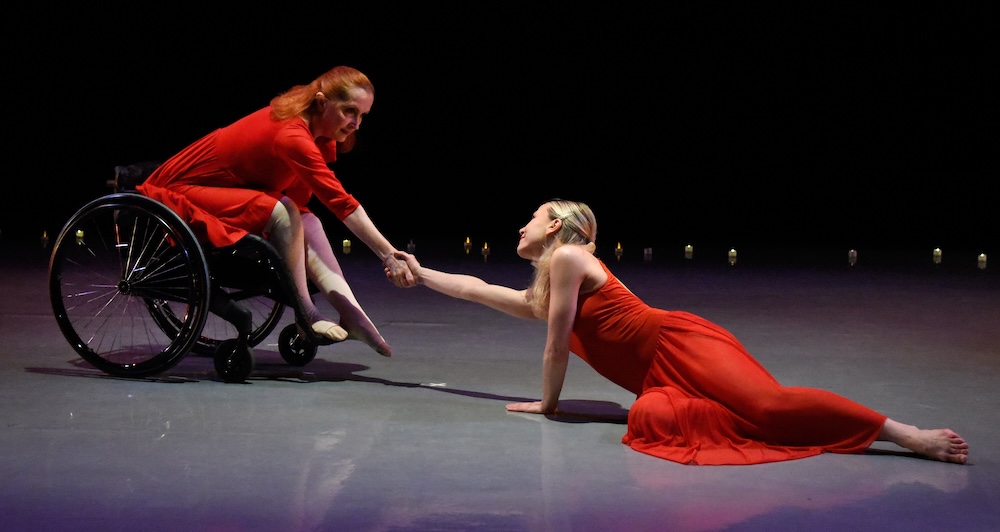
Kitty Lunn, dancer, choreographer, artistic director and tireless advocate for disability rights, passed away on August 18, 2026, at age 76.
Her company, Infinity Dance Theater, announced her passing in a Facebook post, prompting an outpouring of love and admiration.
“Our hearts are heavy at Infinity Dance Theater as we announce the passing of Founder and Artistic Director Kitty Lunn. She once said, ‘I chose the name Infinity because it’s the symbol of never-ending motion.’ Kitty put that principle into practice through her extraordinary career. Her legacy will endure through the countless students she trained and the many professional artists with whom she collaborated to produce works for dancers with and without disabilities.” Infinity Dance Theater Facebook announcement
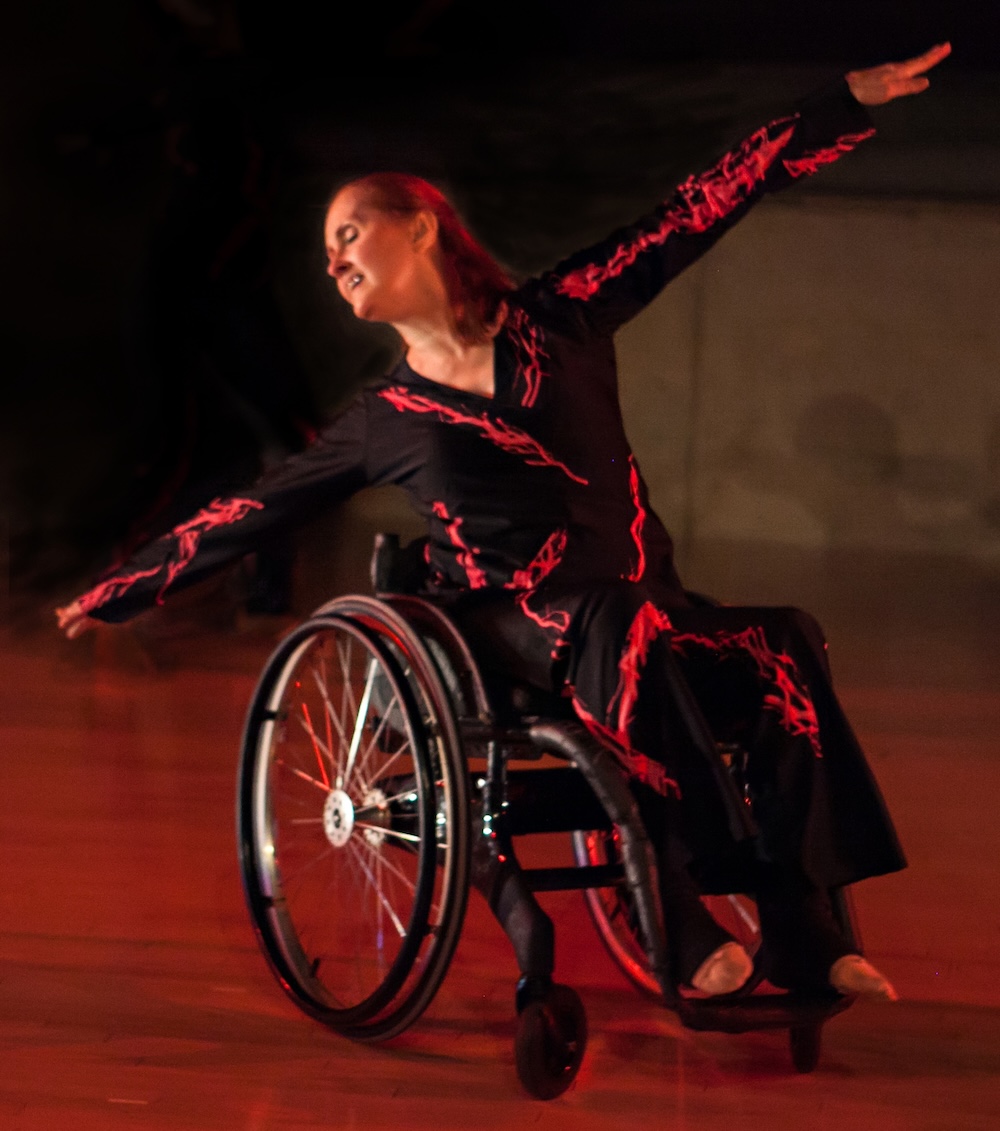
Lunn studied ballet with Lelia Haller in New Orleans, and was performing principal roles with the New Orleans Civic Ballet by age 15. She received a scholarship to The Washington Ballet, where she studied with Mary Day and Edward Caton. There, she performed many of the classics and worked with dance luminaries Martha Graham, Agnes de Mille, José Limón, and Erik Bruhn.
In 1987, she had an accident while preparing for her first Broadway show. An untimely slip on ice caused her to fall down a flight of stairs and fracture her spine. Her dreams of Broadway shattered, she spent almost three years in acute-care hospitals, undergoing multiple surgeries and intensive physical therapy.
Her physical therapy did not follow the traditional rehabilitation route. In a 2009 interview with The Brooklyn Rail, Lunn spoke about her therapist, Shaw Bronner, a dancer. She came to her apartment five days a week, five hours a day, for five years. She credited Shaw with helping her overcome obstacles and inspiring her to think of the wheelchair as freedom and independence, rather than a downer.
After her accident, Lunn believed her dancing career was over. Eventually, she began experimenting with transferring ballet technique into a wheelchair. She returned to class at Steps on Broadway, using a special lightweight wheelchair designed by her late husband, actor and designer Andrew Macmillan. She spent years figuring out how to translate ballet movement into a seated body.
Her philosophy wasn’t “dance therapy.” She believed dancers with disabilities deserved real dance training, technique and artistic standards, not merely therapeutic movement. That distinction was vital to her. She felt the arms, wrists and fingers could take on the expressive and technical functions that the legs, ankles, and feet perform for a standing dancer.
In 1995, she founded Infinity Dance Theater to be more than “a wheelchair company.” The premise was that dancers with disabilities and nondisabled dancers should perform together, with equal weight onstage. She rejected the notion that disabled dancers were an inspirational sideshow, moving them to the main focus of performances. In doing so, she changed the definition of who and what a dancer could be.
Infinity Dance Theater’s longtime Music Director, William Catanzaro, talks about her emphasis on the necessity of understanding the foundations of drama in order to choreograph a coherent dance work. He also mentions her generous nature and their collaboration on the 2023 production Frida Kahlo and the Dance with Death, performed at Theater for the New City to strong critical reviews.
He reminisces about playing for her classes, saying, “Among all things, she would constantly crack jokes. She was also a philosopher. She was an incredible, resilient person and artist. She will be missed.”
She offered education and teacher training through the company. She designed the program because young people with disabilities were contacting the company wanting to study dance but were finding that many doors were closed to them.
Nicole Marques, one of her students, says, “One thing that she would always say to me is when you are a disabled dancer, it’s so imperative to move because, in Kitty’s words, ‘if you don’t move it, you lose it.’” Marques added that Lunn told her that no dancing in her life was like no breath in her lungs.
She developed a unique transposition technique for dancers with disabilities, with the core idea of not inventing an entirely separate form of dance. Rather, she taught educators how to take ballet, modern, jazz, or a technique they already knew and transpose it for students using wheelchairs. She wanted the teachers to learn how to open the doors for their students.
The ultimate goal was to enable those students to participate in regular dance classes and performances, rather than being put into separate therapeutic programs. Student Luznérida Rosado recalls Lunn saying, “You can cry, but never stop moving! You are not your disability.”
She was a fearless advocate for disability rights. Lunn served as a Councilor of Actors’ Equity and as a board member of AFTRA, along with many other roles. Her union work produced actual changes in performers’ contractual rights.
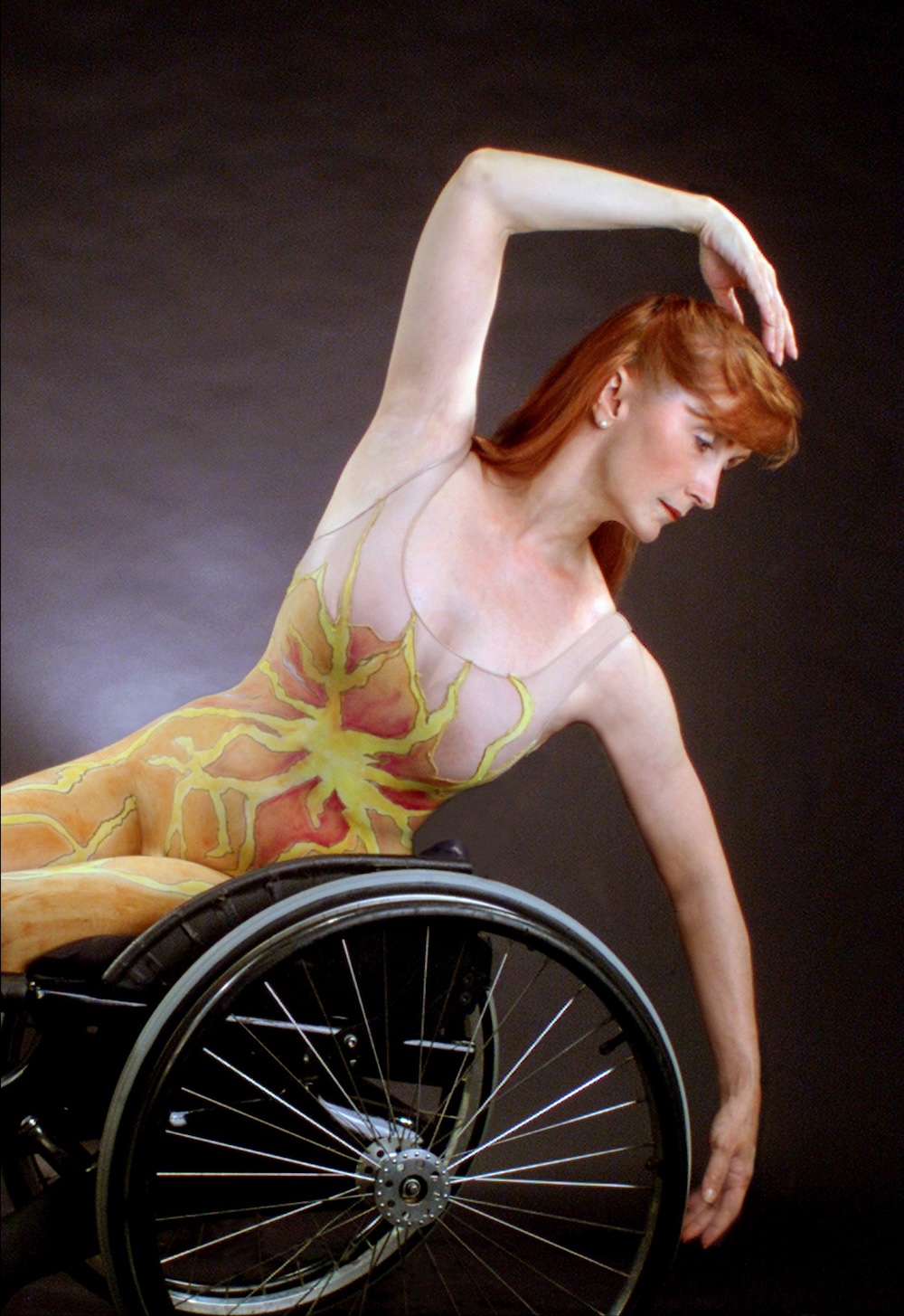
Her work with the performing unions established provisions for performers including accessible audition locations, interpreters for deaf actors, advance audition materials for blind and visually impaired performers, notification of disability-specific casting opportunities, and inclusion of actors with disabilities in the definition of nontraditional casting.
Anita Hollander, cast member of the new musical Freak the Mighty, says, “What I’m doing right now (dancing in a major musical on one leg and crutches) is what Kitty spent her life fighting for. We knew each other personally and professionally for many decades. We shared frustrations and horror stories but also joys and successes. She was a force to be reckoned with.”
Lunn showed great courage in taking on powerful New York institutions. She brought separate lawsuits against Lincoln Center and Radio City Music Hall over accessibility. Her victories in the courts forced both venues to make improvements to accommodate people with disabilities.
Lunn wrote the following for a concert engagement: “Many people consider people using wheelchairs to be ‘bound.’ I hope we will begin to be seen as unbound and boundless.”
Infinity Dance Theater posted on Facebook that they are currently exploring meaningful ways to honor Kitty and her legacy. They will share more details as they become available.
By Mary Carpenter of Dance Informa.
Share this: