Symphony Space, New York, NY.
February 6-9, 2026.
Technological development moves at the speed of light these days, it can feel like. A plethora of questions about such development swirl in the ether, many that poignantly ask about our humanity in relation to emerging technologies; will such innovations as spatial computing and AI make us lose touch with our essence, and is the convenience worth it?
Mere words can feel inadequate for addressing such gargantuan questions. Abstract art forms, such as dance, can offer us another language and shift our perspective to new possibilities. The Dance on Camera Festival has always platformed bold, insightful work that can expand our language and perspectives in such ways.
Poignantly, this year’s selections (33 in total, from 12 countries) call upon forward-thinking approaches to offer enticing glimpses into something much more organic, ancient, and fundamental: the depths of the human soul. The three works detailed below are glittering examples of such leveraging the technological to highlight the spiritual.
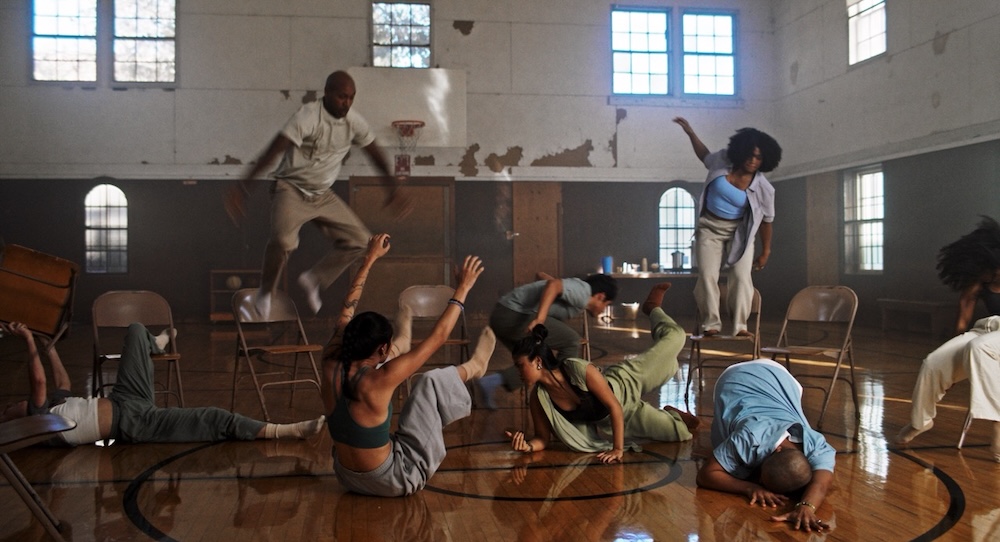
Amanda Beane’s Chair Deconstruction (2024) offers a thoughtful and compelling questioning of our sedentary culture. It juxtaposes the constriction of physical stasis and the freedom possible in the moving body. The film opens on individuals sitting in folding chairs, arrayed in a half-circle in a gymnasium setting. The silence in their bodies echoes the silence in the score – until both movement and music rise. The movement is angular and slightly propulsive, with tiny explosions of energy – small releases of dormant kinetic force within muscle and sinew.
The dancers roll their spines as they continue with those tiny explosions of movement energy, creating a sense of indulgence; there is deep pleasure in this movement, of the release of that energy we contain through static days. Broken tones in the score match the relative lack of continuity, of flow, in this movement. Frequently shifting camera angles add to that freneticism, that intermittency.
Yet, rather than rising anxiety, there is a calm at hand: a release of tension, the long exhale after a deep and held inhale. It is a release into the natural human state: of movement, of physical engagement, of sharing that state with other humans.
Two dancers in the center of the chairs become an emotional core; most of the close-ups are on them and their expressions. A moment of an embrace between them is a deep and tender human sharing, shared with us without a word.
Later, dancers indulge in their own movement while closely connecting in space: sharing in the private bliss of personal movement. There is liberation in all of that, too, the freedom to feel and to express such feeling, to genuinely connect with another – no reservations at hand.
The movement begins breaking out into the gymnasium setting: spacious reaches, big smiles, and the goofiness of chairs over heads and doing “the worm” right on the floor. There are even athletic endeavors, such as backflips, and luxuriating in floor-based movement.
The virtuosity of many different movement styles is welcome, as is the movement of simply being. After abandoning the confinement of chairs, their limit is all of the plentiful space that their bodies can devour. “Shadow (an insert)” applies a touch more tense mystery, with duet dancers moving in a semi-spotlight. It’s an effective shift to keep viewers’ curiosity piqued, just a dash of variance.
The work winds down with voiceover through a school loudspeaker, bringing expressions speaking to “whoops…okay, back to the day, back to the grind.” One dancer’s eyes roam slightly awkwardly: “no one saw that, right?”. They rein in those visceral impulses once again and stack their folding chairs in an orderly fashion. There is a feeling that their day and their responsibilities continue, but at least they experienced this kinetic freedom – and will hopefully remember it fondly enough to return soon.
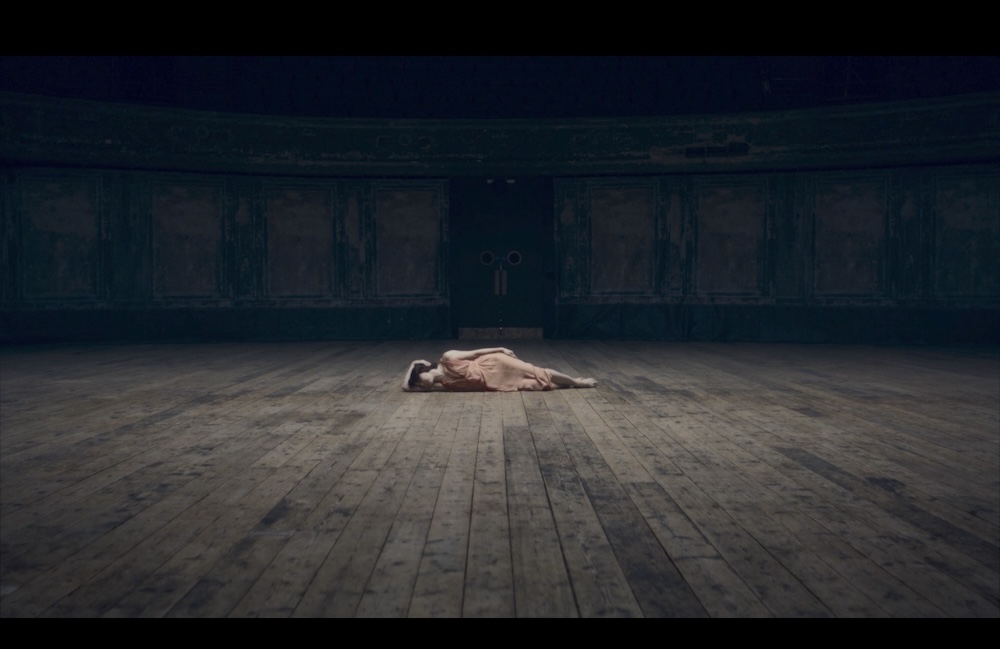
Grigory Dobrygin’s Five Brahms Waltzes In The Manner of Isadora Duncan (2025), with choreography from Frederick Ashton,is a memorable honoring of Isadora Duncan’s legacy: her movement packaged in a 21st century sensibility yet very much retaining its essence. Duncan affirmed the importance of boiling down to the most essential components and stripping away what was superfluous. This work carried that idea with elegance and aplomb. Soloist Lynn Seymour moves with equal parts impassioned strength and receptive softness – thus memorably representing Duncan’s ethos of nature’s fluid balance, its dynamic and harmonious integration, embodied.
The piano score rises along with a spotlight coming up on Seymour. She wears a draping dress of light fabric, and the space is Spartan: it’s just her, the movement, and music. She slowly takes to her feet, her hands dexterously gesturing through her kinesphere. Her momentum builds as the score also does, to have her soon waltzing, stepping, and reaching through the open space all around her – the camera panning out to catch all of this ambulation.
The solar plexus leads her explorations of the space, of her own body’s possibilities, just as Duncan would want. She seems to experience an inwardly reflective moment between separate scores; she doesn’t let the power of the moving moment go unprocessed, unappreciated. That more reflective demeanor continues in the score, with a more somber score and lower lighting to match.
The movement vocabulary stays fairly consistent – with elegant shaping of pedestrian skips, steps, reaches, lunges, and the like – yet also takes on a more yearning quality. Through such tonal shifts, the short film offers a pleasing emotional range. There is strength in her softly waving arms, with her motions of pushing and pulling. Her legs deeply lunge, her gazes clear and sharp.
A scarf drops into the open space, into which she runs with abandon: the scarf trailing behind her. A spotlight follows her movement through the space, elements as simple as small weight shifts and crossing steps made luminous through her kinetic absorption. Soon comes a sprinkling of something that appears more “technical” – a foot delicately placed to a knee, running with gesture and clear form – yet she does not lose the simultaneous ease and abandon of the prior sections.
Her next prop is handfuls of flower petals, which feels like an acknowledgement of Duncan’s deep connection to the natural world. Seymour savors a moment of just holding them, a reminder to take those slow, intentional moments of appreciating nature’s gifts.
Such patience, a cadence of these pauses between bursting energy, allows such energy to settle in and fully marinate for viewers. She then spreads the flower petals in a circle, then moves around it, taking effervescent flight: a more athletic embodiment of Duncan’s connection with nature, embodiment all the same, no more or less worthy for its height or speed.
In conveying the Duncan ethos through such a rigorous, yet easeful presentation of movement, this film reminds us of the timelessness of that ethos. It comes to us viewers wrapped in a “post-post-modern” sense that early twentieth-century work can come to us in a twenty-first sensibility, and there need be no discordance in so crossing centuries. If approached and offered with intention and rigor, anything can go, and mean much – and that was certainly the case with this work.
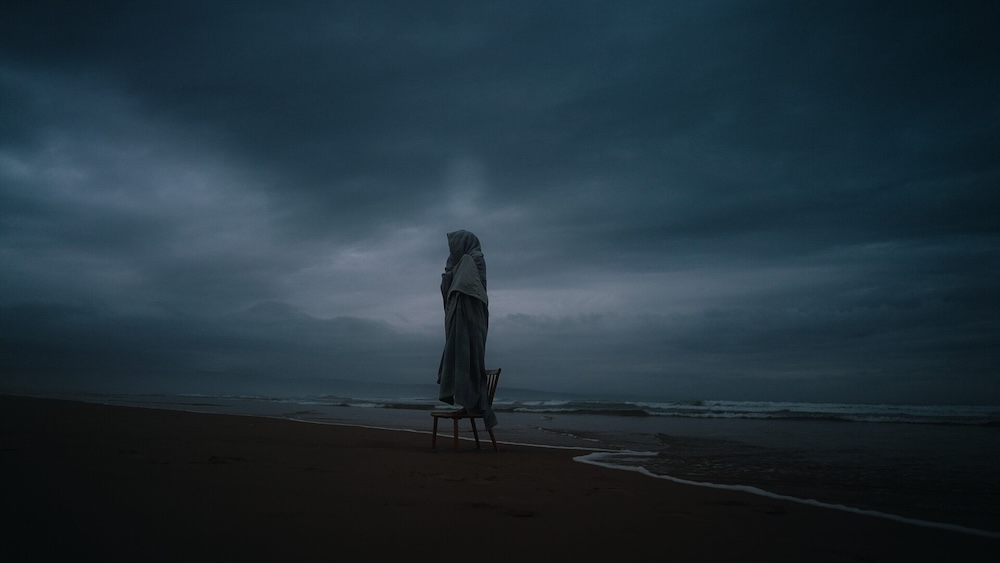
Jessica Nupen’s Loom Body (2025)is a fresh, bold movement metaphor delivered in a thought-provoking short film – pairing the organic movement of the human body and that of the mechanized loom. A blurred image brings us into the film, slowly getting clearer as we get closer to an individual. Frames splice the movement of that individual with that of a loom: both with a jerky, continuous, and rhythmic quality. Other bodies accumulate in the frames, moving with that same mechanized quality.
The perspective shifts to include what is made in the loom; two women dance with large cloths, and with each other. With them reaching, pulling, and sharing weight, the shots move with a certain urgency, even an anxiety. Yet, just as in Chair Deconstruction, there’s somehow also a calm at hand: in the beautiful natural vistas, the rhythm of the loom sounds, the unforced and proudly assured movement style of the two dancers.
The camera brings us into a factory with the dancers moving in those loom qualities: accented, angular, consistently rhythmic. Poetic voiceover ties these qualities and actions to ideas of work, self-worth, and the balance of obligation to the other and to the self. It’s a fairly abstract meditation on such big ideas that one could likely tease apart and ponder for some time.
The movement is the heartbeat of such big ideas, with much richness to savor short of any circular ruminations of existence. Just as with each of these three works, keen and thoughtful use of filmic technologies opened small windows into the vast expanses of what it means to have a yearning spirit in this spinning world.
The 2026 Dance on Camera Festival thus underscored that the digital and the organic do not have to be at odds – rather, when brought together with intention and command of craft, can help illuminate what it means to be human.
By Kathryn Boland of Dance Informa.
Share this: