Tag Archive | "ballet"

Dancing to Live Music


By Laura Di Orio.

George Balanchine said, “See the music, hear the dance.” The choreographer, like many dancers, found inspiration for movement within music. To be able to move one’s body to music can be magical enough. And to be able to dance to live music is, for many dancers, a dream.

Here, Dance Informa speaks with professional dancers who enjoy the privilege of performing to live music. The Australian Ballet’s Brooke Lockett, Miami City Ballet’s Rebecca King and Joffrey Ballet’s Fabrice Calmels share their expertise and the joy of making the music come alive.

Do you prefer dancing to live or pre-recorded music?

Brooke Lockett, dancer with The Australian Ballet, backstage during a performance of Sugar Plum. Photo courtesy of Brooke Lockett

Brooke Lockett, Coryphee with The Australian Ballet
The positive to recorded music is you get an inner rhythm and timing, and the work becomes very consistent, and in some cases, almost predictable. You can never assume anything when it’s to live music. The tempo can be faster or it can slow down parts you prefer faster, but all issues aside, nothing gives me goose bumps more than the sound of a sublime live orchestra playing Tchaikovsky’s Swan Lake. The curtain goes up and the music floods onto the stage from the pit. It goes through your bones and brings everything you have been rehearsing to life.

Fabrice Calmels, Principal Artist at the Joffrey Ballet
For me, it is preferable to dance to live music, but there are actually times when I find pre-recorded scores a safe alternative, like in a very difficult performance on tour.

For you, what is the biggest challenge of dancing to live music?

Rebecca King, Corps de Ballet Dancer with Miami City Ballet
The music’s tempo can be a challenge. Even though the conductor knows exactly what the dancers need, the speed can still vary from performance to performance. It is our job to be completely in tune with the orchestra because you never know what is going to happen. Because the musicians, like us, are susceptible to human error, sometimes the music can sound different, which can catch the dancers off guard. This is the beauty of live theater – you never know what you are going to get.

For you, what is the greatest reward of dancing to live music?

Brooke Lockett
When a ballet is extremely difficult or you are quite nervous about a role, music is an incredibly powerful escape that has the ability to take you away to another place on stage. Without it, I don’t know that my profession would be as powerful or as rewarding.

Fabrice Calmels
Here’s what is going on with live music: You have a full orchestra with different instruments working together as a team, following a score and led by a conductor, who, in turn, is watching and observing every move from us, the dancers. With the conductor’s expertise, he is able to match the choreography with the music and create the flow. For me, it is communication at its best.

How does dancing to live music compare to dancing to recorded music?

Fabrice Calmels, principal artist with the Joffrey Ballet, in Jessica Lang's 'Crossed'. Photo courtesy of Fabrice Calmels

Fabrice Calmels
The beauty of live music is the clarity of the sound, and performing at Chicago’s Auditorium Theater, we have one of the best engineered houses in the world. It was built for live music, and its acoustics are incredible. Live music is simply rich. There is something about the quality of instantly created sound and vibration that is priceless. Recorded music has so many factors that come into play, such as how well the track may be recorded, the quality of the player or speakers, static, or speakers that sometimes do not separate well the low-bass from the mid-bass.

Brooke Lockett
The sound is the biggest comparison. It’s like when I see a live music concert, and no matter how loud I play the CD after the show I can never recreate that same feeling or volume. You hear so many more elements and instruments when it’s live.

For a piece that you will eventually perform to live music, what is the process of incorporating the musicians or conductor into the rehearsals?

Rebecca King
Our conductor, Gary Sheldon, spends a lot of time with us in the studio during rehearsals. He not only comes in the week before we take a program to the theater, but he also tries to be around when the choreographer or repetiteur is in town working with us. He has told me that he finds it very important to familiarize himself with our works as much as possible. This makes it easier for him to know when certain cues are coming up, or what tempos different dancers are comfortable with.

Do you usually try to build some kind of rapport with the conductor and musicians?

Brooke Lockett
Absolutely. Sometimes you are feeling a little flat or have an injury, and it’s important for them to know those things. And for those shows when you are on fire and loving it, you can really bounce off one another.

Rebecca King, dancer with Miami City Ballet. Photo by Susan Stocker, Sun Sentinel

Rebecca King
I think all the dancers at Miami City Ballet have a great rapport with our conductor. He always makes an effort to say hello in the hallways, wish you “merde”, or good luck, before a show, and commend you on your performance after the curtain comes in. You can tell he really makes an effort to know the dancers, which we really appreciate. We don’t have a lot of interaction with the musicians, but we do always make an effort to thank them when we see them leaving the pit. Without them, their talent and extraordinary effort, we would not be able to do what we do.

What’s been a memorable moment of performing to live music?

Fabrice Calmels
The beginning of Lar Lubovitch’s production of Othello starts with a very powerful overture by the orchestra. This leads to the first dance, “The Prayer”, when Othello rises from a kneeling position for a stunning solo done only by creating circular movement with his arm. In every rehearsal and performance, I become Othello in that moment, located near the first panel of the stage, waiting for the main curtain to go up. I am already kneeling with both hands gathered as a prayer resting against my forehead. The orchestra is playing the score, the drums become explosive and so powerful that I feel my hand bouncing up and down from the vibration they create from underneath me. It completely gets in me, my heart begins to beat like a drum. It’s an experience unlike any other.

Brooke Lockett
We had a guest conductor for a season of Swan Lake once and we had all been talking about how slow it was, and in our final Act II entrance as a Cygnet it was like we were doing Willies from Giselle, it was so slow. We had the giggles for the entire entrance and had to quickly pull ourselves together.

Rebecca King
My first year in the company, we were performing Balanchine’s Symphony in 3 Movements, with a score by Stravinsky. Ask any dancer and he/she will tell you that the complexity of Stravinsky’s music has no doubt kept them up at night. Trying to memorize every note and count is no small feat. During a section of the first movement, the three principal couples were on stage, and there was a brief pause followed by a change in the music. Something was missing. The dancers suddenly realized that the instrument that was, at that moment, in charge of keeping the beat was nowhere to be found. They started counting aloud to each other to keep themselves in sync. Thankfully, this confusion only lasted a few bars before another change in the music arrived. We found out later that the musician playing the instrument in question had fallen asleep in the pit!

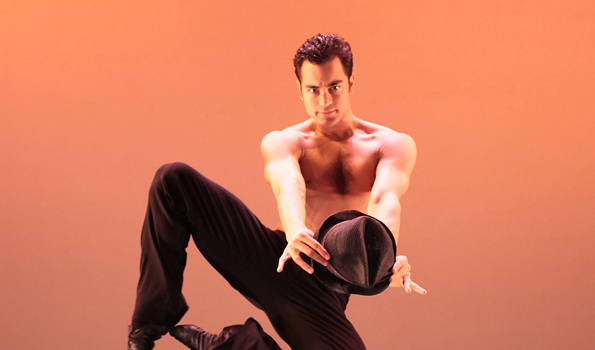
Top photo: Fabrice Calmels, principal artist with the Joffrey Ballet, in Edwaard Liang’s Age of Innocence. Photo courtesy of Fabrice Calmels.

Published by Dance Informa dance magazine – everything dance in Australiadance news, dance auditions & dance events.

Posted in FeaturesComments (0)

Aussie Stephanie Williams Joins American Ballet Theatre


By Rebecca Martin.

Australian dancer Stephanie Williams has gone from strength to strength since leaving The Australian Ballet in 2011 and joining Het Nationale Ballet in Amsterdam for six months before settling into her new home of New York where she is one of American Ballet Theatre’s (ABT) newest recruits.

Since commencing her ballet training at the age of 8 with the Marie Walton-Mahon Dance Academy in Newcastle, Stephanie has been a dancer to watch.  Moving to Melbourne as a teenager to train at The Australian Ballet School, she received the Gold Medal at the 10th Asian Pacific International Ballet Competition in Tokyo, graduated at the top of her class, and performed the dual role of Odette/Odile in Swan Lake.  In 2007, Stephanie joined The Australian Ballet as a Corps de Ballet member before being promoted to Coryphee the following year.  While with The Australian Ballet, Stephanie performed many Soloist and Principal roles and was a guest artist with Christopher Wheeldon’s Morphoses, again performing Principal roles.  2009 saw Stephanie work with choreographer Wayne McGregor on his new piece Dyad 1929, and become the youngest ever winner of The Australian Telstra Ballet Dancer of the Year Award and People’s Choice Award.

In the lead up to the world premiere of Ratmansky’s Firebird in California, Stephanie found time to speak with Dance Informa about life since leaving Australia…

You’ve done quite a bit of travelling lately, having gone from The Australian Ballet to Het Nationale Ballet in Europe, and now with American Ballet Theatre in New York. How are you managing so far away from friends and family?

The past year has been a whirlwind of travel, exploration and life change. At times it’s been wonderful and exciting and at other times scary and daunting, but all part of an incredible journey that has given me a fresh perspective on life and dance. The beautiful people that have come into my life have had a huge impact on me and they have helped me with the major changes that come with moving to the other side of the world. I have to say I am extraordinarily fortunate to have the most beautiful, supportive family whose love and belief in me has never wavered, even when I’ve felt lost at times. And although I miss them terribly, I am in an extremely positive, motivating, passionate and inspiring environment every day at ABT. This fills me with a sense of happiness and allows me artistic fulfillment, of which I couldn’t have ever imagined and appreciate so much. And thank goodness for Skype!!

Stephanie Williams of American Ballet Theatre. Photo James Hooper

Any interesting cultural differences you’ve come across?

New York is incredible in that I feel like it’s so open to different styles and foods and that’s why it’s so exciting because there is always something new and interesting to try and seek out. I’m not a good sleeper so the fact that I live in ‘The city that never sleeps’ works perfectly for me!
Amsterdam is like no other place, with canals and bikes everywhere you look. I used to love seeing an entire family on a bicycle – the mum riding with the two kids on the front, baby in arms, perhaps an umbrella and mobile phone in hand and some groceries hanging off the handle for good measure. All executed without a care in the world! And then parked amongst another hundred bicycles so the street looks like a twisted metal junkyard! What a truly amazing sight and the epitome of Amsterdam.

Do you notice differences in European and American dancers compared with Australians?

There are definitely differences in dancers from Europe and America compared to Australia and I think a lot of it comes down to training and cultural differences. But what I think is amazing about dance is that it is universal. All around the world there are inspiring artists expressing themselves through movement and to me I feel that it is such a special, beautiful way to share one’s emotions. No matter your training, background or where you’re from, each individual has his or her own unique way of expressing that through dance. That is incredible.

Did you have trouble securing a Visa to work in the US?

I was actually very lucky with securing my Visa. ABT helped by petitioning on my behalf and they required a lot of paperwork from my time dancing with Het Nationale Ballet, Australian Ballet and Morphoses The Wheeldon Company, so my mum was an absolute hero and compiled everything and sent it to ABT. Once my petition was approved I secured my Visa. It has a name which I love. Apparently I am an “Alien with Extraordinary Talents”! I then just had to go to the US Consulate in Amsterdam, but was very lucky with how smoothly it all came together.

Is living in New York and dancing in one of the world’s best companies a dream come true?

I have to admit I do pinch myself most days. I have found a happiness and an appreciation for what I am fortunate enough to do every day. Living in New York is incredible. It is a city to get totally lost in, to explore and to dream. American Ballet Theatre is a very special organisation and to be a part of it is very humbling and inspiring. But over the course of the last 15 months I have grown up a lot (as stereotypical as that sounds). I have found such beauty in people, places, dance and life and to be able to recognise and appreciate it. That, to me, is the dream I have journeyed to.

What shows do you have coming up with ABT?

At the moment I am in Costa Mesa preparing for our triple bill which consists of Merce Cunninghams’ Duets, Christopher Wheeldons’ 13 Diversions and the world premiere of Ratmanskys’ new Firebird. I will be dancing in 13 Diversions and Firebird which I am really excited about! Being involved in the creation of Firebird has been incredible and inspiring each and every day. Working with Ratmansky and seeing this ballet come together has been amazing and I’m so excited about the premiere this week!

Will Australian audiences see you on stage at home in the future?

I really hope I can come and dance in Australia sooner rather than later, so I will definitely be looking at how to make that happen.

Top photo: Stephanie Williams dances in La Bayadère with American Ballet Theatre. Photo Gene Schiavone.

Published by Dance Informa dance magazine – everything dance in Australiadance news, dance auditions & dance events.

Posted in InterviewsComments (0)

Dance Academy’s Alicia Banit & Tom Green


By Deborah Searle.

As dancers across the country are enjoying season two of ABC3’s hit dance drama, Dance Academy, Dance Informa spoke with two more of the shows young stars – Alicia Banit who plays ‘Kat Karamakov’ and Tom Green who plays ‘Sammy Lieberman’. Tom spoke with Dance Informa directly from Los Angeles as he is keeping busy filming a pilot season for another show in the States.

If you didn’t see our interviews with co-stars Jordan Rodrigues and Dena Kaplan, click here.

What do you enjoy most about Dance Academy?

Alicia
Dancing and acting have always been my favorite things and with this show I can do both! It’s my dream job.

Tom
Being part of something so original and well received, and having people contact you and tell you it has positively influenced their life in one way or another.

Did you enjoy filming season two?

Alicia
Season two was an absolute blast to film. It was great to be back with the cast and crew from season one and the new cast mates just heightened the love. It’s awesome to have a group of people with the same passion and that get along so well. It makes the whole experience so enjoyable.

Tom
Season two was a lot more fun than season one. Purely because we all knew each other much better than the previous season, we had better storylines, better routines and we were all much more familiar with our characters and their journey.

Characters Ben (Thomas Lacey), Kat (Alicia Banit) and Sammy (Tom Green) perform in an episode of Dance Academy, season 2. Photo: Mark Rodgers

Do you relate to your character?

Alicia
I absolutely relate to my character. Personality wise Kat and I are very similar with us both being the life of the party and quite quirky, but Kat deals with some family situations that aren’t ideal for her and I’ve always had a very close and loving family around me. Kat is more of a rebel than I am so it’s fun to be able to bring that side of me out through Kat.

Tom
Sammy and I both have a similar sense of humour, so I can relate to that, as well as his determination.

Tell us about your dance background.

Alicia
I’ve been dancing since I was four at T-Jam Dance School doing tap, jazz, ballet and hip hop. At the age of 12 I got a scholarship into The Victorian College of The Arts Secondary School (VCASS) and learnt new dance styles like contemporary, character and acrobatics. I’m now 21 and I still haven’t stopped dancing!

Tom
I started dancing when I was about 11 or 12 just because my sisters did it. Plus, at the time I was singing a little so I needed to know how to move on stage. I trained at the Joanne Grace School of Dance in Wollongong, NSW for about eight years in ballet, contemporary, jazz and modern. Once I turned 16 I would catch a train up to Sydney every Saturday for a hip hop class at Urban Dance Centre.

What’s your favourite dance style?

Alicia
I love hip hop and during the second season of Dance Academy I rediscovered my love for tap! They are both such free dance styles and allow you to bring your personality into them.

Tom
Contemporary or hip hop.

Tell us about your acting background.

Alicia
I started acting at the age of 6 when I got a small role in a film called Dead Letter Office. After that I did lots of comedy skits on shows called I.M.T (In Melbourne Tonight) and Rove. I stopped acting for a little while when I really focused on my dancing and then at the age of 16 I started up again getting roles in Summer Heights High, Neighbours, As The Bell Rings, Rush and Tangle. Then finally I got my dream job on Dance Academy!

Sammy (Tom Green) dancing in a scene from Dance Academy

Tom
I had always been involved in plays and shows at school and at the local theatres as a kid. When I was 12 I was accepted into a drama group called Kids Casting Agency where I would learn drama exercises and theatre sports every Saturday for a year. At the end of the year I left the group and went back to school but I was still getting called in for auditions. I booked my first job when I was 16 on a telemovie called Emerald Falls which unfortunately never got picked up. After that I went back to school and ended up auditioning for a short film called The Ground Beneath and was lucky enough to score the lead role. That film opened a lot of doors for me and my career; I signed with an agent, won several awards around the world and got to work with some industry professionals on other jobs.  Since then I’ve been lucky enough to have worked around the country on a couple of feature films, short films, corporate films, TV shows and commercials.

If you weren’t cast in Dance Academy, what would you like to be doing?

Alicia
I’d love to still be acting and dancing. I’d probably be in America auditioning for films and shows over there.

Tom
If I wasn’t cast in Dance Academy I would have probably gone back to school and finished year 12. If I wasn’t acting I have no idea what I’d be doing. It would have to be something in the arts.

What advice would you give to young dance/acting hopefuls?

Alicia
The advice I always give is to never give up. The performing industry is tough and cut throat and there are a lot of rejections. You have to not take that rejection to heart and concentrate on your goal. Do as many classes, auditions and performances as you possibly can to get your confidence up and always believe in yourself.

Tom
You have to work extremely hard in both fields if you want to pursue them as a career. If you want to dance, don’t just stick to the same styles, go out and learn new things from different teachers at seminars or workshops. If you want to act, watch a lot of classic films, become familiar with techniques, actors, directors and photographers. Experience as much as possible.

Top photo by Steve Brack.

Published by Dance Informa dance magazine – everything dance in Australiadance news, dance auditions & dance events.

Posted in Interviews, Top StoriesComments (0)

First Position Dance Doco


By Rain Francis.

It seems now is the hour for marvellous dance documentaries. 2011′s much anticipated Pina by Wim Wenders did not disappoint and then there was the memorable and inspirational Life in Movement. Later this year Australian dancers and film fans can look forward to what has been called “an enormously satisfying”* documentary, First Position.

Produced and directed by ex-dancer Bess Kargman, First Position follows six young dancers as they prepare for the Youth America Grand Prix. Every year the prestigious competition attracts over 5000 applicants, of which 300 are selected for the finals in New York City. It is an opportunity to be seen by the world’s top dance schools and companies, who may offer scholarships and contracts based on the dancers’ performances. The stakes are high.

The six dancers on whom the film focuses share a fierce determination and a love of dance, but this is where the similarities end. With origins as diverse as Sierra-Leone, Israel and California, their upbringings differ greatly. Kargan sheds light on each dancer’s family life, circumstances and path thus far. Parents and teachers are also interviewed, giving further insight into the way of life these young dancers are entwined in.

In the same way that Black Swan has been embraced by an audience beyond balletomanes, First Position is sure to engage even the non-dancer. It has won the Audience Award at both DOC NYC Film Festival and the San Francisco Documentary Festival in 2011, and is part of the official selection for several other festivals the world over. Film Journal International called it “a supremely feel-good film”, Criticize This called it a “masterpiece”. First Position opens in cinemas in the US on May 4 and will open in Australia later in the year, with the date yet to be confirmed.

In other dance film news, A Life for Ballet is due for release in April. Directed by Marlene Ionesco, this dance film explores the history of ballet between 1954 and 2011. With the romance of choreographer Pierre Lacotte and his muse Ghislaine Thesmar as a centrepiece, A Life for Ballet features performances from the Bolshoi, the Kirov and the Opera de Paris, including appearances by Rudolf Nureyev, Agnès Letestu , Michael Denard, Evgenia Obraztsova and Svetlana Zakharova. As with most great films, you might not find this one in the usual cinemas, but selected theatres such as Melbourne’s Classic and Nova will have it.

*Alissa Simon, Variety

Published by Dance Informa dance magazine – everything dance in Australiadance news, dance auditions & dance events.


Posted in FeaturesComments (0)

Dance Quiz – Australian Choreography


By Rain Francis

1. Who choreographed the Australian production of Andrew Lloyd Webber’s Love Never Dies?

a) Graeme Murphy
b) Tim Harbour
c) Jerry Mitchell
d) David McAllister

2. In 2011, who won the Australian Dance Award for Outstanding Achievement in Choreography?

a) Stephen Page
b) Luke George
c) Stephen Agisilaou
d) Rafael Bonachela

3. Garry Stewart is the Artistic Director and Choreographer of which Australian dance company?

a) The Australian Ballet
b) Dancenorth
c) Expressions
d) Australian Dance Theatre

4. Which choreographer does NOT have a work in The Australian Ballet’s 2012 production of Infinity?

a) Leigh Warren
b) Gideon Obarzanek
c) Graeme Murphy
d) Stephen Page

5. A fusion of which two dance styles best describes the work of Bangarra Dance Theatre?

a) ballet and hip hop
b) ballet and contemporary
c) contemporary and Indigenous Australian
d) Indigenous Australian and hip hop

6. Which of the following is NOT a work by Gideon Obarzanek for Chunky Move?

a) Glow
b) Mortal Engine
c) Human Interest Story
d) Connected

7. Australian Dance Theatre and Leigh Warren and Dancers are both based in which Australian city?

a) Melbourne
b) Adelaide
c) Sydney
d) Perth

8. Which work did Tim Harbour choreograph for the Victorian College of the Arts Secondary School in 2011?

a) Carmen and Jose
b) The Story of Clara
c) Halcyon
d) Songs of Light

9. Which work by Phillip Adams for BalletLab featured in the 2011 Melbourne Festival?

a) Aviary
b) Miracle
c) Amplification
d) Origami

10. Who is the current Artistic Director of Queensland Ballet?

a) Raewyn Hill
b) Natalie Weir
c) Li Cunxin
d) Francois Klaus

ANSWERS:
1 – a, 2 – d, 3 – d, 4 – a, 5 – c, 6 – c, 7 – b, 8 – a, 9 – a, 10 – d.

Photo: Australian choreographers Graeme Murphy, Gideon Obarzanek and Stephen Page with Lana Jones of The Australian Ballet. Photo by Georges Antoni for The Australia Ballet’s Infinity programme.

Published by Dance Informa dance magazine – everything dance in Australiadance news, dance auditions & dance events.

Posted in Teacher Tips & ResourcesComments (0)

Who Cares For The Teachers?


By Chris Bamford.

Being a dance teacher is one of the most rewarding jobs in the world, but I might be a little biased as I am one. There’s nothing more rewarding than seeing a student improve, grow and reach his or her full potential in your class.

But what about the teachers?  We place so much emphasis on the students’ conditioning, care and injury prevention, yet we have a tendency to forget about ourselves.

Long gone are the days where the teacher just sat in a chair with a cane and explained what the students had to do. We teach a lot more visually and practically these days. The teacher generally shows the wrong way and the right way to do steps and movements and goes to the extremes so students can see and understand the differences. This can put teachers at risk, especially when they may not be as fit and limber as they used to be.

Being a dance teacher, and especially a studio owner can be very stressful. You need to wear so many hats and manage many facets of a business from customer service, complaints, marketing and finances to general administration.  Then add an annual concert to the mix, and maybe a summer school and eisteddfod, and let’s face it – we are stressed! So we don’t need to add injury to our lives.

What can dance teachers do to reduce the risk of injury? Let’s start by looking at what some of what the most common dance injuries are

• Muscle strain

• Joint sprain

• Bruising

• Muscle soreness

• Fractures

Understanding what these injuries are and what causes them can help identify problems early, as most teachers do with their students. But what about yourself?  Let’s look at what can cause these injuries during the many hours of instructing and choreographing that each teacher does.

Excessive range: This applies to movement that forces a joint or body part beyond a safe range. For example, hyper flexion at the neck or over-arching the back.

Excessive load: Movement that places excessive weight on or through a joint or muscle. For example, knees bending below 90º when landing or straight leg sit-ups.

Ballistic: Repetitive dynamic movement that stretches muscle tissue beyond the normal range. This sort of movement is often explosive and uncontrolled. For example, bouncing (of knees, spine), overly repetitive kicks, leaps, head isolations and arm flings.

Sustained: The holding of a position that places excessive stress on a muscle group or joint. For example, a coccyx sit or balance on one leg for a long period of time.

Repetitive: Too much repetition can be dangerous. Even safe movements performed too many times can cause injury. For example, jumps, push-ups and lifts.

In my opinion, when you’re teaching for four hours in a row or more, you can’t avoid some of the above movement types, but it’s important to be aware of them and to think about how much we demonstrate a movement if we feel strain, pain or any warning sign. Injury and stress are always going to be in our lives, it’s the nature of the dance business, but here are some tips to help you reduce them:

  • Remember occupational health and safety rules.
  • Get a regular remedial sports massage or visit the physio.
  • If you have injured yourself, but still have to teach, use an assistant teacher or senior student for demonstrating until you have fully recovered.
  • Keep up regular classes for technique and strength. We can get so busy, but we too must be in class regularly. I have heard of large dance studios holding a teachers’ class once a fortnight and rotating who from the staff takes the class. This helps the teaching staff to keep up their technique and fitness.
  • Keep hydrated and eat a well balanced diet.
  • Make sure to get plenty of sleep. You need energy to energize your students and a rested mind to be creative.
  • If you are teaching for long period of time pace yourself and take regular breaks if you can.

At the end of the day, teachers need to remember to take care of themselves. We inspire and nurture talents, yet we sometimes forget to inspire and nurture ourselves. Start to look after yourself so you can continue to give to your students for years to come. Being a great dance teacher is just as important as being a great dancer.

Source: www.curriculumsupport.education.nsw.gov.au/primary/pdhpe/dance/dan004.htm

Photo: © Viorel Sima | Dreamstime.com

Published by Dance Informa dance magazine – everything dance in Australiadance news, dance auditions & dance events.

Posted in Teacher Tips & ResourcesComments (0)

La Traviata


Mrs Macquarie’s Point in the Royal Botanic Garden, Sydney
March 22 2012

By Kristy Johnson.

Thursday 22nd of March, media were treated to a rehearsal of Opera Australia’s La Traviata. Set at Mrs Macquarie’s Point in the Royal Botanic Garden, Sydney, the ultimate romantic opera tells the story of the ‘fallen woman’ or more figuratively, ‘the woman who goes astray’.

An impressive infrastructure installed on Sydney Harbour captured the huge production of Handa Opera’s La Traviata. Guests were invited to view spectacular sets, beautiful costumes, fireworks and a 9-metre chandelier sparkling with Swarovski Elements, suspended above a purpose-built shimmering stage on the waters of Sydney Harbour.

La Traviata is perfect for first-time opera-goers and was a visual treat, despite the poor weather conditions at hand. Due to an onslaught of rain, the production was delayed quite considerably, and when the rain finally eased off, the audience were only able to view a select few acts. Wearing black tie didn’t seem to matter much, when blue ponchos emblazoned with the Mazda logo were being thrown out left, right and centre. Considering the amount of money spent on the production, one would think that some form of shelter, even for the performers, would have been provided. Whilst my guest and I found it quite humorous to be watching Opera in the rain, one could not help but feel sympathetic towards the performers whose costumes seemed to already be ruined by the end of the first short act.

For what we did see of the dancing, Stephen Baynes delivered what you would have expected – great choreography. It was obvious that the dancers were required to possess solid technique and training in classical and contemporary styles. Having seen the dancers rehearse prior to the night, at the studios of Opera Australia, it was a delight to see the finished product.

Emma Matthews, who played the role of Violetta and Gianluca Terranova in the role of Alfredo Germont, did not disappoint either. The vocals were simply incredible.

Overall, despite the poor weather conditions, all had a great night. Delicious catering of gourmet pizzas and champagne ensured guests were kept happy and entertained.

Published by Dance Informa dance magazine – everything dance in Australiadance auditions, dance news, dance events, dance reviews and resources for dance teachers.

Posted in Australian ReviewsComments (0)

Infinity – The Australian Ballet


By Rain Francis.

Arts Centre, Melbourne
February 2012

The Australian Ballet’s 50th Anniversary celebrations have begun with a big, beautiful bang. Infinity is a triple bill of new works created by three of Australia’s most important choreographers, to three commissioned scores.

The evening opens with The Narrative of Nothing, from Australia’s beloved Graeme Murphy. After creating a string of lavish story ballets, including 2011′s Romeo and Juliet, Murphy opted out of the constraints of expressing a narrative, returning to a more neoclassical, purely abstract form. During the creative process, however, he found it impossible to NOT find meaning in the steps being constructed, eventually coming to the conclusion that as humans we need – have always needed – stories. The resulting ballet is a 30 minute exhibition of formidable technique, not necessarily always virtuosic in the sense of being grand and showy, but intricate, flawlessly executed and at times lightning-quick. As Murphy noted, in the various groupings of dancers, the audience is free to find its fictions and fantasies.

The Narrative of Nothing is set to Brett Dean’s Fire Music, dedicated to the victims of the 2009 ‘Black Saturday’ bushfires. Powerful in scope and elaborately detailed, the score is expertly rendered by the choreography. The dancers are dressed in unitards which are covered in minute mirrors – an innovative design of Murphy’s long-time collaborator, Jennifer Irwin.

Unexpectedly, the most traditional classical ballet choreography and costumes of the evening are to be found within a piece by one of our most eminent contemporary choreographers. There’s Definitely a Prince Involved is Gideon Obarzanek’s first major work since departing Chunky Move. It asks questions such as ‘what is ballet?’ and ‘what is love?’, drawing on answers collected by Obarzanek when conducting interviews as part of his research. Swan Lake, as the quintessential ballet, is deconstructed and given a realist’s revamp, shot through with candid, sometimes amusing, often nerve-touching narration. Created alongside the choreography, Stefan Gregory’s score manipulates Tchaikovsky’s famous original, thankfully retaining its faultless essence.

The show-stealer of the second work is easily the contemporary Grand Pas de Deux, narrated by Madeleine Eastoe and danced by guest artists Sara Black and James O’Hara. The two bodies writhe and tumble with invertebrate fluidity, reminiscent of the fabulous dressmaker’s dummy in Dame Peggy van Praagh and George Ogilvie’s production of Coppelia.

For me, the piece de resistance of the evening is Stephen Page’s mesmerising Warumuk – In the Dark Night. Inspired by Yolngu families’ creation stories of the night sky, the work explores the ‘spiritual relationship between people, land and nature’. Various myths are interpreted, including those of the Milky Way, the lunar eclipse and the morning star. Dancers from Bangarra Dance Theatre and The Australian Ballet blend seamlessly, the latter embracing a more weighted movement vocabulary. Throughout, the combination of the dance, David Page’s score and Padraig O Suilleabhain’s lighting is nothing short of hypnotic, but it is Jennifer Irwin’s breathtaking costumes which blow my mind, particularly in the dance of the Seven Sisters.

Infinity is a well-balanced cross-section of the Australian dance palette. It incorporates various traditions and our unique Indigenous culture, whilst nodding to the new directions of our choreographers. Here’s to the next 50 years.

Photo: Graeme Murphy, Lana Jones, Gideon Obarzanek, Stephen Page. Photo Georges Antoni

Published by Dance Informa dance magazine – everything dance in Australiadance news, dance auditions & dance events.

Posted in Australian ReviewsComments (1)

Dance Academy’s Jordan Rodrigues & Dena Kaplan


By Deborah Searle.

The much anticipated Season 2 of ABC3’s Dance Academy starts Monday March 12. Dance Informa spoke with Dance Academy stars Jordan Rodrigues who plays ‘Christian’ and Dena Kaplan who plays ‘Abigail’ in the lead up to the new season.

Tell us about your dance background and training.

Jordan Rodrigues
I started when I was about 13 and trained in all main styles of dance from ballet to hip-hop and haven’t stopped since.

Dena Kaplan
I started dancing at age 3! I have mainly trained in ballet at the Australian Ballet School and with Jane Moore. I also trained overseas in contemporary dance at Alvin Ailey and did jazz and hip hop at Broadway Dance Centre. Dancing has been a huge part of my life from a very young age. I was always eager to try as many classes and teachers as possible.

Did you take formal acting classes before auditioning for Dance Academy?

Jordan
I did drama at school, but that’s about it. After season 1 of Dance Academy I went back to the basics of acting so I could get the formal training behind me and it was an incredible help.

Christian and Abigail in class. Photo: Mark Rodgers

Dena
No- never :)
Only a few private lessons with an acting coach.

Do you relate to your character?

Jordan
Christian does remind me of my rebellious days as an angst-y teen, but I’m not really like that anymore. We both share the same style of dance which is a contemporary/ hip-hop style and we also wear sort of the same clothes.

Dena
Yes, we are both very passionate about dance and extremely driven career wise. I also try to be a hard worker like Abigail. I relate to many of her experiences and obstacles that occur in the dance world and her sensitivity towards her family.

What do you like most about your character?

Jordan
He knows how to get the ladies and I actually take pointers off him too!

Dena
Her sense of humour and dry wit, she is also very honest.

Christian dancing hip hop. Photo Mark Rodgers

What do you dislike about your character?

Jordan
He is a bit closed when it comes to his emotions but that just makes him Christian doesn’t it.

Dena
Her competitive nature, it’s detrimental to herself. She also has a hard time letting people in and embracing new friendships. Plus, she’s very critical of herself.

What has been your most embarrassing or memorable moment on set?

Jordan
I had an amazing experience with the cast shooting some pretty emotional scenes on one of the last days of shooting season 2 and I learnt a lot about myself as an actor that day.

Dena
The amount of times I have fallen over or hurt myself during a dance scene is laughable! I also tend to ruin all my costumes as I am a little clumsy with tea and coffee. There have been many memorable moments. In season 2 I had the pleasure of working one on one with the incredible Rafael Bonachela from Sydney Dance Company.

What is life like behind the scenes?

Jordan
Really good, everyone gets along really well and we have become a family that goes through ups and downs together on and off set.

Dena
Early starts, lots of rehearsals, sore bodies and lots of fun! Constant green room antics and pranks, and music playing.

What do you enjoy doing in your spare time?

Jordan
I love playing cover songs on the guitar, dancing and going to the beach for a surf.

Dena
Travelling! I love being active and fit in my spare time but I also enjoy being at home with my sisters and puppy and watching TV. I fill my spare months off being involved in the other side of the industry by doing styling and makeup. I enjoy being behind the scenes too. Currently I am working on a new project that is keeping me very busy writing and creating!

Abigail performs en pointe. Photo: Mark Rodgers

How has your life changed since Dance Academy?

Jordan
I don’t think I would be as good a dancer if I didn’t have the show to push me to be my best and I also now have people tweeting me in different languages which is pretty cool. However, I don’t know what they’re saying sometimes.

Dena
I have been fortunate enough to continue working in the Film/TV industry which I am so grateful for. I have been living in Sydney too permanently, which is a new change.

What can we expect from your character in Season 2?

Jordan
Christian is going to be a lot more open with himself, friends and his dancing so you will get to see a another side to him and not the mysterious Christian that you met in season 1.

Dena
A huge change! She goes through a very big journey in season 2, lots more dancing and maybe even some singing. Expect to see a few different sides from Abigail this series.

What did you enjoy most about filming Season 2?

Jordan
There was a lot more dancing and more intense story lines that were able to push me as a dancer and actor.

Dena
I absolutely love my cast, they are the most wonderful and talented group of people. I really enjoyed working with our new cast members too – Issi Durant (Grace) and Thomas Lacey (Ben). I also think we pushed our minds and bodies to the limit this series and I am very proud of what we created.

Why will we enjoy watching Season 2?

Jordan
Well apart from seeing the growth of the characters and the awesome dance scenes, we have two new amazing characters that will definitely spice things up.

Dena
The whole series has stepped up a level, the dancing is extraordinary, we have more choreographers involved and the acting is very moving this season. I think the audiences will be hooked!

Catch Jordan and Dena in Dance Academy on ABC3 at 6:30pm every Monday through Thursday, starting March 12.

Top photo by Steve Brack.

Published by Dance Informa dance magazine – everything dance in Australiadance news, dance auditions & dance events.

Posted in Top StoriesComments (2)

La Traviata: Opera Meets Dance


By Kristy Johnson.

Renowned Australian choreographer Stephen Baynes, most notably recognised for his work with The Australian Ballet, is lending his hand to the opera.

An epic new outdoor production of Verdi’s tragic love story La Traviata, will see 16 dancers become a part of the visual spectacle, taking place on Sydney Harbour this March. Perfect for first-time opera-goers, you can expect beautiful costumes, fireworks, spectacular sets and well-rehearsed choreography, all under a 9-metre chandelier made with Swarovski Elements.

Dance Informa sat down with Stephen during rehearsals to discuss the process and challenges of choreographing for the opera.

Stephen Baynes

How have rehearsals been so far?

It’s such an unusual set-up with this amazing huge stage and quite an unusual configuration too. We’ve had a week out at Olympic Park with the singers, but this is actually my first time with the dancers today. And the dancers are great. It’s been good.

Is there any difference choreographing for an opera, as opposed to the ballet?

Oh yes. As far as making up steps, it’s not that different really. I think the particular thing about this situation is that in a way, the actual choreography is the actual steps. Whilst they’re important, we want to have something that looks good. It’s more like the atmosphere you create and how it’s going to combine with the chorus in this particular thing, how it’s going to come together as a whole. In fact, I didn’t really want ‘oh here come the dancers to do their little debut’. I want it to be really organic, but this party is a really out there party. It’s quite an underground type of thing and these people are all dressed up. They’re dressed up as gypsies and matadors, and they’re putting on a show.

During the audition phase were you looking for dancers with a strong contemporary or ballet background?

They had to have a bit of a classical background I think. It’s like singing; you need someone with that basic training. Contemporary wasn’t so important. It was more important that they had a good schooling and that they would be able to pick up the choreography. I wanted to see a lot of style and pizzaz and they came with that straight away.

Are the dancers from contemporary based companies?

A few of them have told me that they’ve worked with the opera quite a lot before. I think some of them are more commercial dancers, and a few girls look like they’ve come from contemporary companies.

Stephen Baynes rehearsing for La Traviata with the dancers

Were you already familiar with the story of La Traviata?

Oh yes! I’ve seen the opera many, many times, so I certainly know it well, which was a help. If I was choreographing for an opera that I had never seen or heard before, that might have been difficult (laughs). I go to the opera a lot, although this is the first production I’ve actually worked on. I jumped to the challenge because I do like the opera.

And will you be returning to choreograph for The Australian Ballet in their 50th anniversary year?

Oh yes, I will be choreographing for Swan Lake. It premieres in September in Melbourne.

Get your tickets to Handa Opera On Sydney Harbour: La Traviata
To find special deals on accommodation, travel and dining packages, visit operaonsydneyharbour.com.au. Shows run from the 24th of March to 15th of April, and tickets are available through Ticketmaster.

Published by Dance Informa dance magazine – everything dance in Australiadance news, dance auditions & dance events.

Posted in InterviewsComments (0)