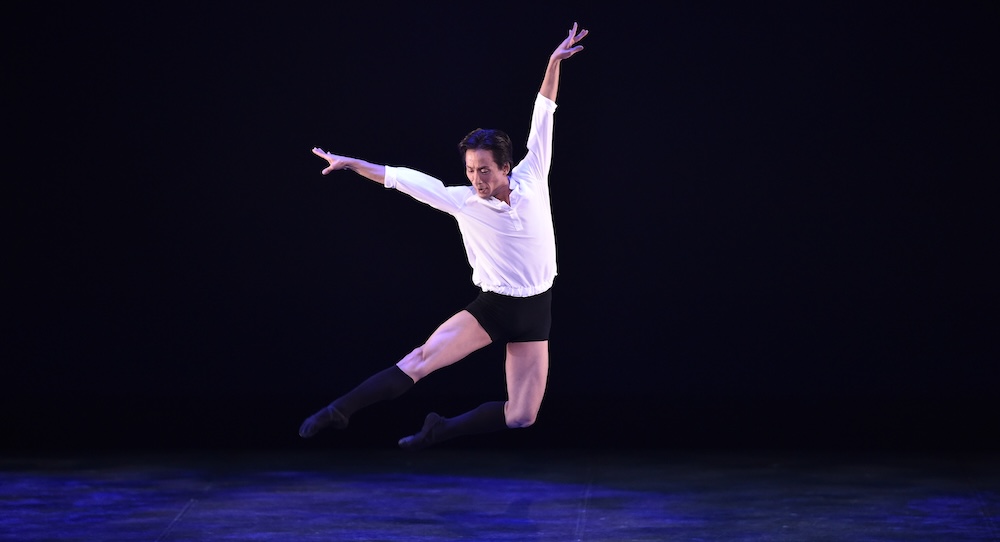
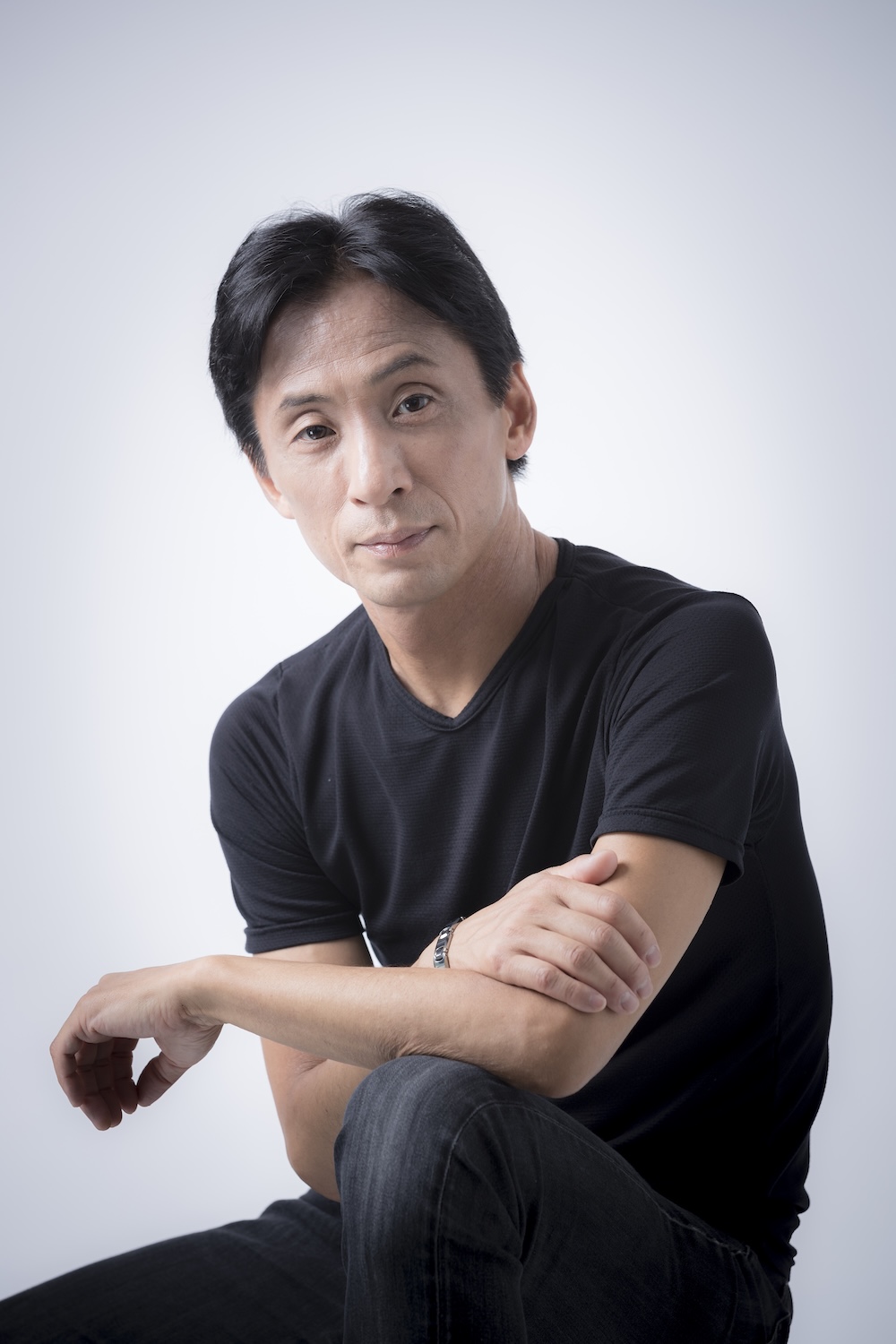
Gen Horiuchi is celebrating 25 years as artistic and executive director of the St. Louis Ballet. During his tenure, he has transformed the once debt-ridden civic organization into a fully professional company with an impressive operating budget, a loyal subscriber base and a school serving approximately 350 students. Horiuchi’s methodical approach, strong organizational skills and steady presence have allowed the company to thrive.
Horiuchi was born in Tokyo, Japan, into a ballet family. His parents were professional dancers who owned a dance studio directly below the family home, immersing him in ballet from a very young age. Ballet was simply a part of everyday life. He says, “When I was born, the ballet studio was already there, and my mother and father were the teachers. Having that family business made the transition into the world of ballet smooth, and there was really no question about continuing to pursue it as a career.” This early exposure to the discipline and routine of studio life shaped his work ethic and artistic perspective.
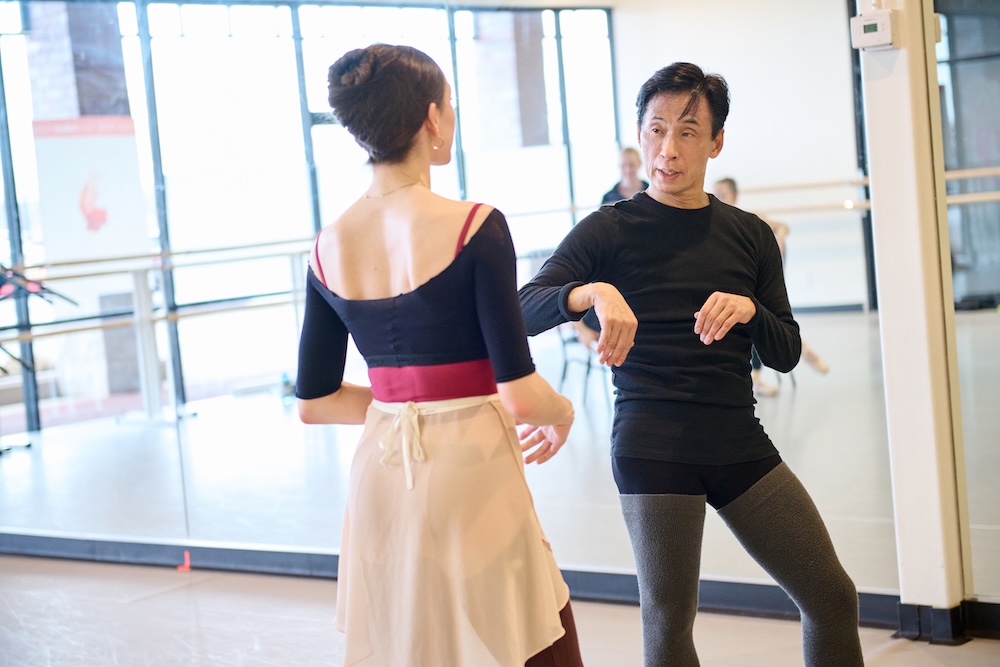
He won the Prix de Lausanne in 1980, earning a scholarship to study at the School of American Ballet (SAB). “Winning that scholarship truly changed my life and set everything in motion for the career that followed. I had always dreamed of dancing in the New York City Ballet (NYCB).” Studying at SAB with teachers such as Stanley Williams shaped his development and prepared him for a professional career.
His time at SAB was not without challenges. “The biggest adjustment was learning and understanding English and American culture,” Horiuchi explains. He persevered and was invited by George Balanchine to join NYCB in 1982, at the age of 17. Looking back, he feels he was too young to fully appreciate the opportunities he had been given. “It took me several years to realize how lucky I was to be able to dance for Mr. B. I wish I had known more about him while I was actually dancing for him, but I treasure the time I spent with him for life.”
Horiuchi rose quickly through the ranks and was promoted to principal dancer in 1989. Several cherished moments stand out. “The first ballet I was cast in by George Balanchine himself was Persephone. That was a turning point for me and really marked the beginning of my professional career. Another defining role was being cast as Oberon in A Midsummer Night’s Dream. It was a role I never imagined I would be cast in, and it presented a new challenge for me as an artist.” He also recalls being chosen for a principal role in Les Gentilhommes as especially meaningful.
He remained with the company for 14 years and later performed the role of Mistoffelees in the musical Cats, both on Broadway and in London’s West End. His years at NYCB taught him the importance of presenting strong work to audiences and considering their experience, not solely what a company wishes to present. This lesson would later inform his leadership in St. Louis.
In 1997, Horiuchi was invited to St. Louis to perform in A Midsummer Night’s Dream as a guest artist. The artistic director at the time was Lyudmila Dokoudovsky, whose father, Vladimir Dokoudovsky, had taught Horiuchi in New York. After Dokoudovsky’s death in 1999, the company’s board approached Horiuchi about the possibility of leading the organization. “I had always dreamed of having my own school and company, so the idea intrigued me, and I went for it.” He accepted the position and officially became artistic director in 2000.
He then began the difficult task of rebuilding the company from a small, struggling troupe into the professional organization it is today. At the time, the company faced financial challenges and had only a small roster of dancers, yet Horiuchi saw potential in both the students and the broader community that supported the school and performances. In previous interviews, he mentions being struck by how welcoming the city felt and the enthusiasm for the arts among audiences and families involved with the ballet. St. Louis, with its strong tradition of supporting cultural institutions, seemed to him a place where a lasting ballet organization could take root.
An early priority was strengthening the school. “I remember George Balanchine always saying, ‘First, a school.’ That idea stayed with me. One of my first priorities was establishing the school in a more family-centered location, which we were able to do with the help of a board member.” In the early 2000s, the academy was relocated to a more accessible suburban facility in the Chesterfield area, a move Horiuchi credits with helping enrollment grow rapidly and strengthening the organization’s foundation.
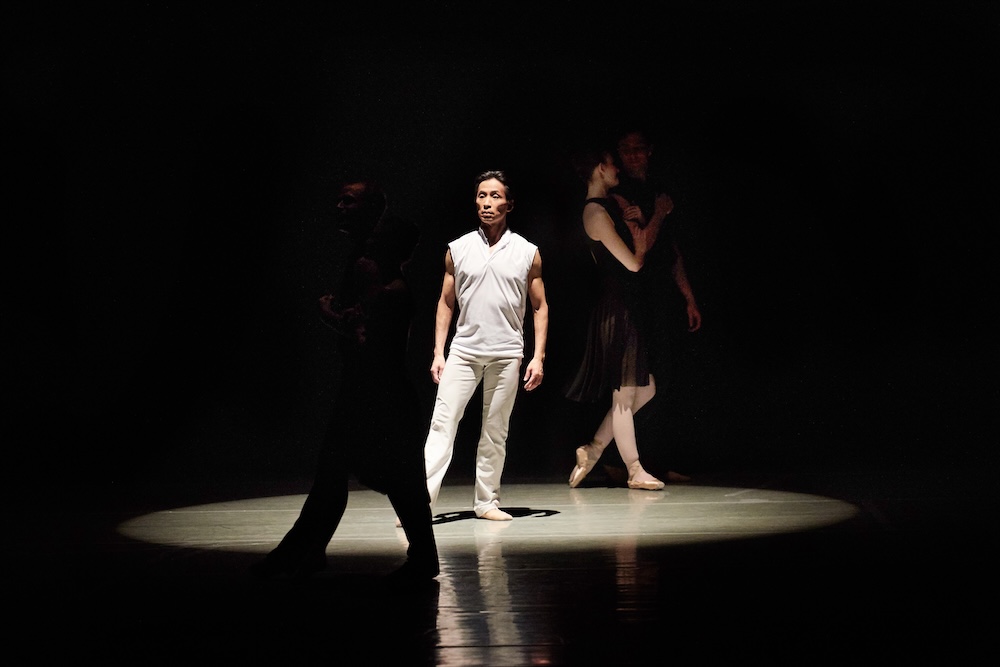
He also focused on securing a consistent performance venue. In the early years, the company relied largely on touring engagements. After presenting performances in smaller local theaters, the company established its primary home stage at the Touhill Performing Arts Center in 2009, allowing it to reach broader audiences. One of the greatest challenges during that period, he recalls, was building recognition. “I had accomplished a lot in my career in New York City, as a ballet dancer and on Broadway, but in St. Louis, people didn’t know me. Missouri is the ‘Show-Me State,’ so I had to slowly prove myself,” he says. “I was trying to develop the talent in the company and produce ballets with a very small budget. I often choreographed the productions myself, which helped save money that would have gone toward hiring outside choreographers.”
Another obstacle was competing with the city’s strong sports culture. “It’s a sports town. At the same time, I knew there was an audience for live performances because of how many people attended shows at the Fox Theatre,” he notes. He worked to build awareness that St. Louis had a resident ballet company worthy of community support, a process that required persistence over many years.
Horiuchi’s leadership style remains firmly rooted in the studio. He believes in leading by example, often taking class and occasionally performing alongside his dancers. “Moving with the dancers reminds me how it feels to be a dancer. It also helps me choreograph better. A director can easily stand in front of the dancers and give directions while forgetting what it actually feels like to be on the other side of that instruction.” By sharing the daily discipline of training, he hopes dancers feel he is working with them rather than simply directing them.
Under his leadership, the organization has grown into a fully professional company. In 2024, dancers ratified their first union contract with the American Guild of Musical Artists (AGMA). The company now includes approximately 24 professional dancers and five second company members on contract, along with a Professional Training Program of more than 30 dancers. A typical season features three to four mainstage productions, additional studio performances and periodic international touring.
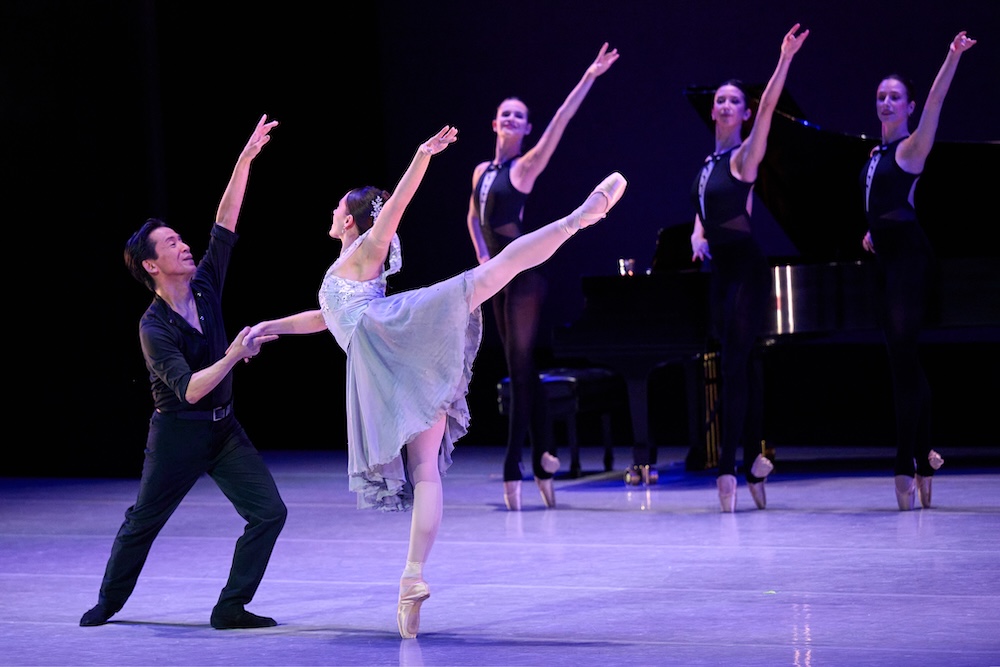
This spring, Horiuchi will bring a group of dancers to Tokyo for a special engagement. “We will perform under Shiki Theatre Company, the largest theater company producing Broadway-style productions in Japan, for five performances,” he says. “The program will include Jerome Robbins’ Interplay, Christopher Wheeldon’s Carousel (A Dance) pas de deux and my ballet St. Louis Blues.”
Reflecting on his silver anniversary, Horiuchi says, “At this stage, I’m especially happy that I’m able to invite colleagues from my past to set and create works for the company. Being able to present ballets regularly by choreographers such as George Balanchine, Christopher Wheeldon, Justin Peck and Jerome Robbins brings me great joy.” Sharing these masterworks with St. Louis audiences while preserving the classical repertoire remains central to his vision.
As he looks ahead, Horiuchi remains focused on growth and artistic connection. “My hope for the future of St. Louis Ballet is to continue presenting the best works available to us while also serving what audiences would like to see, and to share and appreciate the experience together.”
St. Louis Ballet will present Cinderella from April 24-26, at the Touhill Performing Arts Center. For tickets and more information, visit www.stlouisballet.org.
By Mary Carpenter of Dance Informa.
Share this: