David H. Koch Theater, Lincoln Center, New York, NY.
February 7, 2026.
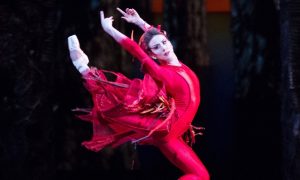
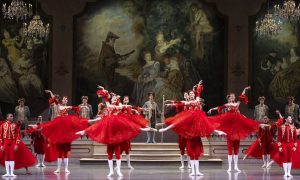
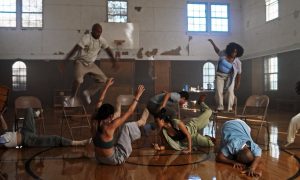
New York City Ballet (NYCB)’s 2026 Winter Season is a robust compilation of works, ranging from the new to the well-loved. One could catch the classics such as Diamonds, Serenade, Prodigal Son, and the full-length The Sleeping Beauty. Or, one could catch the Contemporary Choreography II, as I did in early February, and watch four pieces: Dig the Say (Justin Peck, 2024), This Bitter Earth (Christopher Wheeldon, 2012), The Naked King (Alexei Ratmansky, 2026) and Everywhere We Go (Justin Peck, 2014). It was one cold day in a lineup of many frigid ones, but there’s nothing quite like ballet to warm up any winter afternoon.
Dig the Say, performed by Tiler Peck and Roman Mejia, showcases a playful “but can you do this?” back and forth element of jovial competition. It’s cute and easy to take in, although I wouldn’t want to be up against Peck in any technical competition. The speed, apparent ease and musical acuity to her dancing has always delighted me, and Mejia’s strong presence only makes her shine more. They played with a red ball throughout, adding a youthful element of the piece, as well as the tension of what would happen if someone were to “drop the ball.”
This Bitter Earth, a ballet I love dearly and have seen many times, was danced by Sara Mearns and Tyler Angle, and had a calm gravity to it — the specific weightiness that comes with understanding the passage of time in a way that only experience provides. Both of these veteran dancers of the piece and the company moved with the bittersweet awareness of such experience.
The Naked King, Alexei Ratmansky’s latest work for the company and it’s 500th original creation, uses the fairy tale, The Emperor’s New Clothes, as inspiration and delivers a bit of comedy in the cautionary tale. It’s farcical, but only just so. For Ratmansky, it was born of current events. NYCB rarely does story ballets, and it was fun to see the dancers in more literal, character and comedic roles.
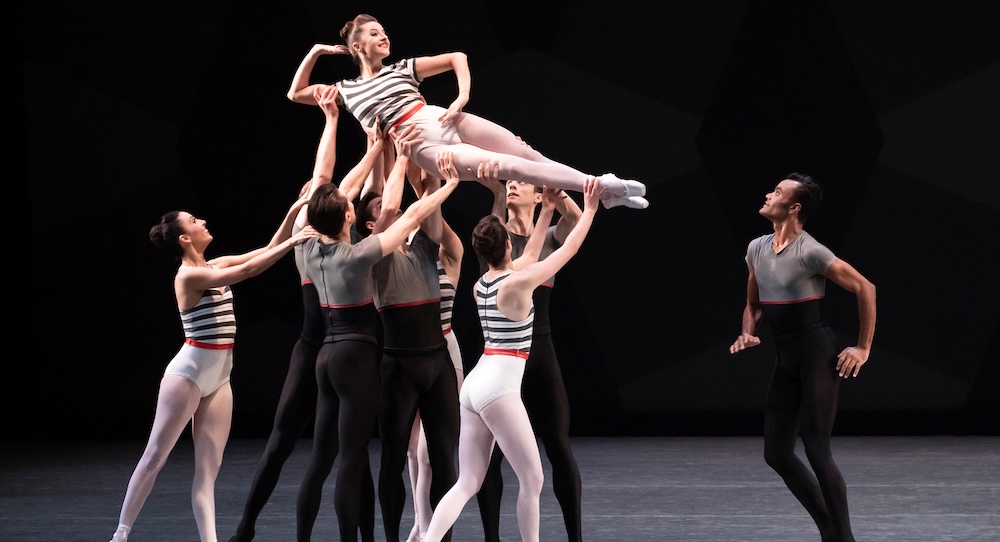
Justin Peck’s works both started and ended the afternoon, with Everywhere We Go closing out the program. The cinematic score by Sujfan Stevens was the second collaboration between Peck and the composer. Its vibrant tone allows the driving, plotless ballet to take the audience on a pleasant ride. It’s joyful and real, with moments of heavy releases, giving the lighter moments higher value. All nine movements were a pleasure to watch, and it’s a work that exemplifies contemporary ballet of the mid-2010s.
In a swirling world, it’s nice to have a few hours of beauty, humanity and art in the confines of a warm theater on a cold day. Dance is, at its core, a form of basic and fundamental human communication. To see it or participate in it is a gift, and NYCB is quite a fine one.
By Emily Sarkissian of Dance Informa.
Share this: