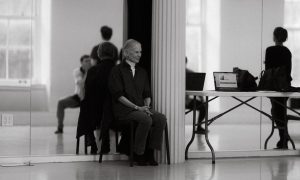
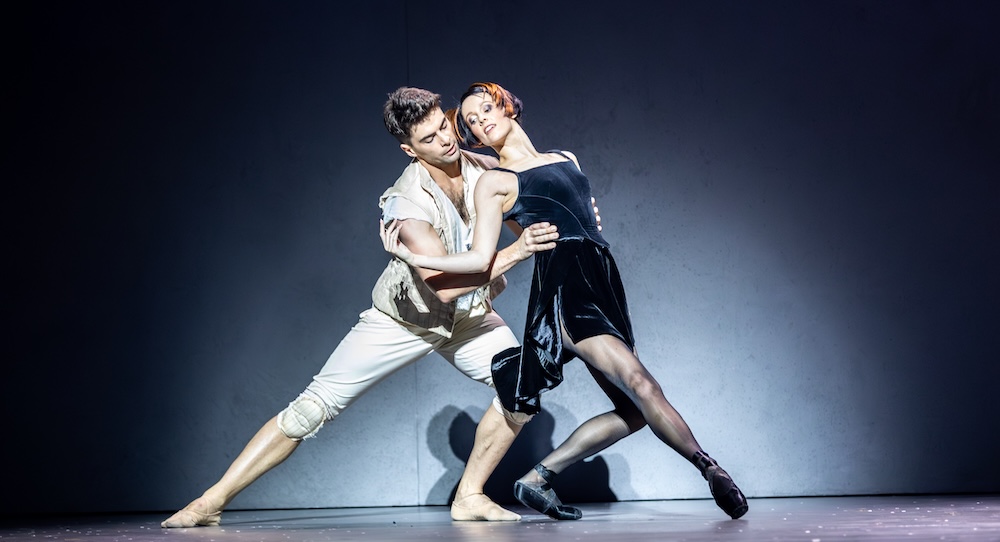
Two women. Two crowns. One story.
“I’d love audiences to immerse themselves in the world and come with us on the journey,” Scottish Ballet Principal Roseanna Leney says of the coming UK and USA Mary, Queen of Scots tour. “Or maybe even be speechless!”
Mary, Queen of Scots is the last of five productions commissioned in celebration of five decades of Scottish Ballet. The company was founded in 1969, entirely on new works. Their repertoire had to be built, and Christopher Hampson reveals he had always had a desire, having been Artistic Director since 2012 and CEO since 2015, to produce a Mary, Queen of Scots that spoke afresh to today’s audience.
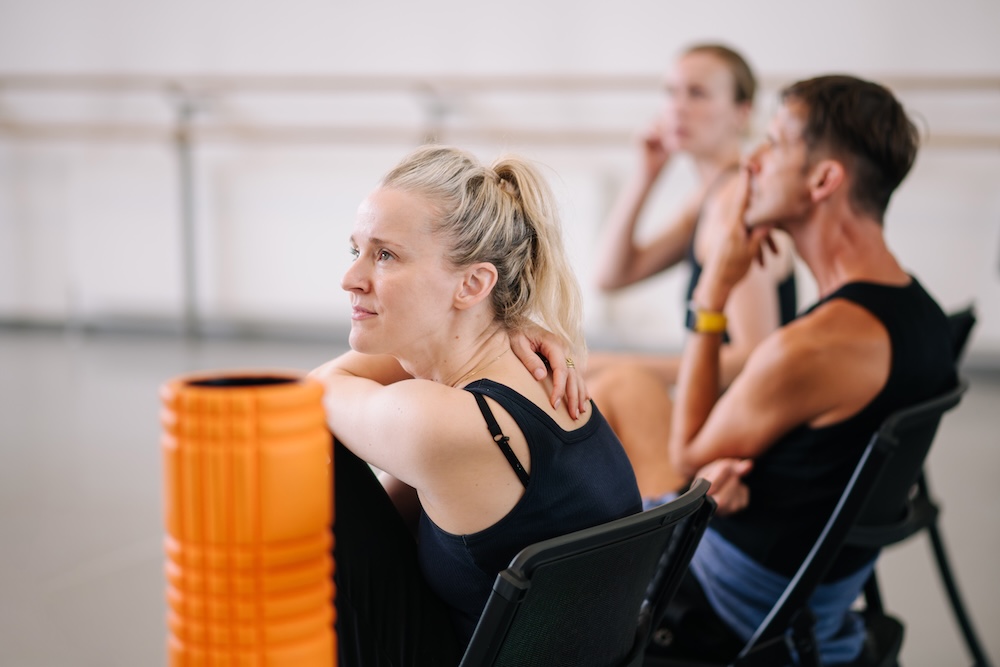
“There are so many ways to tell Mary’s story, and I think Scottish audiences so far have loved this production,” Hampson shares. “I feel they want us to be bold. It is current, imaginative, and fluid.”
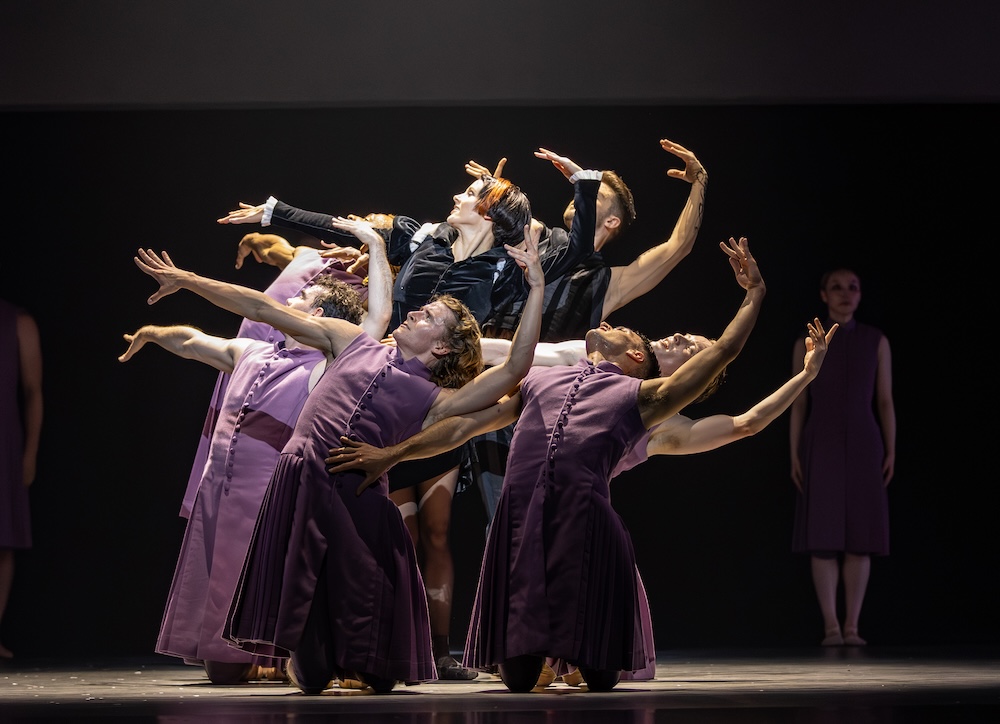
Setting off this spring to Sadler’s Wells Theatre, London, followed by the Spoleto Festival in Charleston, USA, and the David H. Koch Theater, Lincoln Center, New York, it seems certain that this dramatic contemporary ballet creation by resident choreographer Sophie Laplane and co-creator James Bonas will land with impact, having already been well-received in Aberdeen, Glasgow and Edinburgh, following its Edinburgh International Festival premiere in 2025.
Creative devotion
Hampson expresses his genuine pride both in the commitment of dancers in his company, now well known for their fresh narrative productions, including full-length works by five women choreographers, and in-resident choreographer Laplane, who has been on a long creative journey with the company.
“Sophie has a sensibility for telling stories,” Hampson reveals. “And a talent for creating original movement, achieving both poignancy and dark humour.”
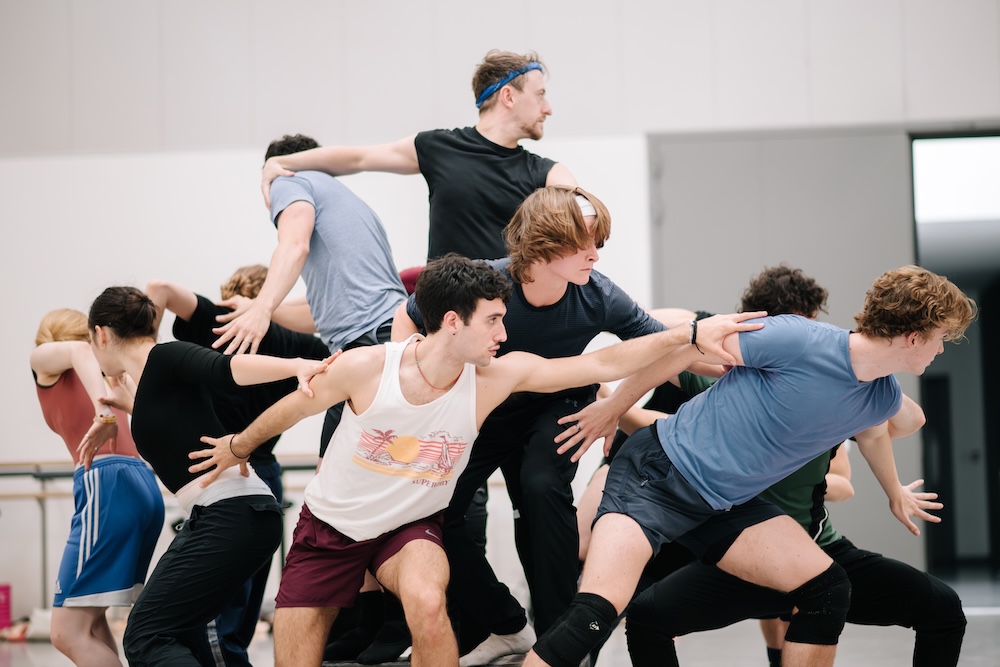
I met on a wintry afternoon in the middle of the Snow Queen with Scottish Ballet Principal Roseanna Leney, who plays the role of Mary, and First Artist Harvey Littlefield, who plays younger Queen Elizabeth I. They were friendly and open with a lovely rapport between the two of them, and we talked about how this historic story of two queens that never met has been reimagined for the modern-day stage.
What’s the story?
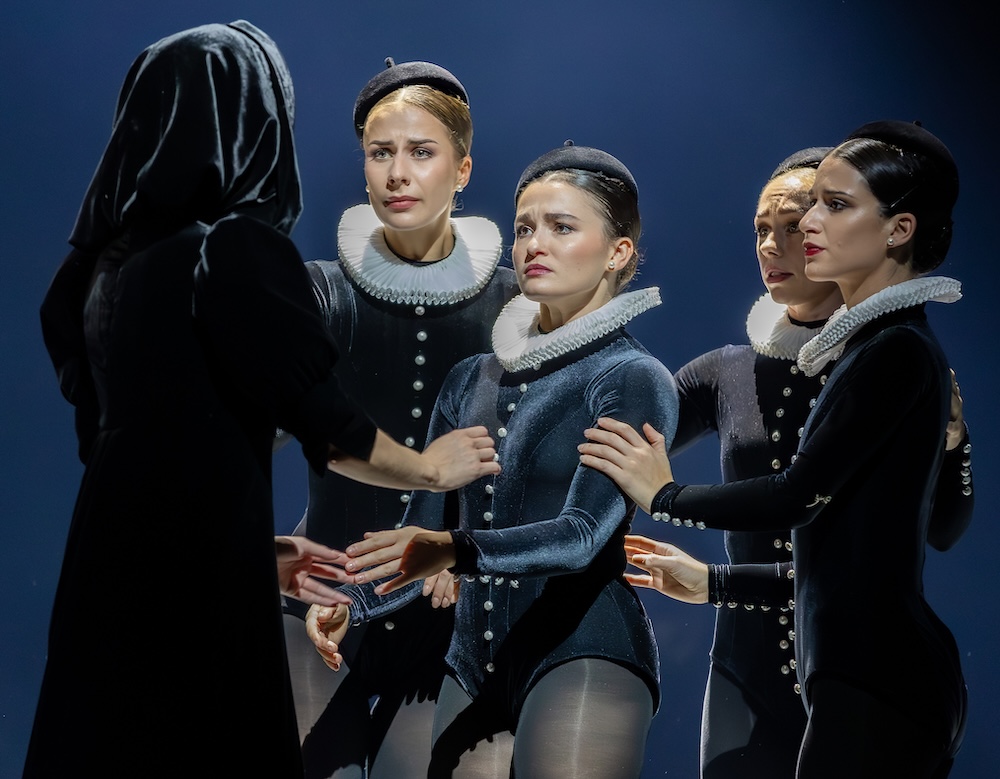
Leney explains that the story of Mary’s life – well known throughout Scotland, but perhaps not so much in other parts of the world – is told through the end-of-life eyes of Queen Elizabeth I, looking back on her life and memories.
Guest artist Charlotta Öfverholm plays older Elizabeth, whose mind is sometimes confused, and doesn’t always remember past events clearly. She is regretful of ordering Mary’s execution and is also coming to terms with the fact that when she dies, the throne is likely to go to Mary’s son James, an event which would tie the crowns of England and Scotland under one monarch. Elizabeth I herself had declared during her reign that she had the body of a woman but the heart of a king. She was surrounded by men, and it was unusual at the time for women to have this level of power. In that sense, Elizabeth spoke of having to be a man in her role; her power illustrated via a scene where younger Elizabeth is on stilts in the ballet.
Leney reveals that although Mary and Elizabeth are on stage at the same time during the ballet, as they had never met in real life, there is no eye contact between the two of them at all. Mary and Elizabeth were cousins who both descended from Henry VII and only ever communicated via letters. They could have been a great support to each other in their lonely world. But, because of her lineage, Mary was a potential political threat to Elizabeth and the English line, and this caused tensions that led to her imprisonment and eventual execution.
Scottish Ballet are of course perfectly positioned to tell this homegrown heart-wrenching narrative with so many poignant even horrific moments, from earlier days of Mary (b. 1542-1587) mourning the death of her husband, Francis, the Dauphin of France, and returning to Scotland hoping to receive help from her cousin Elizabeth (b. 1533 – 1603) only to be rejected; to Elizabeth’s spies murdering Mary’s advisor Rizzio and Mary’s forced abdication from the throne. There are twists of power and even paranoia bubbling under the surface; an abundance of dramatic material to draw on.
Emotional connection
“It’s been great to put these amazing women on a pedestal,” says Littlefield. “I feel so lucky to have had the opportunity to play this gender-fluid role. It’s very dramatic, and I’ve enjoyed getting to know who Elizabeth really was. She was perceived as angry and dominant, but she was also sensitive with a yearning to be a mother. Behind closed doors, she was a wreck, and in my life, I’ve felt that way and could immediately relate. I’ve never been able to put my life experience into a role like this before.”
Emotional and personal struggles are not details often recorded in history books and I can imagine the deep insight and subsequent tangibility of these royal characters portrayed onstage will be a major draw of the production.
What was it like, having a ballet created on you?
“It was epic, so special. I’ve grown artistically,” says Leney. She explains how despite playing many classical roles, in dancing Mary, she was required to let go of everything, of all her inhibitions, so much so she felt like a different person. Littlefield highlights both their joy in being able to uncover Elizabeth’s feminine and softer qualities as the role was created on them, as well as their hopes that a future transgender or non-binary person would be able to play this role in the future. The role was purposely given space in the production by Laplane and Bonas so that anybody who was able to personify the role would be able to play it.
I was interested to know whether, in creation and rehearsal, Leney and Littlefield had been emotionally affected and ‘taken their work home’ with them.
“One hundred percent,” Littlefield responds immediately. “I didn’t realise how much jaw and neck tension I was holding in portraying Elizabeth, the physical strain I put on myself. I’d find myself feeling anxious or overwhelmed at home and realised it was lingering with me; she became so much a part of my life.”
Leney recalls that she felt she could have slept for months after the ballet had been created. “I was always thinking about it,” she says. “It was fascinating, I was always wanting to read up about it. I stayed in the bubble.”
An imaginative tour experience
There seems to be so much that audiences will be able to resonate with as the company prepare to leave Scotland; the modern retelling of the story, the viewpoint of the not-always accurate elderly Elizabeth, the contemporary choreographic style as we view the present and the past, plus two Elizabeths at different life stages simultaneously. Other major players to look out for on stage include the four Marys — ladies-in-waiting and Mary’s confidantes, uniquely all of her own age with the same name, who travelled to France and back with her. And Walsingham, a key player in the English Court who was instrumental in building the case for Mary’s execution.
“It’s fascinating that these characters were perceived to have held great power; but the audience can see that there are other powers at work, that make them powerless, in a way. There will be a resonance there,” concludes Hampson. “This is not an historical re-enactment; this is an imaginative experience. I’m excited to be sharing what Scottish Ballet does best: telling stories in a fresh, new, brilliant way.”
Scottish Ballet will present Mary, Queen of Scots at Sadler’s Wells in London (5 – 8 March), Spoleto Festival USA in Charleston (28 – 30 May), and David H. Koch Theater at Lincoln Center in New York City (4 – 7 June). For more information, visit scottishballet.co.uk/whats-on/mary-queen-of-scots.
By Louise Ryrie of Dance Informa.
Share this: