Tag Archive | "Houston Ballet"

A Guide to Ballet Competitions


By Rebecca Martin.

From a small town competition to the international Prix de Lausanne, there is a ballet competition for every age and every level of dancer. Whether you’re a young ballet student, in full-time training, or are a seasoned professional, the benefits of ballet competitions are numerous. However, there are some drawbacks, and the ongoing question of whether ballet should even be competitive. If you’re weighing whether or not to enter the world of ballet competitions, or are already a regular on the competition scene, Dance Informa has put together a guide to ballet competitions to help you navigate the tutus, tights, tears and trophies.

For younger dancers, competitions expose them to the fun of stage lights, costumes, make-up and prizes. For parents, it can mean long car rides, tantrums and endless sewing of sequins. Yet the pros far outweigh the cons, and the skills and discipline learned through competing can be carried on to other aspects of the dancer’s life, making them a more focussed and mature adult. Personally, some of the fondest memories of my childhood involve ballet competitions. I formed great friendships, developed an affinity for the smell of backstage, learned to be organized and to perform even when nervous. Importantly, I learned the spirit of sportsmanship. It wasn’t about winning; it was about performing on stage in front of an audience, having fun and being friendly with fellow competitors.

If you’ve ever seen an episode of the television show Dance Moms, you will be forgiven for thinking that competitions are cut throat events that involve screaming teachers and complaining mothers. While that may happen from time to time, it’s important to find a ballet teacher who is encouraging and selects students for competition who are able to handle the pressure and are up to standard. Competitions are not the be all and end all of ballet training. If a teacher is putting too much emphasis on competition and neglecting the technique and enjoyment aspects, then consider trying other ballet schools.

For older dance students, ballet competitions can mean scholarships to prestigious schools, prize money or even job prospects. While bringing home a medal or wad of cash is fantastic, the greatest benefit of competing can be the connections dancers make to ballet companies and their peers. Competitions are reshaping the way dancers audition for companies. Rather than attending multiple auditions at what is often a great financial expense, major ballet competitions are used by ballet company directors to source new recruits. Directors can see the dancers both in class and on stage, something they cannot do in a regular studio audition. USA’s International Ballet Competition (IBC) is basically an audition for attending company and school directors. According to Stanton Welch, who is currently Houston Ballet’s Artistic Director, competitions augment the audition process and are a great way for directors to shop for talent.

Joel Woellner at Prix de Lausanne

Joel Woellner competes at Prix de Lausanne 2013. Photo by Gregory Batardon.

The Prix de Lausanne, one of the world’s greatest ballet competitions for pre-professional dancers now schedules networking into the program. An afternoon is set aside for schools to set up booths to talk with potential new students, so dancers don’t have to be a prize winner to be awarded a scholarship or offered a place in a training programme.

For dance students of any age, it is important to keep expectations realistic. Judging is subjective, and things can go wrong on stage. No matter how much dancers rehearse, they still may fall out of a pirouette or fluff their balance in arabesque, and no matter how well they perform, they still may be beaten at judging time. It is important to value the quality of the learning experience and the performance itself over the number of medals or prizes won. Students can return to class after competitions with inflated egos after winning or become overanxious about their dancing if they aren’t as successful as they hoped. Some dancers receive scholarships and job offers after being eliminated from competitions, which is far more beneficial in the long run than a medallion or prize money. Both dance students and parents, as well as teachers, need to keep things in perspective and not focus on a gold medal.

For dancers in a ballet company, their career is going to consist of constant auditions, so the practice early on is extremely beneficial. Every time a visiting choreographer comes in to watch company class and cast for their next work, they will be auditioning for them. The competition doesn’t end once a dancer gets a contract with a company.

Most local competitions allow entry through an application form. Some may request a photo or video. The bigger competitions will require dancers to attend an audition class or series of elimination rounds, and international competitions will first need to see an audition video.

DO:

  • Speak to your ballet teacher about local competitions and check Dance Informa’s listings for upcoming opportunities.
  • Do your research. Visit the website of the competition and carefully read the entry form and guidelines.
  • Make sure you are eligible. There are often age restrictions and sometimes even syllabus restrictions.
  • Pick a routine or variation that compliments your abilities. Don’t do something that is too difficult for you.  It’s better to do a simple routine well than fumble through a tricky number.
  • Make the most of every experience. Listen to the judges and teachers and apply their feedback.
  • Enjoy the experience! You’re on stage in front of a supportive audience.
  • Talk to as many people as possible.
  • Have a make-up kit that you take with you to every competition. Include needle and thread, resin, hairspray, hairpins and spare tights.
  • Be prepared! Rehearse, practice in your costume, test out the stage before you go on, get plenty of rest, and fuel your body.
  • Have a back up copy of your music.
  • Remember that people are not only watching your dancing, but also the way you behave. Be professional, attentive and courteous.

DON’T

  • Give up!  The more competitions you do, the more confident you will become.
  • Let your nerves get the better of you. What is the worst that can happen?
  • Be negative or critical of others.
  • Put anything extra on your application form or audition DVD. Follow the guidelines.

Remember that the process is the prize. Here is a listing of various ballet competitions around the world:

-  www.rad.org.uk

-  www.prixdelausanne.org

-   www.ballet.org.au

-   www.jjgp.jp

-   www.yagp.org

-   www.usaibc.com

-   http://moscowballetcompetition.com

-   www.bda.edu.cn

-   www.theamericandancecompetition.com

-   www.concorsointernazionaledanza.it

-   www.wbcorlando.com

-   www.danceuponadream.com

Photo (top): Promotional image from dance documentary First Position about the Youth America Grand Prix - a must see dance film.

Posted in Tips & AdviceComments (0)

Double success at the Prix for Joel Woellner


By Grace Edwards.

‘Success is sweeter and sweeter if long delayed’ is a saying that will find no argument from 18 year-old Sydney native and new Houston Ballet apprentice, Joel Woellner. Though he chose not to compete the first time he qualified for the semi-finals, Woeller’s patience has been ultimately vindicated after winning two prizes at this year’s Prix de Lausanne.

Over 250 hopefuls aged between 15 and 18 years old submitted DVDs to this year’s Prix, from which 20 competitors made it to the final round. Woellner was the only student from an American ballet school [Houston Ballet Ben Stevenson Academy] to win a prize. Ranking sixth overall out of 78 international competitors, he was awarded not only a scholarship but the competition’s contemporary prize.

Congratulations on your success Joel! How would you describe what you were feeling when you heard that that you had won two prizes?

Surprised, yet a huge amount of satisfaction! Having had such a vigorous training schedule, putting so much energy into Prix, then having it rewarded, is one of the best things I have felt. But even if I hadn’t placed, just being on stage at the finals of Prix de Lausanne is a moment in my life that I’ll never forget.

How did you prepare for the Prix?

The first time I was accepted [for the 2012 competition], Houston Ballet decided to hold me back for a year, so I didn’t go. This time though, I started my training for the Prix as soon as I heard that I was accepted. My teachers had agreed on my variation, so I went to YouTube to learn the choreography and to draw inspiration from the videos of professional dancers who had done it in the past. Once I’d learnt the steps to the variation I began visualizing myself in costume on the stage of Prix de Lausanne.

I was then given rehearsal time with one of the Houston Ballet teachers, Andrew Murphy. Together we set the steps to music and slowly began to correct the variation. A few weeks later we were running the variation through and working very hard on perfecting every step. Mr. Murphy is well-known for running variations multiple times to build stamina and I was not an exception. After each rehearsal my legs were on fire, my lungs burning and my heart about to pump out of my chest. In each rehearsal, however, I visualised myself onstage dancing the variation perfectly.

I found that once I had gotten to Prix, dancing my variation on stage was easier because I had already been onstage in my mind. For me visualising is essential and a great tool that gives me confidence.

How did you select and prepare your contemporary solo?

I first saw my contemporary solo on the website of the Prix de Lausanne and instantly fell in love. The combination of the music, and the fluid and effortless movements of it captured my attention. I really love to tell a story through movement and emotion and I knew this solo was going to let me do that.

I started rehearsals with my contemporary teacher, Pricilla Murphy. Her coaching was incredible! She taught me how to articulate my movements, as well as to keep a strong centre. Throughout my rehearsals with her I learnt so much about my body and how to dance in a truly contemporary style.

Dancer Joel Woellner Prix de Lausanne 2013, contemporary solo

Joel Woellner performing his contemporary solo at Prix de Lausanne 2013. Photo by Gregory Batardon

The day before I left for Switzerland a showing was put on in the studio theater at Houston Ballet. The company members, the artistic staff and the Artistic Director were invited to watch, so many people came. This experience was a ‘dress rehearsal’ of what the Prix was going to be like. I was very nervous but I was well prepared so the performance went smoothly and the experience gave me so much confidence. I felt very self-assured afterwards and I knew that Prix was going to go well.

What do you think the judges were looking for most in their potential Prix prize winners?

I think the judges are looking firstly at the dancers’ technique and physique — can they dance steps confidently and do they physically look the part on stage? I also think they look at whether or not a particular dancer can survive in a professional environment.

From the small amount of company life that I have witnessed, I have noticed that the ability to learn and apply corrections to choreography is crucial. Someone that can take on board what a choreographer or artistic director is asking will always succeed. Having rehearsals with the choreographers of the contemporary solos represents a chance to showcase and improve upon this ability.

How have your wins affected your training goals?

Being a scholarship winner allows me to receive an apprentice contract with an associate company of the Prix de Lausanne. I’m proud to say that I have been offered and have accepted an apprentice contract with Houston Ballet. However, I know I’m not the ‘finished product’ as a dancer. Being a part of the company and dancing beside so many amazing artists will push me even more. I aim to work as hard as I can so that one day I may be as good as the people I’m dancing next to.

Prior to the Prix, you had also competed at the YAGP in 2010, at which you were offered and accepted a Houston Ballet II full scholarship. Do you think international competitions are important to a dancer’s development?

It’s clear that international competitions provide exposure and the chance to be offered places in professional schools. International competitions also allowed me to compare my abilities with the rest of my age group around the world.

That year [at the YAGP], I didn’t make the finals. I remember being disappointed, but I have always looked at this experience as a positive and I really think that’s how all competitions should be viewed. I knew that I wasn’t yet up to scratch with the rest of my age group so I was determined to make sure that I was.

For me, competitions are what started my professional career.

Without whom do you believe you might not have made it this far?

I decided that being a professional ballet dancer was what I wanted to do with my life around the time I started high school, so I moved dance schools and started taking ballet classes with Jo Ansell and Kim Traynor [at Ettinghausens Dynamic Arts, Sydney, Australia]. Both took an immediate interest in my career. Their wisdom and knowledge helped me to improve my technique and choose the best path for my career. Ms. Jo and Ms. Traynor have been so influential in my career, and I want to thank them for their dedication and the hard work they have put into me. I truly believe that I would not be where I am today without their help.

What advice would you give young dancers who want to compete in the Prix?

The advice I would give is: Number one, absorb everything you can from the week. Every correction the teachers and coaches give you is invaluable. Stay in contact with every friend you make because the ballet world is so small that at some point down the road you are likely to bump into them again.

Number two, try not to think of the Prix de Lausanne as a competition and get hung up on whether you make the finals or not. Instead, look at the week as a way of enhancing your abilities technically and artistically.

Photo (top): Joel Woellner competes at Prix de Lausanne 2013. Photo by Gregory Batardon.

Posted in InterviewsComments (0)

From Pirouettes to Vinyls: Former Ballerina Anne-Tyler Harshbarger Spins into the International DJ Scene


By Stephanie Wolf.

Ever since she was a little girl and saw her older sister in dance class, Anne-Tyler Harshbarger wanted to be a ballerina. She went on to achieve this dream through illustrious careers with Houston Ballet and Atlanta Ballet, performing a wide range of classical and contemporary repertoire. But, Harshbarger couldn’t be defined solely by her balletic aspirations. There was a different, creative energy brewing in her, which would eventually evolve into Harshbarger’s diva of the nightclub alter ego, DJ Anne-Tyler. Now, the former ballerina is making a name for herself in the Los Angeles and international DJ scene.

At sixteen, Harshbarger attended her first rave in North Carolina. “I was blown away by the unbelievable vibe the music created. There was a sense of unity and acceptance and love through dance that I had never felt before…this world was a non-judgmental one where I could explore movement in a safe place.” She was instantly hooked to the music and dance of the “underground party” world. “Collecting music became an obsession. Eventually, I got my own decks and the rest is history.”

Anne-Tyler Harshburger Atlanta Ballet Nutcracker

Anne-Tyler Harshburger in Atlanta Ballet’s ‘Nutcracker’. Photo by Charlie McCullers, courtesy of Atlanta Ballet.

Her first DJ gig had her spinning vinyls in a derelict Atlanta warehouse for a designers’ showcase. “I prepared for hours for it,” says Harshbarger. It was a memorable night, which sent her on a new and exciting journey. From there, in conjunction with her career as a featured dancer with the Atlanta Ballet, Harshbarger found more success in the Atlanta DJ scene. Juggling two careers had its challenges, but that didn’t deter Harshbarger from pursuing both of her passions. “At times it was exhausting,” she says. “But the love of what I was doing kept me full of energy. I needed the variety and contrast of both classical and electronic to feel inspired.”

In May 2011, Harshbarger officially left Atlanta Ballet to focus on her budding DJ-ing career. As she transitioned, she noticed many similarities between the two professions. “They are both about letting go and expressing your true self, taking risks, overcoming fear, and connecting with an audience. Dancers and musicians are vessels through which the power of music flows.”

Atlanta Ballet Anne-Tyler Harshburger

Anne-Tyler Harshburger performs with Atlanta Ballet. Photo by Charlie McCullers courtesy of Atlanta Ballet.

Like ballet, being a professional DJ isn’t the most conventional career trajectory, begging the question: how does one become a professional DJ? “A lot of it was being at the right place at the right time,” Harshbarger says in regards to the initial years of getting her career up and running. But, ultimately, she achieved success through her raw talent, gusto for music and movement, and diligence. “Word of my enthusiasm and talent traveled fast…I believe a big part of it was simply my desire to do it. When I want something, I make it happen.”

While the DJ scene has primarily been a “man’s world”, female DJs are starting to gain fame and recognition. Harshbarger feels grateful to be a part of this burgeoning demographic, but she doesn’t “preoccupy [herself] with gender” and pursue this passion solely to make a social statement. “I have faced both adversity and advantage as a lady DJ. Most important is talent. The music always comes first in my book.”

DJ Anne-Tyler likes to shake things up with her musical repertoire and often allows the ambience and vibe of a party to influence her mixes. “I started with house music and it will always be my fave to spin,” she explains. “But these days I play everything: techno, drum n’ bass, chill out, lounge, nu disco, 80’s, 90’s, indie rock, hip hop, R&B, pop remixes, dub step – you name it.”

Now, DJ Anne-Tyler is a mainstay in the LA nightclub world. She spins five nights a week at Los Angeles clubs like Supperclub, W Hotel Hollywood, Palihouse, Katana, and Caffe Roma, among others. Word of her skills has also taken her to a number of other U.S. and international cities. “In 2013 I’m very excited to return to my stomping grounds of Houston and Atlanta. Also on the agenda for the new year are Amsterdam, Berlin, London, Tel Aviv and Ibiza.”

This won’t be Harshbarger’s first time DJ-ing in Ibiza, Spain, the world’s electronic music Mecca. In the summer of 2008, she was a resident DJ at the city’s hot nightclub, Amnesia. She continues to go back each summer, expanding the scope of her international fan base and challenging herself as a maestro of the turntable. Her life of mixing music and beat juggling for the world’s hottest clubs and parties keeps her on the move a lot, but she doesn’t mind the go-go-go lifestyle. “I love to travel. It is very exciting for me to go on these adventures.”

DJ Anne-Tyler Harshburger

Photo by Havana Club, ATLnightlife.com

Dancing is still very much a part of Harshbarger’s life and, likely, will always be in some capacity. “I still go out dancing a lot, I dance in my apartment all the time, and I do barre on my terrace sometimes.” She adds, “Since I’ve been in LA I’ve taught private lessons and have some master classes coming up. I also produce an event every Friday in Beverly Hills where I dance and create the costumes. It’s a Euro-style performance art house music scene.”

When she’s in Hollywood she isn’t holding back. Harshbarger has found many other artistic outlets such as acting, modeling, and building her new clothing line. She’s graced the pages of magazines like MODE, Jezebel, and The Atlantan; and her film and television credentials range from established shows like The Walking Dead, Drop Dead Diva, and What Not to Wear, to commercials and music videos.

The future is looking prosperous for DJ Anne-Tyler. On November 30 she was seen as a DJ in the world premier of the motion picture horror flick The Collection. She is also the brains behind ENJOYMUSIC ENJOYLIFE, a “whimsical lifestyle brand created for DJs, musicians, and music lovers.” Find out more about it at enjoymusic.com. Through her mash-up of beats and her graceful moves, DJ Anne-Tyler hopes to inspire others to chase their dreams.

Top photo: Anne-Tyler Harshbarger by Jonah Hooper

Posted in InterviewsComments (0)

American Amber Miller of Eifman Ballet, Russia


By Rebecca Martin

Eifman Ballet is arguably Russia’s most exciting modern ballet company. The company’s namesake, director and choreographer, Boris Eifman, is considered the face of modern dance in Russia. His company comprises young, slim, and acrobatic dancers that are tall with long limbs – the minimum height for females is 174cm and males is 185cm.

The company’s only non-Russian dancer is America’s Amber Miller, who has trained with Ellison Ballet’s Professional Training Program in New York City and won first place in both contemporary and classical categories at the Youth America Grand Prix.  She was also featured on the web series Dance 212 which followed Amber’s training and life prior to her appointment with Eifman Ballet.

Dance Informa managed to catch Amber during her vacation before getting stuck into rehearsals for an international tour

You turned down a contract with Houston Ballet in the US to join Eifman Ballet.  What was it about Eifman Ballet that enticed you?

Deciding to turn down Houston Ballet and join Eifman Ballet was a difficult decision for me. Houston Ballet is such an amazing company with many talented dancers and is extremely close to my home in Dallas. I never, in a million years, thought I would have the chance to go to Russia, let alone dance in a Russian company. So, when I was offered the contract from Eifman Ballet, I felt I couldn’t turn it down. Boris Eifman is such an imaginative choreographer and all of his ballets are so different from anything else out there. Getting the chance to be a part of the Eifman Ballet company and perform throughout the world at many of the great theatres has been an incredible experience!

Amber Miller of Eifman Ballet

Amber Miller of Eifman Ballet. Photo by Rachel Neville

What professional/dance challenges have you encountered since joining Eifman Ballet?

I went to school at Ellison Ballet in New York City and we mainly focused on pure classical ballet. Edward Ellison, the owner and Director of Ellison Ballet, does a tremendous job with pre-professional dancers and he gave me the skills necessary to dance professionally. Coming to Eifman Ballet was a little difficult at first because it is mainly contemporary, so I had to learn how to loosen up and use my technique in a different way while learning a completely new style. I also had to step in for a few performances when someone became sick or injured. While on tour in Berlin, I actually found out an hour before the show that I had to dance for a girl who had gotten sick! All of the dancers really helped me. During intermission we actually rehearsed the second act so I would know exactly where to go. It was definitely a stressful, but extremely gratifying experience.

What personal challenges have you faced?

I have experienced some personal challenges since moving to Russia. This was my first year away from home, so getting used to living without my family was definitely difficult at first. Thank the Lord for Skype and Facebook! It was also extremely challenging when I first moved because I did not know any Russian at all. Luckily, all the dancers are really nice and have helped me so much to learn the language and to help me get around St. Petersburg.

Tell us some highlights of working with such a wonderful company.

I have always wanted to travel and see the world. With Eifman Ballet, I have been able to do that. I’m still amazed at all the wonderful places we get to travel to and the beautiful theatres we get to perform in. Another major highlight is getting the chance to work with Boris Eifman. Watching him create new ballets is such an incredible experience and I am constantly amazed with the choreography and ideas he is able to produce.

What interesting cultural differences have you encountered?

Before moving to Russia, I was expecting everything to be completely different from the United States. Apart from the language, things are not all that different. There are a lot of restaurants, stores, malls, etc that are the same as in the United States. I spend my free time with friends doing mostly what I did in the States…eating, shopping, and enjoying time together.

Are you more Odette or Odile?

I am definitely more of an Odette. I’m a shy and quiet person most of the time, especially when I first meet someone.

Photos by Rachel Neville

Posted in Interviews, Top StoriesComments (0)

Houston Ballet Brings Cutting-Edge Repertoire to NYC’s Joyce Theater


Joyce Theater, New York City
October 14, 2011

By Stephanie Wolf.

It was a packed house for the Friday evening performance of Houston Ballet at the Joyce Theater. The Texan company brought their ‘A-game’ with an impressive array of repertoire from some of the world’s most sought after choreographers: Jorma Elo, Jiri Kylian, and Christopher Bruce. New Yorkers lusting for great dancing were not disappointed.

With simple costumes of short black unitards and dramatic stage lighting, the performance opened with Kylian’s all-female ballet Falling Angels, featuring an ensemble of eight dancers and the pulsating rhythm of Steve Reich’s Drumming. Kylian created Falling Angels over ten years ago, but the ballet still feels fresh and innovative.

No particular dancer stood out because the group as a whole was the ‘star’ of the piece. All of them danced the frenetic, quick movement in excellent unison. Each dancer engaged every muscle of her body; fully committed to the choreography and driving beat. Kylian included moments for each performer to break from the unison work and dance a brief solo, which kept the piece from being too repetitive.

The dancing was aerobic and incorporated the use of exaggerated facial expressions. Sometimes, the dancers tugged back and forth on their unitards to further enhance the movement. Their endurance was impressive, as they maintained the high energy from the moment the curtain went up until the end of the ballet.
ONEendONE with Artists of Houston Ballet. Photo by Amitava Sarkar

The second ballet on the program was Jorma Elo’s One/end/One, a display piece for the technical virtuosity of eight Houston Ballet dancers. It contrasted classical attire (the ladies wore tutus and the men were in tunics) with contemporary movement. Elo contorted a leg extended in tendu to an unballetic posture with the swerve of a hip and bend of a knee. Dancers’ arms took a classical form, and then rippled into a more gestural position (if position is even the correct word because it appeared as if the dancers never stopped moving). His choreography was relentless, but the dancing was brilliant.

In the opening section, Elo played with the idea of tableaux; creating a picture with the dancers in space and then allowing it to quickly dissolve into a series of fast turns or footwork. Despite the speed of the choreography, the dancers executed the movement fully and the men covered the entire length of the stage in just a few jumps. Dancers entered and exited the stage throughout the section, resolving in several different variations of solos, pairings, trios, quartets, etc. A particular stand out in both the first and final section of the ballet was Melissa Hough, who joined the company in 2010 after dancing with Boston Ballet. She attacked every intricate step with an uncanny amount of speed, poise, and confidence.

There were many moments of creativity and beauty in One/end/One. In the adagio, danced by Soloist Karina Gonzalez and Principal Connor Walsh, Elo produced an unusual yet stunning interpretation of a typical pas de deux. Several lifts had Walsh not only suspending Gonzalez in extended positions, but also required him to lift a leg to arabesque and maintain the ballerina’s placement simultaneously. Another interesting moment in the pas de duex had Walsh lying on his back with his legs stretched up to the ceiling, swaying back and forth like windshield wiper blades at Gonzalez’s command. The two made the difficult partnering work look smooth and delicate.

It was interesting and intriguing, but asked the question, “What is the point?” This is not to say that a choreographer should ever have to explain his or her work, but the intent behind the ballet was curious. Was Elo mocking ballet with the choreographed quirks and unusual angles or simply further exploring both the formality and litheness of classical form?

The final ballet of the night was Christopher Bruce’s Hush, a clever vignette of dances for three men and three women. Hush brought to life the unique musical partnership of violinist Yo-Yo Ma and vocalist Bobby McFerrin. The dancers resembled mimes with the ladies dressed in pom-pom adorned muslin dresses, the gentlemen sporting suspenders or old-fashioned suits, and all with white faces. It had the feeling of a 1930s circus.

From playful, to sentimental, frenzied, and joyous, the ballet ran a gauntlet of emotions. Bruce hoped to tie in the element of everyone’s inner child and did so successfully. It’s a relatable piece, which sparked several bursts of laughter or sighs of pleasure from the audience. 

The opening section had series of twists, turns, and lifts with the dancers often linked by their limbs. From there, each section highlighted a different dancer with original and creative choreography. Jessica Collado danced a fluid, carefree solo exceptionally well. There were several tender moments from Kelly Myernick and James Gotesky, who brought a maternal and paternal aspect to the ballet. And a trio between Melody Mennite, Rhodes Elliott, and Ilya Kozadayev to McFerrin and Ma’s interpretation of “Flight of the Bumble Bee” was particularly fun. The ballet ended with a ‘hoedown’, eventually winding down to a final picture of all six dancers heading upstage, linked arm and arm.

Running a little under two hours, it was a well-balanced program. The evening showed the technical proficiency of the company, as well as original and interesting repertoire. Thank you Houston Ballet for reminding New York how much exciting dance exists outside of the city’s perimeter.

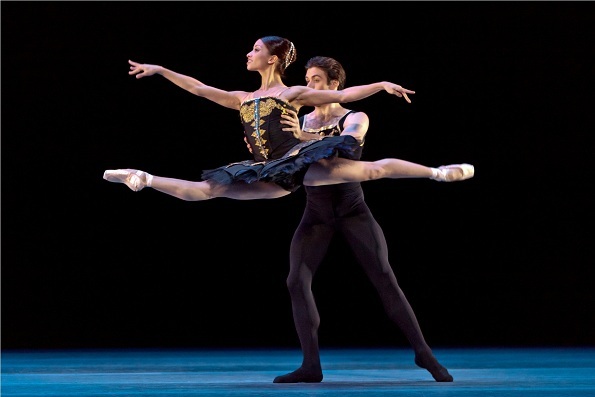
Top photo: ONEendONE with Karina Gonzalez and Connor Walsh. Photo by Amitava Sarkar

Posted in Reviews - USAComments (0)

America’s Prix de Lausanne Prince


By Deborah Searle

On February 6 the 2011 Prix de Lausanne culminated in a dazzling final where 20 finalists competed and eight were awarded prizes, from over 200 candidates from all over the world. This year young performer Derrin “Harper” Watters of Houston Ballet’s Ben Stevenson Academy was chosen as a prize winner by the tough jury of international dance VIPs. Celebrating its 39th year the Prix de Lausanne is a prestigious international competition for dancers aged 15 to 18 with a long history of career success for its young prize winners.

Tell us about your Prix de Lausanne experience
It was for sure an experience I will never forget. It was an amazing opportunity to travel and dance with dancers from all over the world, and I learnt to trust myself and my teachers. It was an eye opening experience to compete. I credit my teachers for jump starting my career there – an opportunity that I couldn’t have gotten anywhere else.

Did you expect to have such success?
Going in we were told to not have any expectations, but to just enjoy it and perform. It was hard for me because for the last two years someone from here (Houston Ballet’s Ben Stevenson Academy) has placed, and it was in the back of my mind the whole time. But at the end I just had to trust myself and my teachers—and it worked!

My prizes were 6th place overall, for which I got an apprenticeship contract, and I won the contemporary prize for my solo.

How did you train for the competition?
I rehearsed everyday with my teachers Claudio Muñoz and Andrew Murphy. We had different rehearsals to go over artistry, work on stamina, and technique. Sometimes we would run the variation once, and then talk through the steps to make sure they were clean and had the proper technique. Other times we just ran it six times nonstop. I definitely credit the coaches for my success, but yes, training was intense.

What is your dance background?
I’ve been dancing since I was five years old, and I’ve been dancing ballet since I was 11. I came from a small local studio in my hometown of New Hampshire, and was there for 2 years. Afterwards, I knew I wanted to keep dancing but I wasn’t sure if I wanted it as a career. So I enrolled in Walnut Hills Performing Arts High School where I could both dance and study simultaneously. After some time there I decided dance was definitely something I wanted to pursue as a career. Luckily I attended a summer program here at Houston Ballet, and subsequently got offered to be in Houston Ballet II, and then I’ll be entering the company next season! Coming to Houston Ballet II was definitely the best decision I ever made.

Sareen Tchekmedyian and Harper Watters

Why did you choose to dance with the Houston Ballet as your prize over international opportunities?
My prize was to be an apprentice for a company, which is to be with them at their lowest level. I had had some experience with the company while in Houston Ballet II, so I was already very comfortable with the teachers, and had worked extensively with the main company. I felt comfortable here. I knew how they worked, and they knew me (my strengths and my weaknesses). I respected their direction and repertoire. For my first experience in a professional company, I just wanted to feel comfortable.

What are your goals for the future? Where will we see you next?
My goal is to dance as much as possible. I don’t have specific aspirations to become a principal dancer, or to dance any particular leads, but my aspiration is to dance as much variety with as many different choreographers as possible. I want to choose when to stop dancing, as opposed to the opposite. Hopefully you’ll see me here! If not I’ll for sure still be dancing—it will always be a part of my life.

What is your advice for the 2012 Prix de Lausanne competitors?
Before the competition: To constantly work hard and to listen and trust your coaches.
During the competition: To fully open your mind to enjoy the experience! Trust in your hard work and perform.

What I learnt is that when you step onstage, don’t think about the steps, but think about the artistry and the performance. You perform your best when you enjoy what you’re doing.

Photos: Amitava Sarkar

Posted in InterviewsComments (0)

Danielle Rowe Dances to Houston


By Deborah Searle.

After ten very successful years at the Australian Ballet, principal dancer Danielle Rowe has packed her bags and taken up the barre at Houston Ballet. A much loved performer, Danielle will be greatly missed in Australia, along with her partner Luke Ingham who has also joined the company. Both popular members of the Australian Ballet company for many years, Danielle and Luke are excited to take their talent to Texas.

Upon arriving in Houston, Dance Informa’s Deborah Searle chatted with Danielle about the transition and her plans for the future.

“It’s been a bit of whirlwind, but it’s going well and I’m settling in”, Danielle shared. “I’ve joined the company as Soloist, which is the equivalent of a Senior Artist in Australia. I’ve already had a day of rehearsal and it feels like I’ve been here forever because everyone’s so friendly and welcoming. I’ve had a good start”, she said excitedly.

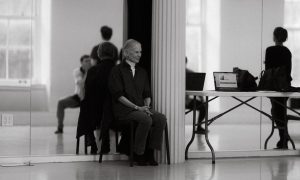
Danielle takes class at Houston Ballet. Photo Jim Caldwell

Audiences in Houston can look forward to some stunning performances by Danielle who won a prestigious Helpmann Award last year for Best Female Dancer. With such an accomplished career in Australia, Danielle was up for a new challenge. “I was at a stage in my career where I just felt like I needed a bit of a change. There wasn’t a dramatic reason for leaving, I just felt like I needed to work in a fresh environment and get out of my comfort zone”, she explained.

And out of her comfort zone she is, in the American southwest. After traveling to the States to guest perform Danielle responded to an urge to relocate. “Both Luke and I were drawn to America. We both were able to guest with Morphoses, so I spent a bit of time in the US. I began to really appreciate and enjoy the American style of dancing and the way that everyone works”. So Danielle and Luke contacted Artistic Director of Houston Ballet, Stanton Welch (an Australian born dancer with strong ties to the Australian Ballet), and the rest is history. But with opportunities all over the States, why did Danielle and Luke choose Houston Ballet? “We had heard really wonderful things about Houston Ballet. They have a great reputation as being a hard working and really versatile group of dancers”, Danielle shared.

The dancing pair is blessed to be able to join a company together. The fact that Houston Ballet offered positions for both dancers was another factor in their decision to join the company. “We wanted to move to a company that we could both work in. We know how hard it can be for couples to both get a job in a company they like. It’s really wonderful for both of us to have been given this opportunity and it’s great to have that support. Moving to a different country is a bit daunting, but we’ve got each other and that makes it easier”, Danielle revealed.

With rehearsals already in full swing for Houston Ballet’s Marie season in February and Sleeping Beauty in March, the pair are already busy, which is keeping Danielle happy. “I am looking forward to dancing as much as I possibly can”, she said. “There will hopefully be more opportunities for me to dance and perform on a more regular basis here. Houston Ballet rehearse all day (even the senior dancers), and they do a variety of different roles, as opposed to just doing principal roles. That was part of my reason for coming to Houston Ballet – the opportunity to work really, really hard and dance consistently”, she explained.

Danielle in class at Houston Ballet. Photo: Jim Caldwell

But what roles would Danielle still like to perform, as she has danced so many ballets over her career. “I’d love to do Onegin and to dance Giselle. I’d also like to do Odette/Odile in the traditional Swan Lake”, she said. But Danielle isn’t just interested in the classics. “I’d love to work with many different new and exciting choreographers. I really like the workshopping process and being challenged and inspired by new choreographers.”

Now that Danielle is in the States she is keen to explore the vast country and the many opportunities that it presents. “I’d like the opportunity to guest with some different companies around America, if I’m able to and if I have time to with the Houston Ballet schedule”, she disclosed.

But will she miss her home country and the Australian Ballet company? “I’ve never known any other company. I’ve grown up with the same group of dancers and danced with the same dancers, teachers, coaches and directors for ten years. I’m going to miss the comfort and security that I’ve developed with the Australian Ballet over the ten years, and also the three years that I had at the Australian Ballet School. I will miss the intimacy that I have with the Australian Ballet family”, she expressed with a sigh.

A little home sick but excited, Danielle and Luke have a wonderful future ahead in Houston and have some advice for other dancers thinking of making a move abroad. “It’s not as scary as you think”, Danielle laughed. “I think the scariest part about moving overseas is making the initial decision and committing to that decision. I certainly thought it was a huge event to uproot and move overseas, but it’s exciting more than scary.”

Good Luck Danielle and Luke. No doubt Houston audiences will adore you!

Danielle Rowe and Robert Curran perform Wheeldon's After the Rain. Photo David Kelly

Fun Facts

Favorite Role
The role that I hold closest to my heart is ‘Baroness von Rothbart’ from Graeme Murphy’s Swan Lake. It’s a character that I’ve had the opportunity to perform over a long period of time so I’ve been able to develop it. Each time I perform it it’s different and special and the ballet is wonderful. It’s a very fulfilling character to play.

Favorite Ballet
I really loved performing Christopher Wheeldon’s After the Rain. The final pas de deux it’s so beautiful in its simplicity and the music is heaven. It’s really special. I think that’s been one of my most special times on stage.

Pointe Shoe Padding
I am a bit weird -  I don’t actually wear anything! I don’t recommend it because you end up with horrible looking feet. As I was growing up I was advised to not wear anything in my pointe shoes, and being an impressionable student I did that and worked through the pain. Now I have really calloused and ugly feet. For the long term I’d recommend a bit of padding for younger dancers so they are able to wear sandals and not have people stare at their feet! 

Touring Must Haves
Massage Ball – I have a massage ball that is my life saver. It gets out any niggly little pains.
Thera-Band - I think you can do so many exercise with just this one piece of equipment. It’s easy, you can role it up and it doesn’t weigh very much. It always helps to get me ready for class. 

Studio Snack
I usually have a banana in between rehearsals to give me energy. I don’t really like them, but I eat them because I know how good they are for me!

Favorite Tutu
My favourite tutu would be the Ballet Imperial tutu. It’s a really hard ballet but the tutu has elegance. The tutu’s so regal that it makes the ballet feel a little easier. I got promoted to Principal when I was doing that role. It was just a really wonderful time and I have fun memories of that costume. 

Hobbies
I love trawling through vintage stores, antiques stores and book shops and seeing what treasures I can find. I love going to the movies and reading. I love chilling out and having a cup of tea whilst listening to records. 

See Danielle Rowe perform with Houston Ballet in Marie this February.

Melody Herrera in Marie. Photo by Pam Francis

Houston Ballet – Marie
February 24- March 6
Brown Theater, Wortham Theater Center, Houston
www.houstonballet.org

Win a Double Pass to Houston Ballet’s Marie!
Inspired by the life of Marie Antoinette

HOW TO ENTER:
Suggest Dance Informa to 3 dance friends and you could WIN!
Just Email Dance Informa at info@danceinforma.com with:
 - Your full name, date of birth and address PLUS
- The email addresses of 3 dance friends.
- Include subject: ‘MARIE’

Competition Opens Jan 31 2011 and closes Feb 14 2011. The winner will be emailed and the a voucher for the tickets will be mailed to them. If the winner does not repsond within 3 days, a second chance winner will be drawn.  The Winner will be published at www.danceinforma.com after announced. Your friends will be given a free subscription to Dance Informa. If your friends would not like a free subscription they can unsubscribe at anytime by emailing info@danceinforma.com with subject: UNSUBSCRIBE

Top photo: James Braund

Posted in Giveaways!, InterviewsComments (1)

Audition Advice from the Pros


By Rain Francis.

Do you have an upcoming audition?
Dance Informa wanted to give you a headstart with some top audition advice. And who better to ask than the directors of some of the best dance companies in the world?

Advice from Stanton Welch, Artistic Director
Houston Ballet

www.houstonballet.org

What’s your most important piece of audition advice?
It’s very important in an audition that when you walk in you pay attention. The way that you engage the person and how you look are very important. You need to be dressed appropriately, you need to make sure that you learn the exercises with detail and that you show that you have a level of artistry. Don’t look fearful, and try to give them as broad a range of all the best qualities of you as an artist as quickly as possible.

What’s the biggest mistake dancers make when auditioning?
Trying to show off too much. In a few auditions that we’ve had, a teacher might set an exercise very specifically because we want to see a certain type of ports de bras or an arm or a jump, and then the dancer changes it so that they can show us their thing. Inevitably what they’re showing us is that they can’t learn in detail what you’re presenting.

What do you look for in auditions?
Of course you want a good dancer. I think there are many good dancers now so by the time you narrow it down, what makes you stand out is your work ethic and your artistry. You need to be a smart and intelligent dancer, as well as being someone who can completely transform into any role.

What can dancers do to be prepared?
Somehow I think it’s important that a young dancer gets through a process of practice auditions, so that by the time they walk into the real audition, they’ve somehow calmed their nerves down. I would suggest going to as many auditions as possible, put on as many numbers as possible, and do as many Eisteddfods as possible so that you’re so familiar with walking out and presenting yourself that it’s like a performance.

Advice from Rafael Bonachela,  Artistic Director
Sydney Dance Company
www.sydneydancecompany.com

What’s your most important piece of audition advice?
Wear the appropriate clothing, as a choreographer always likes to see the body of a dancer.  Don’t try to hide under a thousand jumpers and twenty pairs of leg warmers.  It shows confidence in yourself and who you are.

What’s the biggest mistake dancers make when auditioning?
Wearing too many clothes.

What do you look for in auditions?
There are different things I look for.  A strong classical and contemporary technique and being able to mix with a group but to have enough individuality and charisma to stand alone on a stage – after all, I only have 17 jobs on offer.
 
What can dancers do to be prepared?
The only way to be prepared is to work hard, be committed and focused.  To get to the highest level of quality, dance cannot be only a five day week commitment, it’s for life.

Advice from David McAllister, Artistic Director
The Australian Ballet
www.australianballet.com.au

What’s your most important piece of audition advice?
Don’t be nervous! All directors want you to be great and they want to see what you can bring to the company, so turn those nerves into excitement and just enjoy the experience. Always wear practice clothes that are neat and simple. Make sure you don’t cover legs with legwarmers and sloppy trousers as we will think you are trying to hide something. Ladies should always wear pointe shoes as the ladies in most ballet companies spend most of their time dancing en pointe.  

What’s the biggest mistake dancers make when auditioning?
Someone who cannot pick up the exercises and has difficulty with basic technical material will lose my attention quickly, and someone dancing off the music is definitely not destined for a contract.  For ladies, wearing a lot of makeup and too many accessories (hair and jewellery) is also distracting.

What do you look for in auditions?
Musicality is the thing that usually first attracts me to someone in an audition. Confidence in their ability and sureness of technique. I don’t mean that competition confidence, but an inner strength and grounded quality that draws the eye rather than acting as a beacon. Before the audition, I will look at their CV and preferably a DVD of them in action. I look at things like where they trained and who taught them, if they have had any previous employment and if not, any other stage experience. All these things count.

What can dancers do to be prepared?
Don’t do an audition if you don’t feel prepared both emotionally or physically as first impressions count; you’re better to reschedule if you are sick or injured. Do a good warm up and have a copy of your CV just in case.

Advice from Stephen Page, Artistic Director
Bangarra Dance Theatre

www.bangarra.com.au

Why do you choose to hand pick dancers rather than hold auditions?
All of our dancers are indigenous and they generally perform with the company for a minimum of four years, and sometimes for as long as twelve years. Sometimes we have a number of positions available in the same year so when this happens we do conduct auditions. We tend to be aware of indigenous students in tertiary institutions training at a professional level in contemporary dance and from time to time we offer secondments to graduates.

 What sort of process do you use for recruiting?
Because highly trained indigenous contemporary dancers are reasonably rare we are generally aware of them through their years of training and we are always open to hearing from dancers who are keen to work with the company.

What do you look for in potential dancers?
I look for someone with contemporary dance training who has an understanding of traditional Aboriginal and/or Torres Strait Islander culture. The dancers I find particularly interesting are those that respond well to Bangarra’s cultural philosophy and choreographic style.

What’s your advice to dancers hoping to find work in the industry?
I would advise all dancers, including indigenous dancers, to have a breadth of experience in all forms of dance so that they are creatively flexible and open to new ideas. Most important is for a dancer to have a great sense of themself as a person and as a performer.

Posted in Feature Articles, Tips & AdviceComments (0)

Latest Dance News


Jurgita Dronina of Lithuania, Senior Female Silver at the 2006 USA IBC. Photo Richard Finkelstein

Jurgita Dronina of Lithuania, Senior Female Silver at the 2006 USA IBC. Photo Richard Finkelstein

The Houston Ballet celebrates 40 years
In celebration of its 40th season, Houston Ballet will stage a brand new production of the historic classic, La Bayadère. This world premiere by Stanton Welch is an exotic story of the temple dancer, Nikiya, her lover, Solor, and the vengeance that keeps them apart. Set in northern India, La Bayadère will dazzle audiences with lavish scenery and costumes. It will thrill novices and balletomanes alike with its strong classical performances including the famous Shades scene, staged for the entire corps de ballet. La Bayadère will run from Thursday February 25th to Sunday March 7th at Brown Theater, Wortham Theater Center. The 09-10 Season will also see the introduction of five additional works into the repertoire, including masterpieces by George Balanchine, Jiří Kylián, Jerome Robbins and Twyla Tharp. 

2009 Next Wave Festival
The Brooklyn Academy of Music Next Wave Festival has returned for its 27th season with an unparalleled line-up of contemporary performance, artist talks, literature, film, and visual art. Dedicated to presenting emerging artists at the forefront of their disciplines alongside modern masters who continue to innovate, this year’s Next Wave is packed with adventurous art for adventurous audiences. Great works being presented include Decreation choreographed by William Forsythe, Itutu by Armitage Gone! Dance, Really Real by Wally Cardona and Company, and Mortal Engine by Australia’s Chunky Move, to name a few. Get your tickets. Visit http://www.bam.org/view.aspx?pid=1096

Laban Workshops and Auditions!
Laban, Europe’s leading conservatoire of contemporary dance training is coming to the US!
Laban, direct from the UK will be running dance workshops and auditions in New York and San Francisco.  The New York workshop and audition will run from November 14th-15th, held at The Ailey Studios. The San Francisco workshop and audition will run from November 21st-22nd, at San Francisco Conservatory of Dance. Places are limited. For more information and to register for the workshops and/or audition contact Clara Bezanilla at usa.audition@laban.ac.uk
http://www.laban.org/dance_programmes/

SAB To Hold Auditions in Tokyo
The School of American Ballet’s first-ever auditions in Japan will be held in Tokyo on October 11th-12th, coinciding with New York City Ballet’s performances at Tokyo’s Bunkamura Orchard Hall (October 8-12). The auditions will be for intermediate and advanced ballet students between the ages of 12 and 18 who are interested in attending SAB’s 2010 Summer Course. The Summer Course is a five-week program in which 200 serious ballet students from around the world live in the School’s on-site residence at Lincoln Center and take ballet, pointe, variations and partnering classes with SAB’s world-renowned faculty. Most advanced students enrolled in the School’s year-round program first attended one or more Summer Course sessions before being invited for full-time training in the Winter Term. The 2010 Summer Course will take place from June 28th to July 30th. The Tokyo auditions will be conducted by New York City Ballet dancers and artistic staff who are also current faculty members at SAB.  Students interested in auditioning must pre-register for the audition by sending an e-mail with their name, birth date and mailing address to sab@kyodotokyo.com.

Broadway Cabaret Festival
The fifth annual Broadway Cabaret Festival will be held at the NYC Town Hall from Oct 16th-18th. The festival celebrates Broadway’s established and up-and-coming talent, with a star studded cast of performers.  Make sure you get to the Town Hall, Broadway’s landmark concert venue, to join in the fun! The Town Hall can be found at 123 West 43rd Street. Tickets start at $50. For tickets and information visit www.the-townhall-nyc.org.

The Pulse On Tour
The Pulse On Tour 2009-10 kicks off in Orlando Florida on November 7th-8th at the World Center Marriott. With esteemed choreographer Gil Duldulao now part of the star studded faculty, including Tyce Diorio, Mia Michaels, Shane Sparks and Wade Robson, this Pulse Tour is set to rock. The Pulse will visit only 11 US cities, plus Toronto Canada, so make sure you reserve your spot. For more information, dates and to register visit www.thepulseontour.com

2010 USA International Ballet Competition
One of the world’s most prestigious dance events, the USA IBC, is a two-week Olympic style competition where tomorrow’s ballet stars compete for gold, silver and bronze medals,  cash awards and scholarships. Designated as the official USA Competition by a Joint Resolution of Congress, the USA IBC is held every four years, in the tradition of sister competitions in Bulgaria (Varna), Russia (Moscow), and Japan (Tokyo). The USA IBC in Jackson, Mississippi remains one of the oldest and most respected dance competitions in the world with up to $75,000 in cash awards, plus company contracts. The ninth USA IBC will return to Jackson from June 12th – June 27th, 2010. The written application deadline is October 30thhttp://www.usaibc.com/

New York City Dance Alliance
The NYCDA tour starts again this October, with the convention’s first stop in Mobile, Alabama on October 24th. The convention will tour to 23 cities before its 16th National Season Finale in New York City in July, followed by a Summer Dance Intensive.
For more information, dates and to register visit www.nycdance.com 

International Association for Dance Medicine and Science – 19th Annual Meeting
The 19th Annual Meeting of the International Association for Dance Medicine and Science (IADMS) will be held on October 29th-31st in The Hague, The Netherlands.  The 19th Annual Meeting will be followed by Special Interest Groups Day on Sunday, November 1st. The venue will be the renowned Koninklijke Schouwburg (Royal Theatre). The three-day conference is directed to those involved with the health-care, education, administration and supervision of dancers, including physicians, allied health professionals, alternative healthcare practitioners, psychologists, arts administrators, artistic directors, choreographers, educators, scientists, movement specialists, and dancers. For more information visit http://www.iadms.org

Very top photo: Chunky Move present Mortal Engine

Posted in Dance News USAComments (2)