
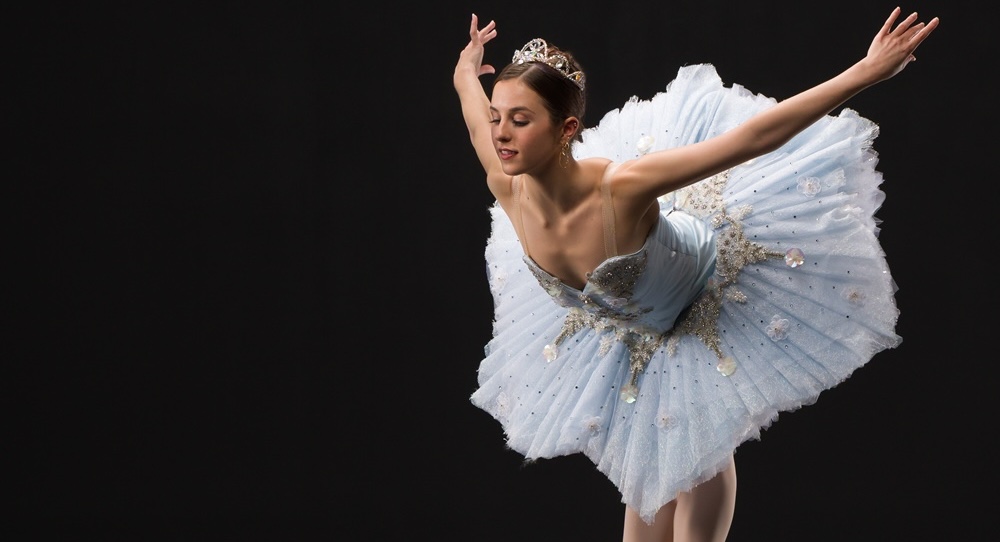
Years ago, while dancing with Harkness Ballet, Claudia Folts experienced a costume mishap no ballerina wants to face. During dress rehearsal as a guest artist in the Sleeping Beauty pas de deux, the crotch of her tutu snapped at the very end of the sequence, rotted threads giving way. Channeling that frustration into action, Folts began her foray into tutu making, first with hands-on repairs, then reverse engineering smoke-damaged Royal Ballet tutus, and soon after being recruited to craft a dozen tutus for Baltimore School of the Arts.
What started as a novice’s trial-and-error journey has blossomed into the widely respected Tutu.com. Founder and creative director, Folts has built a go-to resource for professional tutu supplies and education, drawing directly from her decades of experience.

Folts’ leap from novice tutu maker to online businesswoman was somewhat ahead of its time. The year was 1994, and she was working as Artistic Director for Charlotte City Ballet, when a marketing woman proposed a tutu-making fundraiser class.
Folts recalls, “I thought no one would show up, but we had 20 people come from all over the world. The newspaper heard about it and did a little story on it, then the AP picked it up and the story went national. All of a sudden, I started getting phone calls about buying the instructions…and from there I thought, ‘This might be something,’ and it’s how the website came about.”
Tutu.com is now on its fifth website iteration, evolving from a strictly informational site to a comprehensive catalog of tutus, fabrics, rhinestones, tiaras and more. The team at Tutu.com is small but mighty with only six staff members, who Folts considers herself lucky to work with.
“We have so much fun here. I come home every single day and I’m exhausted. We haven’t finished anything, but I feel like I’ve accomplished something that will make somebody else happy, and that makes me happy,” Folts says.

Customer needs continue to shape Tutu.com’s offerings. “People call or email me and say, ‘I wish I had a pattern for XYZ,’ and we’ll sort it out with them,” shares Folts. “So, we may end up doing something customized for them and then eventually commercializing it.”
Folts’ experience as a dancer informs her design choices today. She says, “We started using powernet for the panties. It’s a medical-grade powernet that stretches, but always returns. Lycra stretches out over time, and sweat eventually rots the fabric and it ends up being a diaper. Cotton bobbinet, what the old tutus were made of, shrinks and costs a fortune now. You had to double it and it still rotted. The powernet is a nylon. It’s easy to dye, lasts a long time, and has enough stretch for breathability.”
This dancer-first approach shines in both custom and ready-to-wear options. Custom orders are typically geared toward dancers doing competitions and professional dancers who want their own costumes for guesting. Folts loves working with dancers to create custom designs. She shares, “They’re really fun to work with because they usually know what they want and are familiar with the ballets. I love the collaborative stuff; it sort of takes on a life of its own. You always get things with more depth and that are more interesting when you’re collaborating with people.”
One of Folts’ favorite designs was for Allie Parsons – a former dancer phenom who needed a contemporary tutu. “This choreographer at North Carolina Dance Theater was doing a contemporary piece for her, and wanted me to do some kind of contemporary tutu,” says Folts. “We did leg tutus that went around her legs, and then two layers of tutu. We stuffed so much of this plastic hooping in it that they all twisted and turned. We put it on her and hand-sewed it to get everything where we wanted it to be.”
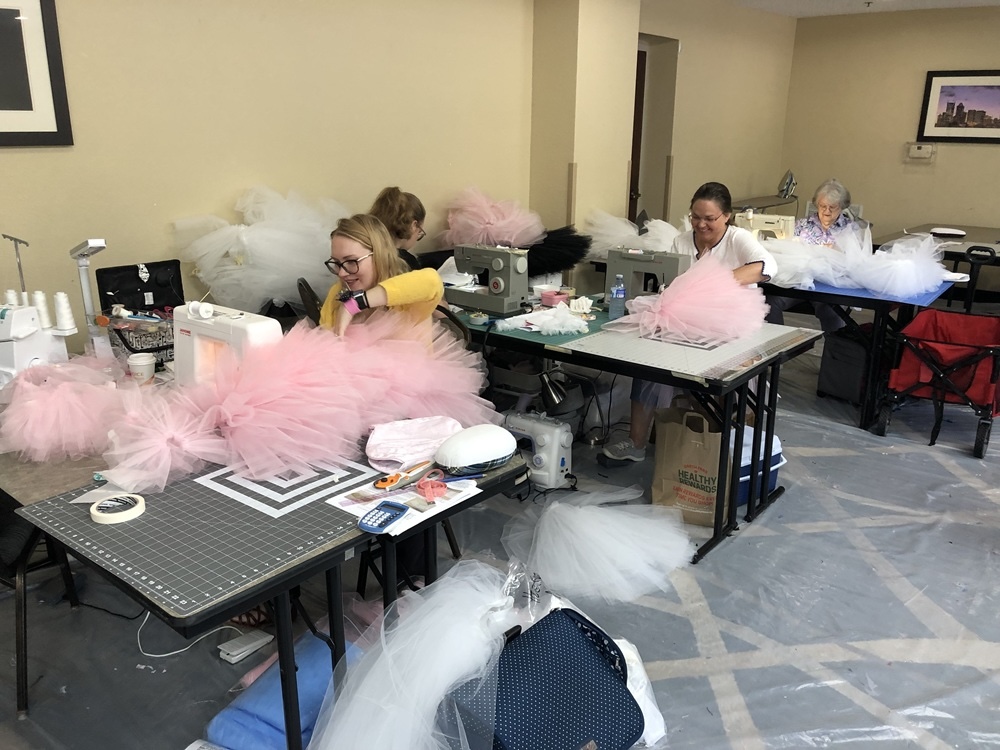
Although this contemporary tutu was a fun outlet, Folts emphasizes the role Tutu.com plays in educating the customer as well. “Sometimes, people want to be different, and we spend a lot of time trying to guide them and help them understand creativity in the ballet world is sort of like working in a room with no windows. There’s one way in and out. You’ve got to be creative with very strong traditional parameters. Part of our job is getting people to understand that.”
While tradition remains sacred, Folts also believes evolution is essential to keep up with what’s in the best interest of the dancer. “There’s no one way to make a tutu. There are so many different ways to do it. We tweak and change it all the time.” One example she gave was regarding boning, “When you had bodices that were boned to death in the back, side, and front, those were the days that people did arabesque at 45 degrees.”
Tutu.com’s TutuSchools is a unique offering that sets them apart by training tutu makers around the globe. Its beginnings were with Folts’ first fundraising class. What started as one tutu and one bodice class has grown to 87 classes and four levels. Folts has four other teachers now who contribute to the school.
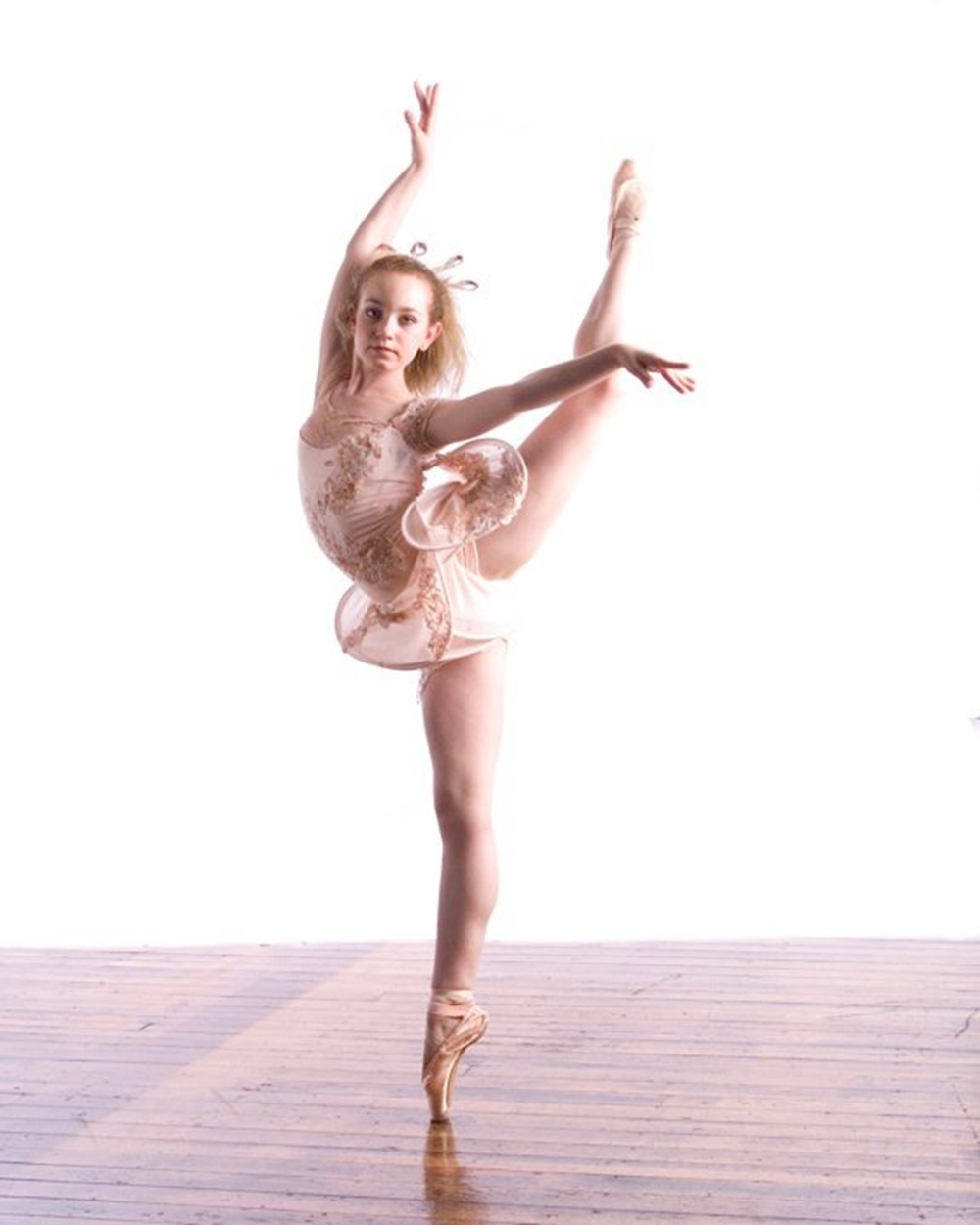
Recently, Tutu.com has only provided classes in Charlotte, but is looking to offer classes out of town next year. They also offer a few basic online courses, but the value is found with in-person, hands-on experience. Students come from all walks of life – some are already working in costume shops and desiring to perfect their skills, others are moms making tutus for their daughters, and even a number of college and high school students have joined.
As Tutu.com works to expand their offerings, Folts shares that they’re hoping to build on their online training – perhaps with classes on tiaras, headpieces and wings. She also wants to eventually offer full 1- and 2- Act ballet rentals. For now, those looking to rent principal, soloist and a handful of group number tutus can do so through the website.
Folts’ journey to becoming an entrepreneur in the arts is a testament to the power of persistence and commitment to growth. For aspiring arts entrepreneurs, she stresses authenticity and focus. “Be patient with yourself. Be ready to work long hard hours… Don’t listen to the noise. Figure out exactly what you want to do. Write a business plan and act like it’s a real business,” Folts says. “Stay true to yourself. Develop your voice as an artist and as an entrepreneur. Anytime you go off your own voice it doesn’t really work.”
For all your tutu needs, visit Tutu.com and follow on Facebook and Instagram @Tutu.comofficial.
By Melody McTier Thomason of Dance Informa.
Share this: