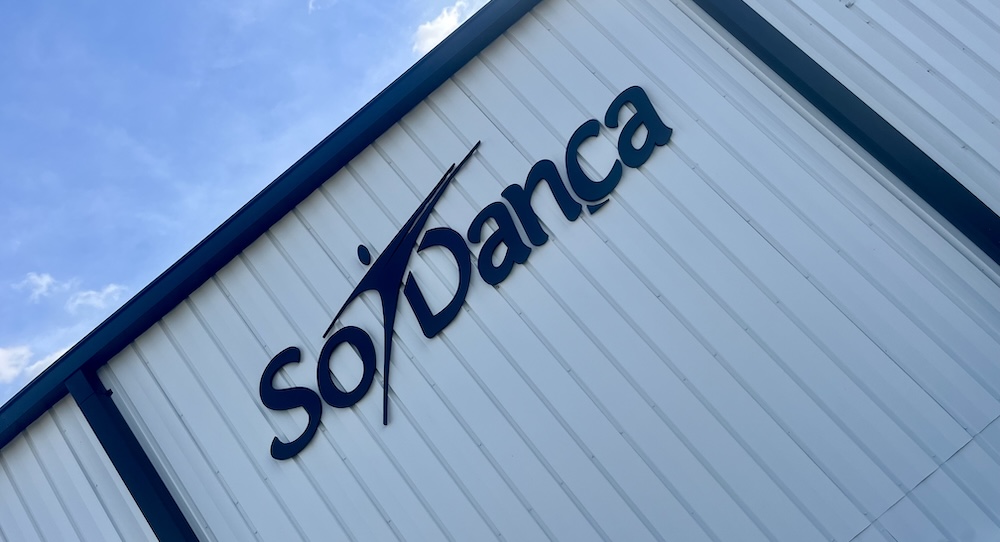
Só Dança’s recent move from South Florida to Moultrie, Georgia, represents a pivotal moment in the evolution of one of the world’s most beloved dance brands. After nearly three decades based in Miami, the company has relocated its U.S. headquarters and distribution operations to an 80,000-square-foot facility that promises greater efficiency, expanded capability and renewed energy for the brand and the wider dance industry. Moultrie, long known for its sprawling cotton and peanut farms, has now emerged as a significant hub within the American dance industry.

In the lead-up to Christmas, Dance Informa had the privilege of visiting Moultrie and the new state-of-the-art facilities to sit down with Só Dança America CEO Lisias Ransan, and enjoy the town’s charming historic downtown.
Ransan shared that the decision to move was both strategic and practical. “We’d been in South Florida for almost 30 years, and things changed a lot there. We were looking for a location that would be more strategic for us to be in and would make economic sense for us to invest,” he explained. South Florida, he noted, is “farther from anything else in the United States,” which makes nationwide distribution less efficient. “Here in Georgia, we cut one-day shipping everywhere. We are able to serve almost 17 states next day or second day!”
Climate and geography also played an unexpected role. When exploring options in Texas and Kentucky, the team weighed not only logistics but quality of life. “We didn’t want to go to a location where the winter would be a problem for us,” Ransan recalled. Moultrie offered a balance: accessible, temperate and – crucially – a place that “fitted like a glove” once everything was taken into consideration.
What surprised him most, however, was the reception. “When we got here, the people were so friendly, the open doors were phenomenal. I couldn’t believe it,” he said. Within five to six months, the company had renovated the warehouse, assembled operations and moved in. “The disruption for our stores was minimal in comparison to what it could have been.”
The move involved not just a company but also a community of employees. “We have five families that came with us,” Ransan shared. Those families, including younger staff in their early 20s, settled quickly. “They were able to find everything they needed.”
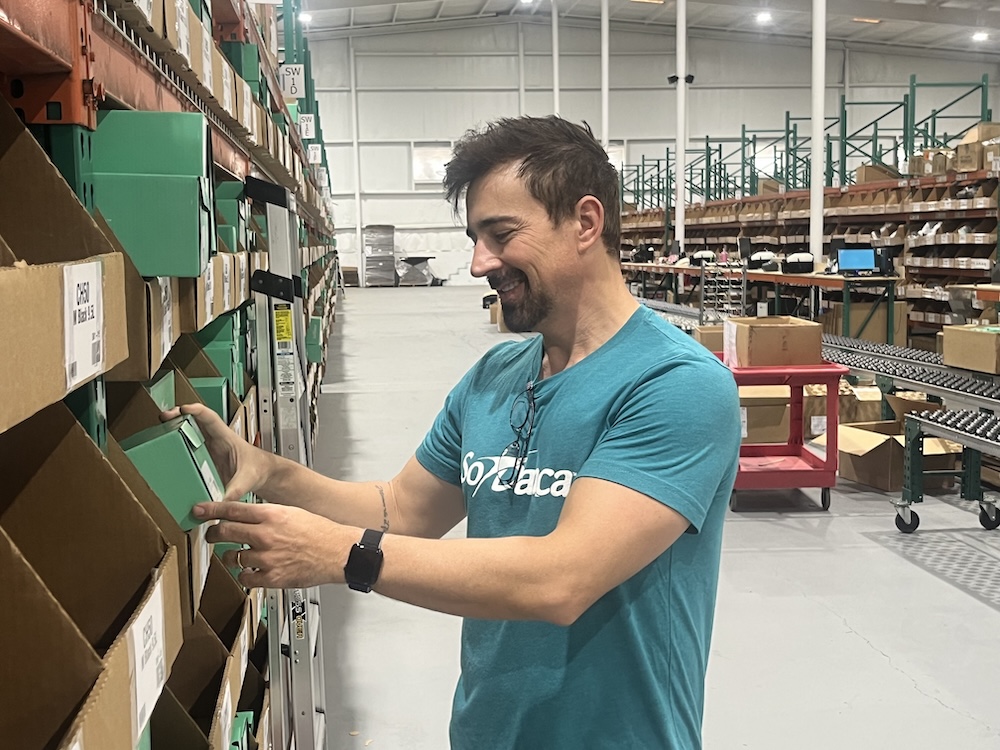
Even two families originally from Rio happily relocated with the company. “They love beaches,” he laughed, “but now they say, ‘I’m so happy here!’”
Ransan is keenly aware of the responsibility that comes with that local embrace. “People come here to see us, see how we’re doing, if we need anything. People stop in the street and talk to you. This is not what I’m used to,” he admitted. “I want to give back to the town as much as they are giving to us. That’s my goal.”
The additional space and operational efficiency are already fuelling significant product development. One of Só Dança’s most anticipated innovations is the next generation of the Alina pointe shoes, years in the making and shaped by extensive testing, feedback, and an unwavering commitment to innovation. “We’re working on a new pointe shoe, and I believe we’re finally able to introduce something truly different to the market,” said Ransan. “While Alina I and II were exceptionally well received, we recognize that no single pointe shoe can serve every dancer. Alina III and IV are designed to fill a critical gap in the Alina line, offering new solutions to meet the evolving needs of today’s dancers.”
“We also have a brand-new pre-pointe shoe called Bloom, developed as an integral part of this line. Designed with the same fitting philosophy, Bloom encourages dancers, teachers, and retailers to think outside the box when it comes to pre-pointe training and progression. This launch is especially exciting for us and our retail partners, as Bloom offers a highly innovative solution with very favorable costs and strong margins, making it as smart from a business standpoint as it is from a training perspective.”
None of it, he stressed, happened in isolation. Retail partners played a key role. “We had a lot of merciful retailers. They were able to work with us, talk to us and teach us. This fruit of what we’re putting together now is a community that’s working together.”
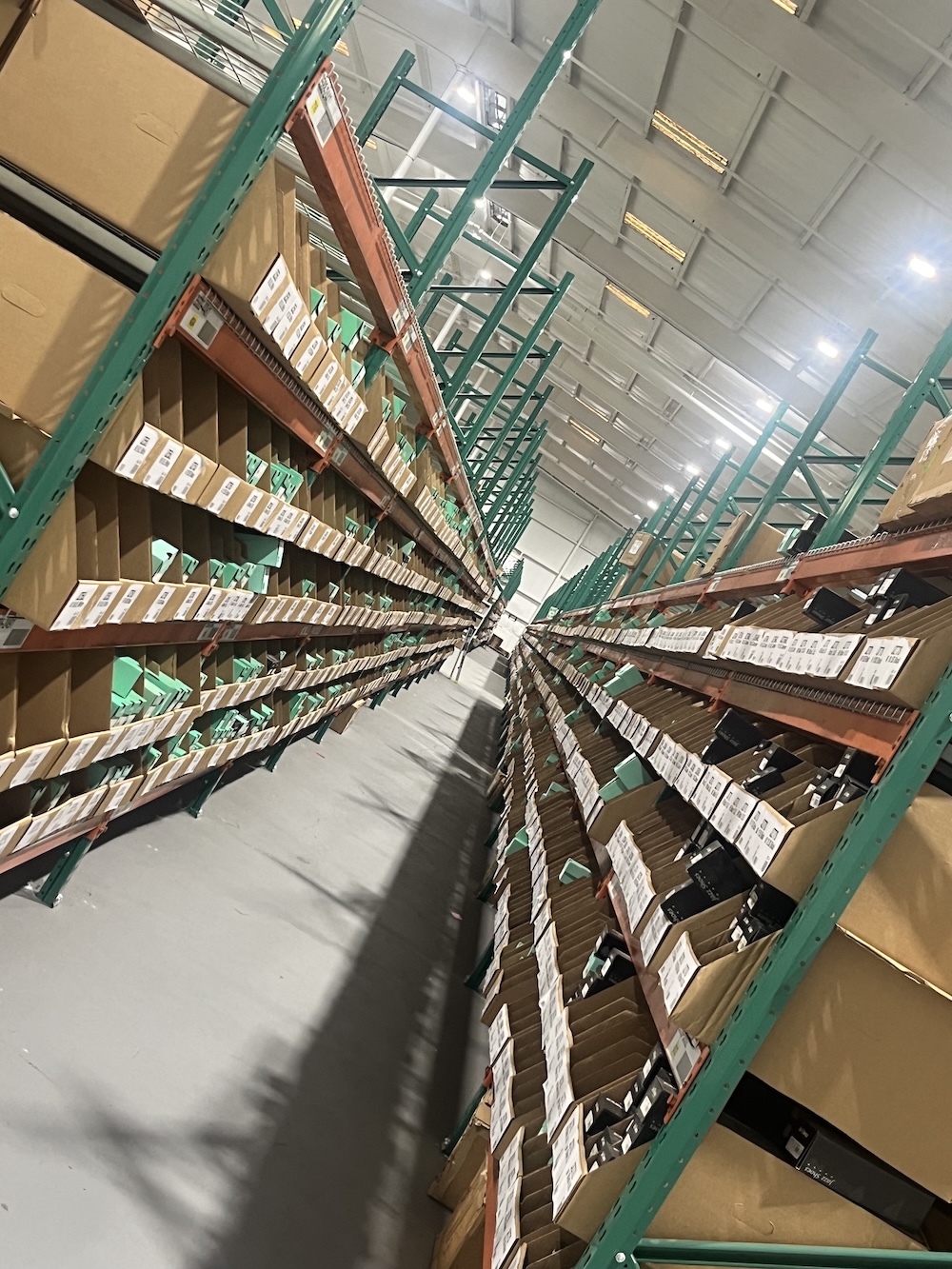
Beyond pointe shoes, Só Dança’s broader product portfolio continues to anchor the brand. “I think our split-sole shoe SD16 is the most sold shoe in the world today,” Ransan noted. The studio-uniform line has also become a major pillar, valued for its quality, range of sizes and “phenomenal” color options. He pointed to the aisles and aisles of product in Moultrie: “The quantity we have… that is something that people enjoy.”
Strategic collaborations further differentiate the brand. Ransan lit up when talking about Só Dança’s ambassadors. Of Tiler Peck, he said simply, “Tiler is phenomenal.” The partnership, he believes, reflects a deep alignment of values. “I can say that she fits in with the way we are. She’s not pretentious. What you see is what you get, and we love that.”
Similarly, he praised Lacey Schwimmer as “so creative,” noting that her line “is doing extremely well.” Bringing artists like Tiler, Lacey, Derick Grant and Aaron Tolson together, he said, works because “they fit, there’s trust, and we love each other.”
Ransan is also acutely aware of the shifting realities of the retail landscape. “The way you did business two years ago is not the same way you do business now,” he shared. “Stability is not the word for this year,” he said with a smile, referencing the current retail climate. In this environment, he sees Só Dança’s role as a steady partner for retailers. “As much as we can, we try to make it more level for the retailers and have clarity in how we act – no surprises.”
That philosophy underpins investments in systems, inventory and retailer support. “We’ve put a lot of investment into the system, from inventory control to the information that they may need,” he explained. “It is not one thing, but a lot of small things that we put together to make a difference.”
Through all this change, Ransan insisted that Só Dança’s core remains steady. “The important thing for the market is to understand that it doesn’t matter how much it changes, our character is always the same,” he said. “What we were, what we are, and as long as I’m here, that’s where we’re going to be.”
His own story mirrors that constancy combined with boldness. When he first came from Brazil in 1997, the family plan was to try the U.S. for two years. “After two years, if we liked it, we would stay,” he recalled. In August 1997, Ransan arrived with his wife, three kids and the family dog. The planned two years quietly became decades. “We never talked about it,” he said, “we just kept doing what we loved.”
Today, standing inside Só Dança’s expansive Moultrie facility, he feels a similar sense of momentum. “There are so many areas we can grow and invest,” he said. “I’m looking forward to what’s coming… The best is yet to come!”
For the dance community – retailers, teachers and dancers alike – Só Dança’s new chapter represents a meaningful investment in the future of the art form.
By Deborah Searle of Dance Informa.
Share this: