Tag Archive | "Royal Academy of Dance"

Genée International Ballet Competition 2012, Wellington


The 2012 Genée International Ballet Competition, organised by the Royal Academy of Dance, will take place in Wellington, New Zealand from 6-15 December, in association with the Royal New Zealand Ballet and the New Zealand School of Dance.

The Semi-finals (12-13 December) and Final (15 December) will be staged in the magnificent St James Theatre, the city’s leading venue for opera, dance and major musical shows and home of the Royal New Zealand Ballet.

“It is with great enthusiasm that we look forward to welcoming the RAD and the Genée International Ballet Competition to the home of the RNZB at the St James Theatre here in Wellington in 2012. Wellington is a vibrant city that is passionate about arts and culture and will provide a wonderful backdrop for this exciting competition.” Amanda Skoog, Managing Director, Royal New Zealand Ballet.

Finalists will compete for a coveted gold, silver or bronze medal, as well as significant prize money, in front of a judging panel of top ballet professionals including David McAllister, Artistic Director of the Australian Ballet, Li Cunxin, Artistic Director of Queensland Ballet and author of the best-selling autobiography Mao’s Last Dancer, and Christopher Hampson, Artistic Director of Scottish Ballet. New Zealand-born choreographer, Adrian Burnett, will create two exclusive variations (male and female) which will be premiered at the Final.

Genee International Ballet Competition 2012The Genée International Ballet Competition, fondly known as ‘The Genée’ is the RAD’s flagship annual event and is named after Dame Adeline Genée DBE, co-founder of the Association of Operatic Dancing, as the RAD was then known.

The competition originated quite humbly in 1931 as the ‘Adeline Genée Gold Medal’ and was introduced as an additional incentive for candidates who had passed the Solo Seal examination. Felicity Garratt was the first recipient of this award with a silver medal and then a bronze medal added in 1934 and 1956 respectively, and both gold and silver medals introduced for male dancers in 1938. The award continued to progress and develop into a competition format and remarkably it has taken place almost every year since 1931, even during the Second World War. In 2002, however Luke Rittner, Chief Executive, took the landmark decision to hold the competition outside London in order to embrace its international spirit taking it to Australia where Sydney Opera House played host to a record number of candidates. Following that success the Academy did not look back and the Genée has been presented in many cities across the globe.

Another event running alongside the main competition is the Genée Dance Challenge, a national dance challenge for young dancers across New Zealand, which will be held on Friday 14 December at St James Theatre.

Tickets for the Semi-finals, Final and Genée Dance Challenge are available from the Ticketek website at premier.ticketek.co.nz

Posted in FeaturesComments (0)

Ballet Theatre of Queensland’s new Artistic Team


After many discussions, several drafts of a written application, a nerve-wracking interview, a “nail-biting waiting period” – and lots of coffee – Libby McDonnell and Timothy Brown received “the most wonderful news” of their careers. They had won the post of co-Artistic Directors of Ballet Theatre of Queensland.

By Rain Francis.

Having performed and created together in various capacities over the years, Libby and Timothy have what they call “an unstoppable creative connection”. With their fresh, youthful energy and an obvious commitment to the professional development of young dancers and performers, they seem a wise choice to take the reins of Australia’s longest continuing dance company.

Now entering its 76th year, Ballet Theatre of Queensland is a not-for-profit organisation which provides “professional performance and stagecraft opportunities to nurture talented young dancers, as well as fostering an appreciation of ballet amongst young and old audiences alike.” The company was founded by Phyllis Danaher (MBE, FRAD), who was the first Queensland teacher to gain the Advanced Teacher Certificate from the Royal Academy of Dance. An influential force in Australian ballet history, Miss Danaher taught several dancers who would go on to become dance icons, such as Garth Welch and Lucette Aldous.

Every Artistic Director to succeed Miss Danaher has been a professional dancer; this is something the company prides itself on. For the last decade, the post has belonged to dedicated husband-and-wife team Jodie Anne White-Bivona and Boris Bivona. Sadly, Jodie passed away on the last day of performances in January this year.

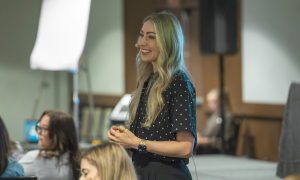
Libby McDonnell, Ballet Theatre of Queesland

Libby McDonnell

Knowing inside-out the demands and enormity of the role, it was under Boris’ recommendation that the title of Artistic Director was again shared by a partnership. And what better partnership in this instance than two friends who are artistically in tune? As Libby and Timothy say, “there are a few people in your lifetime that you have a genuine creative connection with. We share a deep mutual respect for one another and we are very fortunate to have this opportunity.”

Libby grew up dancing with BTQ, has since worked as an independent contemporary choreographer and costume designer, and is resident choreographer at Blue Roo Theatre Company. Timothy has danced with Queensland Ballet and Expressions Dance Company and has created works for both companies, as well as The Australian Ballet’s Bodytorque programme. BTQ President Michelle Platz says, “We are so excited to have this young dynamic duo join us. Between their choreography and design skills, they will start another amazing chapter in BTQ’s history.”

That chapter began with Libby and Timothy’s first task: to audition for the new season’s company. Each year, BTQ presents six performances, utilising all dancers in two casts. This gives all the dancers the opportunity to learn and perform in a variety of roles. After seeing 123 talented young dancers over 4 auditions, the “incredibly challenging” task was complete, and the co-Artistic Directors are now embarking on their first artistic adventure, creating Peter Pan. This engagement comes with added importance and significance, being the first ballet that Jodie and Boris created together. Libby and Timothy wish to pay their respects to their predecessors by delivering “an exceptional new storybook ballet”.

Timothy Brown, Ballet Theatre of Queensland

Timothy Brown

Libby and Timothy acknowledge that BTQ is a training ground, offering professional company experience for young performers: “We can’t expect them to know all the things we take for granted as adult professionals, such as how to conduct yourself in a theatre and how to emotionally deal with auditioning for lead roles in a professional manner. It is a part of our job to equip them with the tools to conduct themselves as professionals in a dance company, and hopefully inspire them to continue performing in ways they have not yet experienced at a dance school level.”

As Michelle adds, these young dancers learn to work as team, forming “friendships and memories that will last a life time”. In the process, the standard of the work they produce and the expectations placed on them are not far removed from the world of professional ballet. These opportunities provided by BTQ – to learn in such a relevant way – would not otherwise be available to the young dancers of Queensland. The fact that they are, is thanks largely to a dedicated group of volunteers who “love the company [and] who donate extraordinarily” to ensure its continuation.

Libby and Timothy are enthusiastic about getting to know their new company, and about the exciting projects that lie ahead. They say, “BTQ has a long history, and enormous soul. With two of us at its helm, we can support and challenge one another to deliver the best possible experiences for our performers and the highest quality of artistic product.”

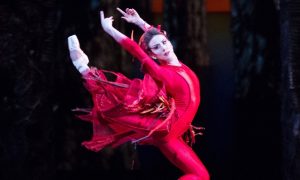
Top photo: Dancer from Ballet Theatre of Queensland

Posted in FeaturesComments (0)

Classical Diva of Dance – Audrey Nicholls


By Brian Nolan.

If there is one person who exemplifies a true Classical Diva of Dance then Audrey Nicholls is it. She hails from Townsville in north Queensland, but after training in Sydney and then furthering her training in London, our second diva made her home in Victoria.  (If you didn’t catch my interview with our first diva, Carole Oliver, click here)

In the world of RAD (Royal Academy of Dance) and in the performing arena Audrey Nicholls stands pointe shoes and tutus over the rest. She is renowned throughout Australasia and internationally for her contribution to the RAD and in 2010 was honoured by the board of trustees at the Academy headquarters in England with a Fellowship in recognition of her contribution and remarkable, dedicated service to the Academy.

Audrey Nicholls dances with Robert Pomie in the Pas de Deux from Don Quixote

With a career spanning 61 years, Audrey, along with Colin Peasley,  is one of the longest serving and dare I say one of the more ‘’mature’’ dancers still performing in Australia. As a valued guest artist of the Australian Ballet Company (where she has been guesting since 1992), Audrey is not only constantly performing character roles with them but still has roles created on her!

Audrey has had a very illustrious career and in her day she graced some of the world’s best stages. A soubrette, with a sensitive lyrical and artistic quality, coupled with assiduous attention to detail and a resounding technique, enabled Audrey to perform and portray a huge variety of roles.

Audrey commenced her career in 1950 where at the very young age of 16 she joined the Borovansky Ballet (now the Australian Ballet) as a member of the corps de ballet. In 1951, she won the inaugural Frances Scully Memorial Scholarship and travelled to London to further her studies. In 1952, she joined the Rambert Ballet as a soloist and in 1953 was promoted to a principal dancer. In 1955, she returned to Australia and rejoined the Borovansky Ballet as a senior soloist.  In 1958, the Ballet Guild of Victoria (Ballet Victoria) was her next stepping-stone with some outstanding principal roles especially in Giselle and Coppelia.

Audrey Nicholls performs 'Waltz' in Le Sylphides with the Ballet Rambert in London, 1954

A career in television from 1958 – 68 saw her immortalized on the small screen with both Channel 7 and Channel 2 (ABC). During this time Audrey commenced teaching the RAD Syllabus.

In 1973, Audrey Nicholls was appointed as a Graded Examiner of the Royal Academy of Dance. From 1982 to today, she has taught RAD teaching courses and classes throughout Australia. Audrey instigated the Victorian Grade Awards and was honoured when the awards were named after her this year.

Audrey is a truly remarkable lady, who is forever smiling. Her warmth and passion for the people around her and the art she loves is evident. When taking workshops or courses, teachers specifically ask for Audrey as they know that the students all come out of class beaming.

Audrey Nicholls FRAD ARAD

What influenced you to become a teacher?

I had been a professional dancer since the age of sixteen and continued until I was about 36. During this time at around 23, I was passionate about teaching ballet and wanted to give back to aspiring young students my love and experience in dance. Along with professional dancer Eve King, I began what was to become a long and rewarding journey of teaching ballet.

When you first started teaching what were your aims and ambitions?

To give the students a pure classical technique and to inspire their love of music. When I hear music, I immediately have a physical reaction to move and express myself and to bring out the artistry of the dance step. I also wanted to offer knowledge of other influential teachers and use the expertise of Martin Rubinstein (Maestro), Lynn Golding, Jack Manual and Christine Howard. We were very privileged to be a part of their education.

Have you achieved these goals?

I do feel a sense of achievement and feel rewarded to have trained many students who have gone on to wonderful professional careers not only as classical dancers but also qualified examiners, teachers, actors and stage managers. I have also trained Genee gold medallist Holly Smart and bronze medallist Pamela Smith, as well as several soloists in the Australian Ballet and Royal Ballet Companies including Delia Harrington and James Newman. One former student of note is Christine Howard who is the Character teacher at the Australian Ballet School (30 years).

What is your proudest moment in all your years of teaching?

Being recognized by my peers and having the honour to be awarded the Fellowship of the Royal Academy of Dance (2011). Also the achievement of 40 years of collaboration with Eve King and our teaching together in our ballet school.

Where do you think ballet is headed in the next 10 years?

Supply & demand – we have the supply of many talented dancers, choreographers, designers, composers and of course teachers! Dancers today have the opportunity to receive excellent training with technical ability being pushed beyond their boundaries. Contemporary and classical demands the utmost from the dancer- today there is no limit to where and what will happen in the next 10 years.

What do you think is the most important thing that has happened or influenced dance in the last 10 years?

Televised live broadcasts of performances reach thousands of people who might not normally have the opportunity to see a ballet. In addition, one of the biggest of all: YouTube

What is your favourite ballet?

I am a bit of a traditionalist, so I will say Giselle. I love the first act, the communicative story telling in the demi character style, told with drama and heartfelt emotion especially with Giselle’s acting in the ‘mad scene’.  Then the pure classicalism of Act 11, the choreography raises so many sentiments and reactions that enable the dancers to put their hearts on the line. It is a wonderful vehicle for the dancer.I grew up on Giselle, starting in the corps de ballet, then Pas de Six, Peasant Pas de Deux, Queen of the Willis and eventually the title role of Giselle.

Who is your favourite dancer?

There are three exquisite women and it is impossible for me to choose between them, they are: Natalia Makarova, Darcy Bussell and Natalia Osipova – for me they are the epitome of dance.

You are an RAD examiner. Why did you choose RAD and do you still examine?

My original teachers were Gwen Hardie and Ann Roberts FRAD, ARAD who both taught the RAD syllabi.  I found the syllabi structure and exam preparation beneficial and certainly challenging. Therefore, when I commenced teaching, the transition to RAD was a natural progression. Becoming an RAD examiner seemed to follow automatically.

I will always be grateful to Martin Rubinstein for his mentoring and guidance when I was becoming an examiner in those early days and to this day. I loved examining, meeting the different teachers and exchanging ideas. I enjoyed helping to sort out problems and addressing the needs of the country teachers where little access to examiners or experienced teachers was available. I have travelled internationally and throughout Australasia for 33 years as an examiner. As an examiner, we all were continually updated with education in dance, psychology, syllabus and new methods. It has been a very rewarding career and I continue as an RAD tutor on different faculties for courses, workshops for teachers and students, and as a Juror for RAD events.

How would you like to be remembered?

Fondly – I hope!  But also for my lifelong love of dance and my devotion to my husband David and my family.

Top photo: Audrey Nicholls in the Pas de Trios from Swan Lake – Ballet Rambert 1954.

Published by Dance Informa dance magazine – everything dance in Australiadance auditions, dance news, dance events and resources for dance teachers.

Posted in Features, Teacher Tips & ResourcesComments (1)