Tag Archive | "RAD"

A Guide to Ballet Competitions


By Rebecca Martin.

From a small town eisteddfod to the international Prix de Lausanne, there is a ballet competition for every age and every level of dancer. Whether you’re a young ballet student, in full-time training, or are a seasoned professional, the benefits of ballet competitions are numerous. However, there are some drawbacks, and the ongoing question of whether ballet should even be competitive. If you’re weighing whether or not to enter the world of ballet competitions, or are already a regular on the competition scene, Dance Informa has put together a guide to ballet competitions to help you navigate the tutus, tights, tears and trophies.

For younger dancers, competitions expose them to the fun of stage lights, costumes, make-up and prizes. For parents, it can mean long car rides, tantrums and endless sewing of sequins. Yet the pros far outweigh the cons, and the skills and discipline learned through competing can be carried on to other aspects of the dancer’s life, making them a more focussed and mature adult. Personally, some of the fondest memories of my childhood involve ballet competitions. I formed great friendships, developed an affinity for the smell of backstage, learned to be organised and to perform even when nervous. Importantly, I learned the spirit of sportsmanship. It wasn’t about winning, it was about performing on stage in front of an audience, having fun and being friendly with fellow competitors.

If you’ve ever seen an episode of the television show Dance Moms, you will be forgiven for thinking that competitions are cut throat events that involve screaming teachers and complaining mothers. While that may happen from time to time, it’s important to find a ballet teacher who is encouraging and selects students for competition who are able to handle the pressure and are up to standard. Competitions are not the be all and end all of ballet training. If a teacher is putting too much emphasis on competition and neglecting the technique and enjoyment aspects, then consider trying other ballet schools.

For older dance students, ballet competitions can mean scholarships to prestigious schools, prize money or even job prospects. While bringing home a medal or wad of cash is fantastic, the greatest benefit of competing can be the connections dancers make to ballet companies and their peers. Competitions are reshaping the way dancers audition for companies. Rather than attending multiple auditions at what is often a great financial expense, major ballet competitions are used by ballet company directors to source new recruits. Directors can see the dancers both in class and on stage, something they cannot do in a regular studio audition. USA’s International Ballet Competition (IBC) is basically an audition for attending company and school directors. According to Australia’s Stanton Welch, who is currently Houston Ballet’s Artistic Director, competitions augment the audition process and are a great way for directors to shop for talent.

Aaron Kok and Kelsey Stokes

Aaron Kok and Kelsey Stokes, winners of the 2012 Sydney Eisteddfod McDonald’s Ballet Scholarships.

The Prix de Lausanne, one of the world’s greatest ballet competitions for pre-professional dancers now schedules networking into the program. An afternoon is set aside for schools to set up booths to talk with potential new students, so dancers don’t have to be a prize winner to be awarded a scholarship or offered a place in a training programme.

For dance students of any age, it is important to keep expectations realistic. Judging is subjective, and things can go wrong on stage. No matter how much dancers rehearse, they still may fall out of a pirouette or fluff their balance in arabesque, and no matter how well they perform, they still may be beaten at judging time. It is important to value the quality of the learning experience and the performance itself over the number of medals or prizes won. Students can return to class after competitions with inflated egos after winning or become overanxious about their dancing if they aren’t as successful as they hoped. Some dancers receive scholarships and job offers after being eliminated from competitions, which is far more beneficial in the long run than a medallion or prize money. Both dance students and parents, as well as teachers, need to keep things in perspective and not focus on a gold medal.

For dancers in a ballet company, their career is going to consist of constant auditions, so the practise early on is extremely beneficial. Every time a visiting choreographer comes in to watch company class and cast for their next work, they will be auditioning for them. The competition doesn’t end once a dancer gets a contract with a company.

Most local competitions allow entry through an application form. Some may request a photo or video. The bigger competitions will require dancers to attend an audition class or series of elimination rounds, and international competitions will first need to see an audition video.

DO:

  • Speak to your ballet teacher about local competitions and check Dance Informa’s listings for upcoming opportunities.
  • Do your research. Visit the website of the competition and carefully read the entry form and guidelines.
  • Make sure you are eligible. There are often age restrictions and sometimes even syllabus restrictions.
  • Pick a routine or variation that compliments your abilities. Don’t do something that is too difficult for you.  It’s better to do a simple routine well than fumble through a tricky number.
  • Make the most of every experience. Listen to the judges and teachers and apply their feedback.
  • Enjoy the experience! You’re on stage in front of a supportive audience.
  • Talk to as many people as possible.
  • Have a make-up kit that you take with you to every competition. Include needle and thread, resin, hairspray, hair pins and spare tights.
  • Be prepared! Rehearse, practise in your costume, test out the stage before you go on, get plenty of rest, and fuel your body.
  • Have a back up copy of your music.
  • Remember that people are not only watching your dancing, but the way you behave. Be professional, attentive and courteous.

DON’T

  • Give up!  The more competitions you do, the more confident you will become.
  • Let your nerves get the better of you. What is the worst that can happen?
  • Be negative or critical of others.
  • Put anything extra on your application form or audition DVD. Follow the guidelines.

Remember that the process is the prize. Here is a listing of various ballet competitions around the world:

-  www.sydneyeisteddfod.com.au

-  www.rad.org.uk

-  www.prixdelausanne.org

-   www.ballet.org.au

-   www.jjgp.jp

-   www.yagp.org

-   www.usaibc.com

-   http://moscowballetcompetition.com

-   www.bda.edu.cn

-   www.theamericandancecompetition.com

-   www.concorsointernazionaledanza.it

-   www.wbcorlando.com

-   www.danceuponadream.com

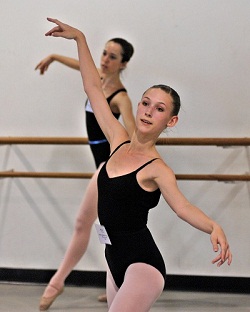
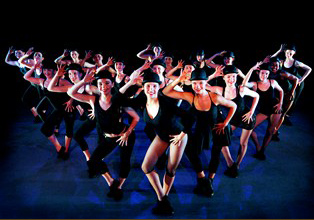
Photo (top): Under 12 dancers from The Dance Spot perform Tchaikovsky’s Serenade for Strings at McDonald’s Sydney Eisteddfod. Photo courtesy of Sydney Eisteddfod.

Posted in Tips, Top StoriesComments (0)

Nurturing the Next Generation of Ballerinas


By Grace Edwards.

It goes without saying that in order to have a successful career in ballet, a dancer must eventually meet, if not transcend, the expectations of the directors who will employ them. Teachers shoulder the heavy responsibility of preparing their dancers for this eventuality. So how do those at the top of the field help their elite dancers to achieve this goal?

“Whether or not I like what’s going on in the ballet world, which I do, it’s making sure your dancers are quite up with the rest of the world,” says Leeanne Rutherford, Director of Ballet Theatre Australia.

Renowned ballet teacher Tanya Pearson of the Tanya Pearson Classical Coaching Academy believes that for better or worse, dancers must be trained to meet the ever increasing physical demands of the art. “The dancers nowadays are much more flexible and that’s demanded by choreographers. When I was training we were more musical and artistic. That was the emphasis then, not high extensions, but now at the moment there’s a trend towards that. Ballet has become a little more gymnastic.”

Pearson, however, emphasises artistry and the importance of interpreting roles to help her students stand out in the crowd amongst the many technical wizards churned out by ballet schools across the globe. In this way she reconciles her own teaching philosophy with the evolving standards of the art and believes that this has helped her dancers achieve success in international competitions such as the Youth America Grand Prix.

Apart from possessing a suitable physique and sufficient facility, the ability to coordinate steps easily, a high level of maturity and a ‘safety blanket’ of good grades are all crucial to a ballet student’s chances of professional success. However, some full-timers do transcend these ‘cookie-cutter’ prescriptions to be accepted into their courses. “Some students just have the ability to work on a regular basis,” says Rutherford. “It’s not a struggle, they’re just meant to do it. It’s like a calling for them.”

To help such talents, Beth James, Director of the West Australian Conservatoire of Classical Ballet avoids focusing too squarely on technique. “Jobs are vast, however, the dancers need to be in a good position to take them,” she says.  “It’s not just always the technique that’s going to make it there, it’s the whole package more so now. I try to help dancers in a more holistic way, to strengthen not only their bodies but their minds and their emotions as well. Organisational skills also need to be looked at.”

She points to self-belief as one of the most formidable but least talked-about obstacles to a young dancer’s success. “It’s learning to accept that although in their mind’s eye they need to be perfect, we are okay with them not being perfect and know that they are going to learn from their mistakes,” says James. “We respect that they are still above and beyond the acceptable range.”

Sonya Shepherd Charlesworth Ballet Institute

Sonya Shepherd teaches Certificate II & III students at Charlesworth Ballet Institute. Dancer Charlotte Price (foreground) is now studying in Amsterdam. Photo by Darren Clark.

“Ballet’s got a bad rep for being a negative environment, so it’s about trying to turn that around,” concedes Briana Shepherd, who teaches at the Charlesworth Ballet Institute. “It’s actually quite hard. I mean, I often find myself being quite negative and I have to turn around and go, ‘Okay, would you want to hear it this way?’ You have to pay attention to how the students receive the corrections too, because everyone learns differently.”

At the Charlesworth Ballet College, the Institute’s professional programme, dancers are schooled in both academic studies and ballet. The college therefore takes on much responsibility for the overall development of their elite students as they enter their teen years. “Sometimes they want to go out, or they just don’t want to do it. But it’s making them understand that if they want a career they have to put in the hard work now,” says Shepherd. “I try to nurture the passion, to have them understand that yes, it is a lot hard work, physically and mentally, but it can be a very rewarding career path.”

Whilst finding ways to address the differing strengths and weaknesses of each student, teachers must also keep in mind the likely demands of their future employers. Tanya Pearson tries to tackle both by exposing her students to different methods of training such as Vaganova, RAD and Cecchetti.

“Each day we have a different teacher, male and female, and they’ve all been trained from different backgrounds. I feel that the exposure to these different styles will help them to follow any teacher that they may strike in an open situation. We also expose the students to regular performances with Sydney City Youth Ballet to be able to perform to an audience, because that’s what they’re training to become a professional dancer for,” says Pearson.

For particularly talented students, participating in international competitions can be beneficial in this regard, giving them an opportunity to see where they range amongst some of the world’s best pre-professional dancers. In a competition like the Youth America Grand Prix, dancers receive reports from the judges who are a selection of directors from schools and companies all over the world. “It’s interesting for students to see how other people see them and if they are marked fairly high in the range they can feel they are up there close to the winners,” Pearson observes. “They can know they’re going in the right direction and maybe next time they’ll be the winner or maybe next time, they’ll get a job. An audition process, after all, is a competition.”

But even for the perfect teacher with dream classrooms full of physically ‘ideal’ students, the fate of the young students is ultimately not in his or her hands. A student’s passion, work ethic and belief in their own capabilities are the major hallmarks of a young ballerina in the making, says Shepherd.

“If they’re willing to keep going, even when it becomes hard, they will get there.”

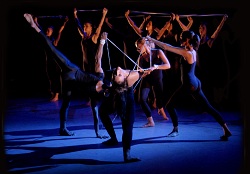
Photo (top): Charlesworth Ballet Institute students rehearse Paquita for a gala last August.  Liam Blair (former student now dancing with the Aalto Ballett Theater Essen,Germany, who was a guest for the gala) partners Charlotte Price. Photo by Darren Clark.

Posted in Teacher Tips & ResourcesComments (0)

Classical Diva of Dance – Audrey Nicholls


By Brian Nolan.

If there is one person who exemplifies a true Classical Diva of Dance then Audrey Nicholls is it. She hails from Townsville in north Queensland, but after training in Sydney and then furthering her training in London, our second diva made her home in Victoria.  (If you didn’t catch my interview with our first diva, Carole Oliver, click here)

In the world of RAD (Royal Academy of Dance) and in the performing arena Audrey Nicholls stands pointe shoes and tutus over the rest. She is renowned throughout Australasia and internationally for her contribution to the RAD and in 2010 was honoured by the board of trustees at the Academy headquarters in England with a Fellowship in recognition of her contribution and remarkable, dedicated service to the Academy.

Audrey Nicholls dances with Robert Pomie in the Pas de Deux from Don Quixote

With a career spanning 61 years, Audrey, along with Colin Peasley,  is one of the longest serving and dare I say one of the more ‘’mature’’ dancers still performing in Australia. As a valued guest artist of the Australian Ballet Company (where she has been guesting since 1992), Audrey is not only constantly performing character roles with them but still has roles created on her!

Audrey has had a very illustrious career and in her day she graced some of the world’s best stages. A soubrette, with a sensitive lyrical and artistic quality, coupled with assiduous attention to detail and a resounding technique, enabled Audrey to perform and portray a huge variety of roles.

Audrey commenced her career in 1950 where at the very young age of 16 she joined the Borovansky Ballet (now the Australian Ballet) as a member of the corps de ballet. In 1951, she won the inaugural Frances Scully Memorial Scholarship and travelled to London to further her studies. In 1952, she joined the Rambert Ballet as a soloist and in 1953 was promoted to a principal dancer. In 1955, she returned to Australia and rejoined the Borovansky Ballet as a senior soloist.  In 1958, the Ballet Guild of Victoria (Ballet Victoria) was her next stepping-stone with some outstanding principal roles especially in Giselle and Coppelia.

Audrey Nicholls performs 'Waltz' in Le Sylphides with the Ballet Rambert in London, 1954

A career in television from 1958 – 68 saw her immortalized on the small screen with both Channel 7 and Channel 2 (ABC). During this time Audrey commenced teaching the RAD Syllabus.

In 1973, Audrey Nicholls was appointed as a Graded Examiner of the Royal Academy of Dance. From 1982 to today, she has taught RAD teaching courses and classes throughout Australia. Audrey instigated the Victorian Grade Awards and was honoured when the awards were named after her this year.

Audrey is a truly remarkable lady, who is forever smiling. Her warmth and passion for the people around her and the art she loves is evident. When taking workshops or courses, teachers specifically ask for Audrey as they know that the students all come out of class beaming.

Audrey Nicholls FRAD ARAD

What influenced you to become a teacher?

I had been a professional dancer since the age of sixteen and continued until I was about 36. During this time at around 23, I was passionate about teaching ballet and wanted to give back to aspiring young students my love and experience in dance. Along with professional dancer Eve King, I began what was to become a long and rewarding journey of teaching ballet.

When you first started teaching what were your aims and ambitions?

To give the students a pure classical technique and to inspire their love of music. When I hear music, I immediately have a physical reaction to move and express myself and to bring out the artistry of the dance step. I also wanted to offer knowledge of other influential teachers and use the expertise of Martin Rubinstein (Maestro), Lynn Golding, Jack Manual and Christine Howard. We were very privileged to be a part of their education.

Have you achieved these goals?

I do feel a sense of achievement and feel rewarded to have trained many students who have gone on to wonderful professional careers not only as classical dancers but also qualified examiners, teachers, actors and stage managers. I have also trained Genee gold medallist Holly Smart and bronze medallist Pamela Smith, as well as several soloists in the Australian Ballet and Royal Ballet Companies including Delia Harrington and James Newman. One former student of note is Christine Howard who is the Character teacher at the Australian Ballet School (30 years).

What is your proudest moment in all your years of teaching?

Being recognized by my peers and having the honour to be awarded the Fellowship of the Royal Academy of Dance (2011). Also the achievement of 40 years of collaboration with Eve King and our teaching together in our ballet school.

Where do you think ballet is headed in the next 10 years?

Supply & demand – we have the supply of many talented dancers, choreographers, designers, composers and of course teachers! Dancers today have the opportunity to receive excellent training with technical ability being pushed beyond their boundaries. Contemporary and classical demands the utmost from the dancer- today there is no limit to where and what will happen in the next 10 years.

What do you think is the most important thing that has happened or influenced dance in the last 10 years?

Televised live broadcasts of performances reach thousands of people who might not normally have the opportunity to see a ballet. In addition, one of the biggest of all: YouTube

What is your favourite ballet?

I am a bit of a traditionalist, so I will say Giselle. I love the first act, the communicative story telling in the demi character style, told with drama and heartfelt emotion especially with Giselle’s acting in the ‘mad scene’.  Then the pure classicalism of Act 11, the choreography raises so many sentiments and reactions that enable the dancers to put their hearts on the line. It is a wonderful vehicle for the dancer.I grew up on Giselle, starting in the corps de ballet, then Pas de Six, Peasant Pas de Deux, Queen of the Willis and eventually the title role of Giselle.

Who is your favourite dancer?

There are three exquisite women and it is impossible for me to choose between them, they are: Natalia Makarova, Darcy Bussell and Natalia Osipova – for me they are the epitome of dance.

You are an RAD examiner. Why did you choose RAD and do you still examine?

My original teachers were Gwen Hardie and Ann Roberts FRAD, ARAD who both taught the RAD syllabi.  I found the syllabi structure and exam preparation beneficial and certainly challenging. Therefore, when I commenced teaching, the transition to RAD was a natural progression. Becoming an RAD examiner seemed to follow automatically.

I will always be grateful to Martin Rubinstein for his mentoring and guidance when I was becoming an examiner in those early days and to this day. I loved examining, meeting the different teachers and exchanging ideas. I enjoyed helping to sort out problems and addressing the needs of the country teachers where little access to examiners or experienced teachers was available. I have travelled internationally and throughout Australasia for 33 years as an examiner. As an examiner, we all were continually updated with education in dance, psychology, syllabus and new methods. It has been a very rewarding career and I continue as an RAD tutor on different faculties for courses, workshops for teachers and students, and as a Juror for RAD events.

How would you like to be remembered?

Fondly – I hope!  But also for my lifelong love of dance and my devotion to my husband David and my family.

Top photo: Audrey Nicholls in the Pas de Trios from Swan Lake – Ballet Rambert 1954.

Published by Dance Informa dance magazine – everything dance in Australiadance auditions, dance news, dance events and resources for dance teachers.

Posted in Features, Teacher Tips & ResourcesComments (1)

Dance 10 Summer School


FIVE FULL DAYS OF
EXCITING AND ENERGETIC CLASSES!

The Royal Academy of Dance Regional Advisory Panel for S.A. is excited to present the most intensive and energetic program of dance for the summer of 2010.
Offering a variety of daily classes.
Don’t miss this opportunity to study with internationally renowned dancers, choreographers and tutors -
LISA BOLTE – CLASSICAL
JESSE RASMUSSEN – TAP
DALE POPE – CONTEMPORARY
DANA JOLLY – JAZZ/MUSICAL THEATRE 
JOANNE HARTSTONE – DRAMA

DANCE 10 will run from -   Monday, 11th to  Friday, 15th January  2010.
DANCE 10  will be held in the magnificent studios at the Adelaide Centre for the Arts, 39 Light Square, Adelaide.   S.A.
Classes will be in four levels by ability.  The minimum age is 9 years.

BOOKINGS CLOSE DECEMBER 7th 2009.

For details and Registration Form to be posted to you, please leave your name and address on the following phone numbers - (08) 8269 5157 or (08) 8355 6599 www.rad.org.au

DANCE 10


Photographer: Suzanne Opitz

Posted in Dance News AustraliaComments (2)

Advancing Dancers Celebrate Graduation


The Queensland Dance School of Excellence is proud to wave off another group of graduates from its Diploma of Dance course run in partnership with Queensland Ballet and Kelvin Grove State College.  It has been a successful year for the class of 2009 but in particular, two of the male graduates, Joseph Stewart and Aeden Pittendreigh, have a lot to celebrate.

Joseph graduates with QDSE’s Most Outstanding Dancer Award; the Solo Seal certificate (the Royal Academy of Dance’s highest achievement); the Runner Up Award from the RAD Scholarships and a Dance Diploma, Overall Position and Certificate of Education.

Aeden graduates with QDSE’s Encouragement Award; the Dowling/Neylan Most Improved Male Classical Dancer Scholarship valued at $2000; the RAD Advanced II certificate and a Dance Diploma, Overall Position and Certificate of Education.

Along with 4 other QDSE students, both boys performed as extras with the Paris Opera Ballet in their recent Brisbane season of La Bayadere and to top off a fantastic year they have both been accepted to continue their dance training in Queensland Ballet’s Professional Year in 2010.

Joseph and Aeden join a growing list of graduates who have progressed from the school into the Queensland Ballet’s Professional Year (PY).  Many of these have gone on to become full-time dancers with the company demonstrating the success of the long standing association between QDSE, Queensland Ballet and Education Queensland.

In 2010, the QDSE/PY graduates dancing with the company will include Melissa Tattam, Kathleen Doody and Tamara Zurvas as full-time company dancers and Lina Kim and Sarah Thompson as trainee dancers.

QDSE is now accepting enrolments into its Year 8 – 12 programs. 
Visit www.kelvingrovesc.eq.edu.au or email qdse@acenet.net.au for information.

Posted in Dance News AustraliaComments (0)