Tag Archive | "Pina"

Silver Success at the Genée for Harry


By Grace Edwards.

In one of the world’s toughest vocations, Victorian College of the Arts Secondary School (VCASS) student Harry Davis, 17, is now one step closer to his dream of becoming a professional ballet dancer after winning a silver medal at the Genée International Ballet Competition 2012. Fellow medallists included Australian Montana Rubin (female gold), and New Zealanders Aurelian Child-de-Brocas (male gold), Kaena Ahern (female silver) and Ariana Hond (female silver and Audience Award).

The prizes were awarded by an illustrious judging panel of three: David McAllister AM, Artistic Director of The Australian Ballet, Li Cunxin, author of the best-selling autobiography Mao’s Last Dancer and newly appointed Artistic Director of The Queensland Ballet, and Christopher Hampson, internationally renowned choreographer and newly appointed Artistic Director of the Scottish Ballet.

Dance Informa’s Grace Edwards spoke to Harry to congratulate him on his latest achievements and gain an inside look into his competition experience.

Congratulations on your silver medal Harry! How did you feel when you realised you had won a silver medal?

Thanks! It was a huge shock actually, especially because even before the competition I had heard from another girl who had entered the Genée the year before that the panel didn’t have to award medals unless they felt the standard of competitors was adequate. For instance, there were years where the gold medal hadn’t been awarded at all. So yes, it was a shock, but honestly it wasn’t even the best part of the whole experience.

Harry Davis ballet competition

What were your favourite aspects then?

It was really fun performing onstage for the finals. We had had rehearsals just before, so it was nice to actually do our solos onstage at the St. James as we’d already been on there.

And definitely getting to know all the people from around the world and doing class with them. I wish that we could have swapped around a bit more so we could have gotten to know even more people because we were always with the same group, but it was still good. I wish the whole thing was longer too!

For all those thinking of entering the Genée this year, what did you have to do to enter and prepare?

For the Genée there wasn’t actually an audition to go to, so the application process was fairly rigorous. You had to write down past scores from all your exams with the RAD and hand over photocopies, write down who your teachers were, your nationality – everything.

After my Solo Seal exam I had a good month or so to prepare with my teachers. The other Genée entrants from VCASS and I coached our solos every Saturday and sometimes throughout the week. Apart from my “dancer’s own” solo and the commissioned solo, we all had to learn the rest once we got to Wellington. I danced the Royal Ballet’s version of the Black Swan Pas De Deux, the Act III solo from Swan Lake, because I had already learnt it from my preparations for other competitions.

What was your schedule like?

The guys’ timetable was actually very lush and had lots of breaks because we were a smaller group. On the first day we met in the foyer at 7am for breakfast, as classes began at 9am. We had ballet class each day first, for which we were split into three groups as there were 71 of us. Our schedules all involved one of three things: variation coaching, solo coaching or dancer’s own [self-choreographed solo] coaching. So this went on for about five days until Wednesday the next week.

Then we had the semi-finals, which involved a ballet class as a warm-up. We performed a ballet class onstage, and the next day we had our variation and “dancer’s own” to perform.  The three judges judged that and afterwards they announced the finalists.

Following that, on Friday, it was just the group of five of us receiving coaching through our solos because Saturday we had the actual final. We were up quite late that evening because there was an after-party after that!

Harry Davis at Genee

You had to perform a commissioned solo by Adrian Burnett as part of the competition. What was that like?

Yes, we all had to learn Adrian’s solo. The solo was really cool. It was fairly classical and had heaps of jumps in it, so on the first day it was really exciting. But once we got to the end it was pretty suicidal because it needed so much stamina!

What was it like creating your own solo?

It actually took me ages to choreograph my “dancer’s own” solo because I hadn’t choreographed much ballet before. We got to choose our own music, so I used music from the movie Pina. It was really difficult for me, but it was a good experience.

How did you celebrate?

Pretty much by doing nothing, because I was tired by the end and also, my knee was quite sore because I have tendonitis. So, I just wanted to rest. We all had a little party in the dorms after we went back to the hotel and that was a release from it all, which was nice. There wasn’t much celebration when I went back home, it was just about having holidays. The experience itself was the reward really.

What are your plans for the future?

I’m looking forward to joining the Level Six boys at The Australian Ballet School this year and taking advantage of all the facilities there as I’d like to improve things like my upper-body strength for pas de deux. I’d also love to try and audition again for the Prix de Lausanne. If something amazing did happen and I actually got into the Prix, the prize money I’ve won from the Genée would help me pay for flights without having to worry my parents. Otherwise, it will probably end up as a long-term deposit, maybe for an audition tour at the end of my training. I’m just saving up at the moment for anything that might happen in the next few years. As for long-term plans, I’m not too sure yet. I’m just keeping my options open at the moment and seeing what happens. I’ve still got a good three years of training to go to figure that out!

Photos courtesy of Harry Davis. 

Posted in InterviewsComments (0)

First Position Dance Doco


By Rain Francis.

It seems now is the hour for marvellous dance documentaries. 2011′s much anticipated Pina by Wim Wenders did not disappoint and then there was the memorable and inspirational Life in Movement. Later this year Australian dancers and film fans can look forward to what has been called “an enormously satisfying”* documentary, First Position.

Produced and directed by ex-dancer Bess Kargman, First Position follows six young dancers as they prepare for the Youth America Grand Prix. Every year the prestigious competition attracts over 5000 applicants, of which 300 are selected for the finals in New York City. It is an opportunity to be seen by the world’s top dance schools and companies, who may offer scholarships and contracts based on the dancers’ performances. The stakes are high.

The six dancers on whom the film focuses share a fierce determination and a love of dance, but this is where the similarities end. With origins as diverse as Sierra-Leone, Israel and California, their upbringings differ greatly. Kargan sheds light on each dancer’s family life, circumstances and path thus far. Parents and teachers are also interviewed, giving further insight into the way of life these young dancers are entwined in.

In the same way that Black Swan has been embraced by an audience beyond balletomanes, First Position is sure to engage even the non-dancer. It has won the Audience Award at both DOC NYC Film Festival and the San Francisco Documentary Festival in 2011, and is part of the official selection for several other festivals the world over. Film Journal International called it “a supremely feel-good film”, Criticize This called it a “masterpiece”. First Position opens in cinemas in the US on May 4 and will open in Australia later in the year, with the date yet to be confirmed.

In other dance film news, A Life for Ballet is due for release in April. Directed by Marlene Ionesco, this dance film explores the history of ballet between 1954 and 2011. With the romance of choreographer Pierre Lacotte and his muse Ghislaine Thesmar as a centrepiece, A Life for Ballet features performances from the Bolshoi, the Kirov and the Opera de Paris, including appearances by Rudolf Nureyev, Agnès Letestu , Michael Denard, Evgenia Obraztsova and Svetlana Zakharova. As with most great films, you might not find this one in the usual cinemas, but selected theatres such as Melbourne’s Classic and Nova will have it.

*Alissa Simon, Variety

Published by Dance Informa dance magazine – everything dance in Australiadance news, dance auditions & dance events.


Posted in FeaturesComments (0)

Dance Movie Marathon – Pt 2


By Rain Francis

We all have our favourite dance flicks. In our last edition I shared with you some of my all time top picks.  Here I list some of the more recent dance films that are sure to get you dancing in your lounge room.

Strictly Ballroom (1992)
Starring a who’s who of Aussie favourites, including Paul Mercutio, Strictly Ballroom was an instant classic. Director Baz Luhrmann’s signature style – with its rich colours, glamorous theatricality and underlying darkness – is a perfect fit for the world of competition ballroom dancing. Comedy, drama, outstanding dance sequences and scary stage mums – this film has it all.

Swing Kids (1993)
Set in pre-World War 2 Germany, this is the story of a group of friends whose lives and views are being warped by Nazism. Thomas and Peter are Hitler Youth by day, but at night they are counter-culture ‘Swing Kids’, which involves dancing to ‘degenerate’ swing music. This film had pretty poor reviews, but it’s worth watching just for the wild, big band dance scenes – and to see Christian Bale on the dance floor!

Shall We Dansu?/Shall We Dance? (1996/2004)
This Japanese movie tells the story of how learning to dance brings one man out of his depression, renewing his energy for life. Eight years after its release, an American remake was made, starring Jennifer Lopez, Susan Sarandon and Richard Gere. There have been a few adaptations to adhere to the differences in culture, and as always, the original is better, but the remake is actually pretty good too.

The Tango Lesson (1997)
Sally, a British filmmaker, suffering from writer’s block, takes a break to Paris, where she meets Argentinian Tango master, Pablo Veron. She convinces him to give her tango lessons, in exchange for a part in her film. This is a semi-autobiographical account of Director Sally Potter’s relationship with Veron. Shot beautifully in black and white and with a generous helping of dance scenes, it is a must-see for fans of all dance styles.

Center Stage (2000)
In the same category of completely unabashed cheesiness as Footloose and Flashdance, Centre Stage is a classic dance movie. Some hilariously bad acting combine with a corny script, cornier choreography, but tremendous dancing, to create this story of a group of dancers at a top ballet school in New York City. The characters are one-dimensional with predictable problems such as eating disorders and stage mum issues, but who cares? This is pure, light-hearted dance entertainment!

Billy Elliot (2000)
A guaranteed tear-jerker every time, Billy Elliot is a feel-good movie with substance. Growing up in the grim, grey North of England during the 1980s miners’ strike, Billy defies convention, societal expectation, and his mining father to become a professional ballet dancer. Billy Elliot has since been made into a hugely successful stage musical. This is one of the top ten dance movies of all time – according to this reviewer, and I challenge anyone to watch it and keep a dry eye at the end.

Save the Last Dance (2001)
If Center Stage revived the 80s trend of super cheesy dance movies, Save the Last Dance kept it real. It upped the cheese ante by adding a few more clichés to the mix, namely ‘white girl falls in love with dark skinned boy’– gasp! If you’re into street dance styles, can forgive bad scripting, and can get past Julia Stiles as the lead, you are probably already a fan of this movie.

Chicago (2002)
As a massive fan of Bob Fosse and of the original stage musical, when I heard this film was being made, I was filled with a mixture of excitement and trepidation. But to my delight, it is a fine adaptation, and even scrapes into my top ten. A few choice numbers have been deleted, and Renee Zellweger seriously needs to eat some pies, but besides that, I have nothing to complain about! The Cell Block Tango is a particularly awesome interpretation. I think Bob would’ve been proud.

The Company (2003)
Starring Neve Campbell, Michael McDowell and James Franco, The Company is about the Joffrey Ballet of Chicago. It is comprised of different stories from people in the real-life company, and most of the actors are actual company members. Campbell, an ex-dancer, co-wrote and co-produced the film.

Honey (2003)
In my opinion, Honey blends with Save the Last Dance and the Step Up franchise to form one endless mess of predictability and bad dialogue. It’s about following your dreams, and doing it your way. On the plus side – if you are into mainstream hip hop that is – there are appearances from Missy Elliot, Ginuwine and Tweet, and Jessica Alba is pretty hot.

Rize (2005)
Written and directed by David LaChappell, Rize is a documentary looking at two dance subcultures of Los Angeles; clowning and krumping. Comprised of interviews with the founders and key players, it includes much historical information, and draws parallels between the two styles and African ritual dance. It is a must-watch for anyone interested in street culture or dance of any style. Visually it is stunning; the abilities of the dancers is mind-blowing.

Ballets Russes (2005)
A documentary from the opposite end of the dance spectrum, Ballets Russes chronicles the history of the ground-breaking Ballets Russes de Monte Carlo, from debut to swan song. It features interviews with elderly ex-company members including Irina Baronova and Alicia Markova, and details the merging of dancers, choreographers, composers and designers who revolutionised an art form and influenced every dancer since. You do not have to be a ballet fan to enjoy this, it is an incredible film.

Step Up (2006)
With a premise reminiscent of Gregory Hines’ Tap (1989), Step Up tells the story of a troubled young man for whom dancing is an alternative to vandalism and car theft. Step Up spawned two sequels, including one that was released in 3D, and, in case you’re still not satisfied, a fourth is due for release in 2012.

Planet B-Boy (2007)
This documentary chronicles breaking, from its birth in New York City in the 70s, to the worldwide culture it has become. Directed by Benson Lee, it focuses on the 2005 Battle of the Year, and five particular crews in the competition, representing France, Japan, South Korea, and the United States. It includes extensive footage of the world’s best breakers, and interviews with the movers and shakers of this vibrant culture.

La Danse (2009)
This is a documentary about the Paris Opera Ballet and its production of seven different ballets. Director Frederick Wiseman is known for his raw, non-narrative style, and La Danse is a good example of this. This film had critics divided – some say it is the best film about dance ever made, others are exasperated by scenes that seem meandering and superfluous. Me? I’m a fan, and if you are interested in the behind-the-scenes workings of a professional dance company, chances are you will be too.

This Is It (2009)
From veteran choreographer, director and producer Kenny Ortega comes this controversial documentary about Michael Jackson. Filmed during rehearsals for Jackson’s This Is It tour, the footage was not originally intended for a film, but after his sudden death 18 days before the tour, the decision was made to release it as a documentary. If you’re a fan, it’s pretty hard to resist getting a behind-the-scenes look at a legend in action.

Fame (2009)
Nineteen years after the original, a remake of this classic movie musical was made. Centred on a group of students at the New York Academy of Performing Arts, and performed by young talented artists, this movie was popular, but begs the simple question, Why? Why remake a cult classic?

Mao’s Last Dancer (2009)
This is based on the incredible autobiography of Li Cunxin, the ballet dancer who escaped Communist China and became one of America’s, then Australia’s brightest stars. Although it doesn’t even come close to being as amazing as the book, it is still an excellent insight into what this wonderful dancer went through, and the sacrifices he made. With choreography by Graeme Murphy and Janet Vernon, and appearances by dancers of The Australian Ballet and Sydney Dance Company, the dancing is high quality too.

Black Swan (2010)
One of the most talked about movies of the last year, Black Swan really gets under your skin. As with much of Director Darren Aronofsky’s work, there are sequences that are difficult to watch. It is the story of one young dancer’s psychological descent, and although it is not a realistic depiction of the ballet world, it is completely engrossing as a dark, thriller fantasy. There was a lot of publicity to the tune of ‘did she or didn’t she dance her own steps?’, but Natalie Portman won an Oscar for her leading role.

Pina (2011)
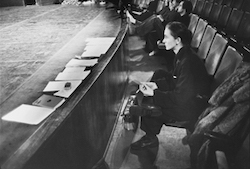
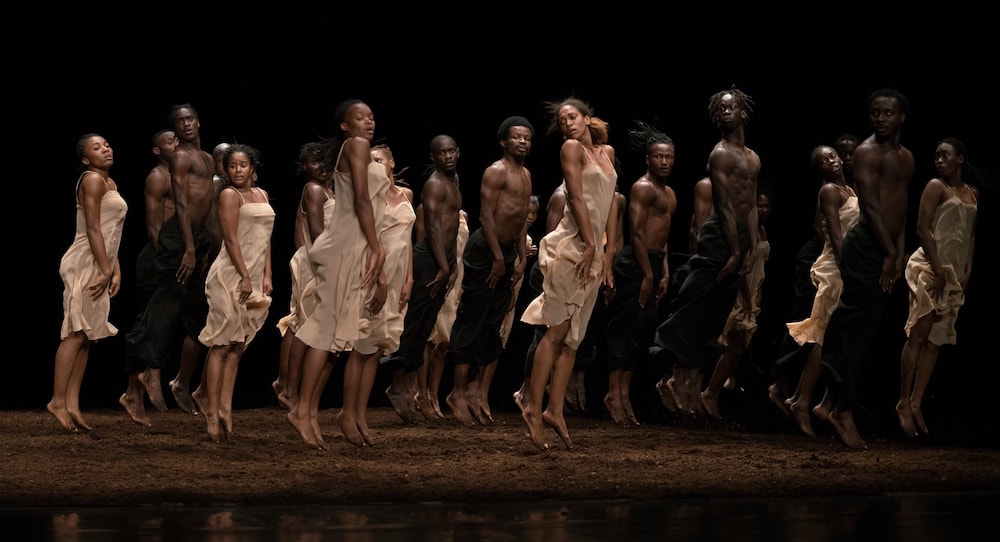
Can I be so bold as to put this film in my top ten, even though it is yet to be released in Australia? I think I’m going to anyway. It is directed by Wim Wenders, as a homage to the late, great, godmother of Tanztheater, Pina Bausch, who died suddenly during preparations for the making of this documentary. I just can’t stop watching the trailer – roll on August 18!

Posted in FeaturesComments (1)