Tag Archive | "Flamenco"

Latin Temperament


The Melbourne Latin Festival celebrates its fourth year with a hot blooded weekend of … burlesque?

By Paul Ransom.

Sometimes, just saying the words make you want to dance. Rhumba, cha-cha, bachata. tango, mambo, flamenco. And that’s before you get to salsa, zumba or pachanga.

Of all the dance forms out there Latin dance is a favourite. With its exuberance, sexuality and joyful immediacy it fills floors and move hips the world over. No wonder the idea of the Latin festival is spreading.

Since she discovered Latin dance in her mid-30s Natalie Montano has gone from enthusiastic novice to the passionate driving force behind the Melbourne Latin Festival, a three day celebration of performance, DJing, social dance and workshops. It’s a huge umbrella event for the city’s Latin movers, from established immigrant communities to newly converted zumba and zouk fans.

Juan Matos

Although she is now pleased to confess that tickets “sell themselves”, it wasn’t always that way. After travelling and dancing around the world Montano was inspired by the success of the Sydney Latin Festival to bring the event south. “On a plane back from Byron Bay I thought, ‘well, it’s about time Melbourne had its own Latin festival’ and I wrote the actual plan on the back of an envelope. Literally.”

Looking back now she can afford a wry chuckle. “I don’t know how I got it all together the first time in just two months, but I got there,” she recalls.

Now in its fourth incarnation, the Melbourne Latin Festival has grown from envelope to extravaganza, tapping into the almost universal appeal of Latin dance styles. “It’s the music,” Montano asserts. “It’s so positive and it just gets your body moving, gets your blood pumping. Even things like Zumba are really just exercising your body to Latin music. All the popular styles are street dances; they’re more social. You’re not stuck in a class doing ballet.”

Although there are other folk, street and social dances out there, the global appeal of Latin dance sets it apart. “It’s positive adrenaline and that’s why it’s so addictive,” Montano argues. “And you can travel solo and you will always find a Salsa class and someone to dance with.”

Perhaps because of its popularity Latin dance has attracted a lot of analysis, from the overtly political and historical to the purely technical and musical. Whatever theory you ascribe to, it seems clear that societies throughout South America and the Caribbean have created vibrant dance cultures that have captured the imagination and feet of the world.

“They’ve been dancing since they were little,” Natalie Montano observes. “We’re talking Third World countries here, so they didn’t have much – but they had their dancing.”

Montano furthers the point with the story of salsa. “It originates from the African slaves in Cuba,” she explains. “When they were in the cane fields they used to sing songs and when they came home they would play music and dance. They didn’t have money to go out to restaurants; this was their culture. And now it’s become commercialised.”

While some will doubtless bemoan the corporatisation of previously peasant artforms, others simply get on with cashing in. Montano is the first to admit that a lot of the drivers behind the regular Latin dance crazes are commercial. “I guess it’s a marketing thing. I mean, after a while you can only do so much Salsa and then you want to bring something else in just to keep the interest going.”

Kadu & Larissa

For this year’s Melbourne Latin Festival the big ‘interest’ is Juan Matos, the world’s best loved, most revered exponent of the funky new fusion style called pachanga. Originally from the Dominican Republic, Matos went to the Big Apple where the influence of hip-hop helped him fashion an electric new style. “He’s number one,” Montano gushes. “It’s taken me four years to get him to Australia so I’m very excited to have him.”

Getting superstar names is one thing, but Montano has gone a little further. “There are a lot of festivals these days so you need something a little different to get people’s attention.” To that end this year’s ‘special theme’ is burlesque.

At first glance Latin and burlesque appear to come from different worlds but Montano would suggest otherwise. “When you’re looking at female styling and shines, which are female solos in salsa, it’s very similar. Very sexual, very seductive and very curious. I think they’ll marry well together.”

With Jason Coleman from Ministry of Dance on board to help create a Saturday evening burlesque themed gala night party, the romance will surely last the weekend. As Natalie Montano notes, “The ladies will dress up, so all the guys will be very happy about that.”

In an age of increasing social atomisation, the role of such obviously social dancing is perhaps more important than ever. “I think it’s the social aspect that makes it really attractive. I mean, it is a couple dance; you need to interact with someone else.”

But of course there is something else about Latin dance that makes it so attractive. With the possible exception of Argentine tango it is not overly technical. Indeed, as Montano herself can attest, (having started in her thirties), it’s something most of us can easily learn. “You can do it all your life really,” she says. “It’s not too strenuous and, y’know, you really can pick it up at any time.”

How about now?

Melbourne Latin Festival
April 6 – 8
Darebin Art Centre, Preston.

Photos courtesy of Natalie Montano

Published by Dance Informa dance magazine – everything dance in Australiadance news, dance auditions & dance events.

Posted in FeaturesComments (0)

Havana Rakatan


Sydney Opera House
June 8 2011

By Elizabeth Ashley

‘A dictionary of Cuban Dance’ is the way Artistic Director Nilda Guerra describes Havana Rakatan, a dance spectacular which has been one of Cuba’s most popular exports over the last few years.

With little story-line, Havana Rakatan is a showcase of the vast array of Cuban dance styles presented from their African roots through to the second-half razzle-dazzle of Cuban salsa tinged with popping and locking.

With 13 dancers selected from the prestigious National School of Dance and backed by the dynamic 8-piece band Turquino, Havana Rakatan exemplifies the integral and intertwined evolution of dance and music. Seemingly boundless energy is expressed through excellent choreography and simple but effective back-drop scenes of Havana.

The opening is a sequence of entrancing Afro-Cuban swaying and circling, juxtaposed with the technical finesse and structure of Spanish flamenco to symbolise both the African roots and Spanish colonial influence. However, Havana Rakatan is no history lesson but rather an infectious celebration of the vibrancy of Cuban music and dance culture.

Daytime Cuba is followed by Havana nightlife complete with shimmering costumes and shimmering footwork. After intermission there is an entertaining mix of sparkling clean mambo, spinning salsa and an unexpected humorous zombie sequence. The men steal the show as they leap and turn in spectacular fashion displaying cool macho bravado as well as bare chests. Geydi Chapman combines her powerful voice to the pulsating Cuban rhythms of the band to add yet another dimension.

Despite the lack of narrative thread, Nilda Guerra manages to infuse light and shade through the ebb and flow of pace and style. These dancers are in no way ‘street dancers’ doing salsa, cha-cha and mambo. Rather, they are supreme technicians blending contemporary and traditional dance as they move with sophistication through the bolero, rumba and Afro-Cuban rhythms.

Havana Rakatan highlights a dance culture that is integral to the social fabric of Cuba whether day or night, on the streets and in the clubs. This is not a dance culture construed for theatre performance, but the spectators on opening night are celebrating these Cubans on centre stage.

As the show builds to a close, the audience is on their feet moving and clapping to the sultry salsa beat, caught up in the infectious Cuban energy of Havana Rakatan.

What better place to be during a cold, wet winter than on the hot and steamy streets of Havana?

Posted in Australian Dance ReviewsComments (0)

Riverdance


Capitol Theatre, Sydney
March 2011 

By Jessica Innes

After it’s mind-blowing debut 17 years ago, Riverdance has stood the test of time and it’s exuberant performers continue to boast an inexorable spring in their step! Starting out as an interval act at the 1994 Eurovision Song Contest, the relatively unchanged show has become an iconic representation of Irish culture and a worldwide phenomenon. Australian audiences can now embark on a joyous and whimsical journey to the other side of the world as Riverdance brings with it Ireland’s most talented dancers as well as performers from Spain, Great Britain and the USA.

The Gaelic lyrics ‘Rí rá agus ruaille buaille’ can be translated to ‘noise and commotion’, which serves as a forewarning to the thunderous machine gun footwork that the Riverdance ensemble unleashes on the crowd. With incredible precision, the dancers open the show dressed in sparkling emerald green in ‘Reel Around the Sun’. The celebratory opening number sets the tone for the rest of the show and highlights the importance of nature in the retelling of the historic story of the Irish migration to America.

Interwoven between the frenzied footwork, the Riverdance Band keeps the energy up with equally vibrant performances using traditional instruments including the fiddle, saxophone, Uilleann pipes and drums. In contrast, the vocal work of the Riverdance Singers echoes throughout Sydney’s Capitol theatre with a purity and fragility that is hauntingly beautiful.

Although there are four different styles of Irish dance, Riverdance has made hard shoe Irish step dancing famous as it’s primary style. Drawing attention to their precise footwork, the dancers’ arms remain firmly by their sides, heeding to ancient Catholic attitudes where the dancers can’t interact with one another. However, Riverdance proves that it is anything but outdated with it’s flirtatious young lead, Padriac Moyles, tantalizing the audience with his expressive performances. The juxtaposition between new and old was brilliantly showcased in Scene Twelve ‘Harbour of the New World’ as the male Step Dancers competed in a “tap off” against the effortlessly cool Riverdance Tappers. The audience cries of disbelief at the sheer intricacy and speed of Moyle’s footwork showed us why Riverdance has so successfully sky-rocketed Irish dance’s popularity and its relevance in today’s society. Moyle vocalized his joy of dance by whooping and laughing as he performed and displayed star quality as he follows in the (very fast) footsteps of Michael Flatley, who still holds the world record for achieving 28 taps per second.

Broadening it’s horizons, the show also displays two smouldering performances by Spain’s Rocio Montoya. The Flamenco dancer overtly breaks the rules regarding on stage fraternization, displaying a strong feminine prowess as she stamps around five male dancers and herds them around the stage.

As the moon rises on the final dance number the dancers portray elfin characteristics with their long hair, floaty costumes and incredible agility as if inspired by a J.R. Tolkein novel. Riverdance embraces the fantasy of Irish folklore and the themes of magic and nature interlaced throughout the entire show will enthrall adults and children alike. Moving in perfect unison, the performers continued dancing well after their bows and showed no sign of fatigue; instead they beamed with satisfaction and pride. This tenacity is what has enchanted audiences for the past 17 years and is what makes Riverdance the timeless masterpiece it is today.

Photo: Jack Hartin, Copyright Abhann Productions

Posted in Australian Dance ReviewsComments (0)

Flamenco – a world wide fire


Flamenco star Paloma Gomez brings the flame down under.

By Paul Ransom.

Flamenco is a mongrel; a pulsing, vibrant, red blooded child of many sires. No wonder it’s so healthy.

Most agree that flamenco coalesced out of Gypsy, Moorish, Sephardic and Byzantine clouds sometime in the fifteenth century, finding its feet in the southern Spanish region of Andalusia. By the time the word flamenco first appeared in the eighteenth century the dance had already taken hold, with its robust peasant heartbeat and intricate Middle Eastern stylings, making it the signature dance of cities like Sevilla and Cordoba.

Today, flamenco is synonymous with Spain. However, it is by no means confined to the sunny shores of the Iberian Peninsula. Indeed, in Australia the dance thrives, a fact recognised by the Spanish government when they sent flamenco goddess Paloma Gomez down under to perform and teach.

“It’s totally amazing for me to see people so far from Spain who have the feeling for flamenco,” Gomez declares. “It’s beautiful. When I travel I see that through the flamenco you can connect with people around the world because they feel the same when they are dancing.”

For Gomez flamenco is truly in the blood; both her parents were dancers and she herself began to dance at four. Years later she became a principal dancer with both the Ballet Nacional de Espana and Nuevo Ballet Espanol. These days she runs her own Madrid based company.

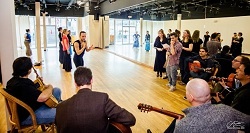
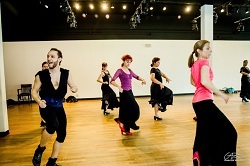
The first stop on her Australian tour was Adelaide, where she teamed up with Studio Flamenco, who themselves are recognised as one of Australia’s foremost exponents of the form. For co-founder Emma Fernée working with Paloma Gomez represents a high point in her own flamenco odyssey.

Having done classical ballet as a child, Fernée came to flamenco by accident. “I saw some in a film and I thought, ‘that looks like something interesting, maybe I’ll just give that a go’.”

From there, she found herself drawn in. “There was something about me in flamenco that I wanted to express. Maybe I’m not really sure what that is but it certainly gave me the chance to express something about myself … There’s a freedom in flamenco to be quite individual. You’re not compelled to always put on a smile and project a particular image.”

Paloma Gomez certainly wouldn’t disagree. “It’s a way you can express every emotion you have inside,” she says. “You cannot dance flamenco if you don’t feel something very strong.”

“It’s more than just a dance form,” Fernée is quick to add. “It’s the music, it’s the songs; everything about it has a very deep history.”

As someone who discovered it from the outside Fernée is keenly aware of both the traditions and the emerging realities of flamenco in the twenty first century. “Outside of Spain it’s become a really popular art form and it’s kinda going through a bit of a transformation. It’s definitely got its origins in Andalusia but it’s becoming international.”

Flamenco was born of fusion so it is perhaps no surprise that it is readily taking on new influences. “The important thing here in Australia is that we don’t try to be Spanish,” Fernée contends. “I think you have to take the art form and use it in a way that has meaning for you and for the culture that you live in.”

As Paloma Gomez says, “You first have to know the roots, but after that you can use your own personality. So of course people around the world bring something new and this keeps the flamenco alive.”

And its popularity is growing despite the fact that it’s not the easiest dance to learn. Even though its birthplace was amongst the peasantry and for centuries it was performed without musical accompaniment (only handclaps) it has technical aspects that lift it above the usual simplicity of folk dances.

“The footwork is quite technical and there are very particular ways that you move the body,” Emma Fernée explains. “But having said that, I teach children and adult beginners who have no dance background, and by and large they get it and enjoy it … But the more you hone your technique the more freedom you have to express.”

Here of course is the point. Expression. Passion. Flamenco is anything but austere. It burns. Paloma Gomez laughs knowingly at this characterisation. “At the end it is all about human emotion; and we can all feel that.”

As if the point needs illustrating, she continues. “When I am teaching outside of Spain I like to try to speak English for the students so they can understand but a lot of times they tell me, ‘no, Paloma, speak Spanish’. They say this because the flamenco is a universal language.”

From its melting pot origins in ‘reconquista’ Spain to its globally popular standing five centuries later, flamenco continues to clap and strum out the beat of many hearts, its earthy power undigitised.

Posted in FeaturesComments (0)