Tag Archive | "Dance Informa"

Win $1000 for You + $3000 for your Dance Studio!


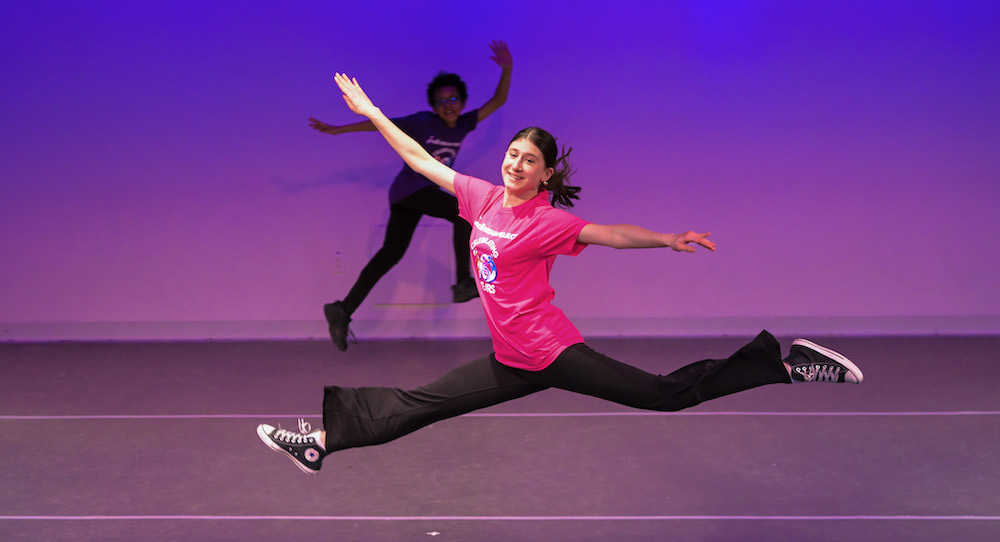
Dance Informa magazine is giving away cash to a lucky dancer and his or her studio. Imagine what you could do with $1000 cash. Imagine blessing your dance studio with $3000. Make dance dreams come true and enter today!


Just click on the image below.

Dance Studio Owners: Tell your teachers and students about this contest. The more entries for your studio, the greater your chances to win. How would you like $3000 towards renovations, new flooring, costumes, camps, audio equipment or whatever you need?


Posted in GiveawaysComments (0)

All-star cast unites for Australia’s Legally Blonde The Musical


By Kristy Johnson.

Already in its third year in London, this smash hit is heading down under to Sydney in October. Having won seven major awards including Best New Musical 2011 at the Olivier Awards, this all singing, all dancing, romantic comedy, doesn’t look like it’s going to slow down anytime soon.

Based on the Hollywood film Legally Blonde starring Reese Witherspoon, college sweetheart and homecoming queen Elle Woods heads for Harvard Law School to try to win back her ex-boyfriend, Warner, after he dumps her for someone more serious.

The all-star Australian cast includes Lucy Durack who plays the lead role of Elle Woods, Rob Mills in the role of Warner, David Harris, Erika Heynatz and Cameron Daddo.

Dance Informa caught up with Lucy and Rob, who starred together in the Australian cast of Wicked, after the launch party in Sydney.

Lucy Durack as 'Elle Woods' in Legally Blonde. Photo (c) Brian Geach.

Lucy Durack

You must be absolutely thrilled to play the lead role of Elle Woods. How excited are you?

Oh extremely excited! It’s a role that’s going to be so much fun to play. I auditioned for nearly a year so it’s one that I’ll be really grateful for and certainly not take for granted.

Can you describe what the auditions were like?

The auditions were in Sydney early last year, and then in November they flew me to London for my final lot of auditions.

The first auditions were like your regular auditions but once I got to London that was pretty nerve-wracking. I knew a lot of money had been put into sending me there and I just hoped I could come up with the goods. So I was very relieved when I did.

Had you always had a keen interest in becoming involved in this particular musical?

When I got cast in Wicked, we saw Legally Blonde overseas and I thought it was such a fun show. I had grown up watching the film, so I really love it. It was certainly one that I had my eye out for. I was hoping that it might come out to Australia and I could audition for it. So I’m very grateful that I got it.

There are great names such as Rob Mills, Erika Heynatz and Cameron Daddo playing roles alongside you. What has it been like so far, to work with them on this new project?

Well I’ve only met Erika once and that was at the launch but she was so nice, and I really think we are going to become great buddies. Rob and I have been friends for a long time so I’m absolutely thrilled. And on top of that we’ve got David Harris – he’s such a great guy. And then we have Cameron Daddo and I’ve never met him before but I’m really looking forward to working with him also.

Rob Mills

Congratulations on landing the role of Warner. Had you watched the film Legally Blonde, prior to auditions?

Yeah, I think in high school. My mum actually watched it a few weeks ago. She asked me if I was the nice boy at the end, or the boy who breaks up with her (laughs).

Can you describe the audition process for us? Had the producers from London come out to Sydney for this?

Yeah, the producers came out here for the auditions, kind of like how the team for Wicked came out here also. That was pretty cool. I got sent in for the role of Emmett, but as soon as I walked in to the auditions they said no. They said you’re not Emmett, you’re Warner. Come back on Friday for Warner. So I came back on Friday for Warner and I got Warner (laughs).

How excited are you to be playing the role of Warner?

I’m really looking forward to it. I’m just happy to get any part in the show!

The cast sounds amazing, and I know you have already worked with Lucy before. Were you excited to work with Lucy again, having worked alongside her in Wicked?

Absolutely. We talked about the shows that were coming up during Wicked. I knew she was very keen to play the role of Elle Woods and I have to give great props to her. She’s very inspirational and a tremendous role model. If you want something, then you have to work hard for it. She got two of the biggest roles in musical theatre in Australia in the last four years, which is pretty amazing. She comes from a good family, a good upbringing. I’m really looking forward to working with her again. She’s extremely professional. She works really hard at working on scenes, making sure that everything is always getting better. She’s never one to throw it in, so to speak. She leads by example and is a great inspiration for everyone.

With the show starting in October, when do rehearsals begin for you?

Around late July. I’m really looking forward to it.

The international award-winning hit LEGALLY BLONDE THE MUSICAL is premiering at Sydney Lyric Theatre, The Star on October 4, 2012. For more information, visit LegallyBlonde.com.au

Top photo: Rob Mills and Lucy Durack in Legally Blonde. Photo (c) Brian Geach

Published by Dance Informa dance magazine – everything dance in Australiadance news, dance auditions & dance events.

Posted in Top StoriesComments (0)

New Cities & More Prizes for Showcase Championships


Showcase National Dance Championships will increase its national tour this season to include up to 18 Regionals. With a massive prize pool of over $85,000 up for grabs this year, the search is on for the next generation of the nation’s TOP dance studios. Who will be it be?

They have reached out once again and invited more dance studios this year to give them the chance to win the title of “Australia’s next TOP Dance Studio”. Apart from the fantastic cash prize of $5,000 to the TOP winning group it also gives the studio national recognition for its outstanding efforts.

The Gold Coast National Finals, held annually at Jupiter’s Casino, have always offered many opportunities to dance schools, including the ever popular Summer Dance Workshops held during the event and the Battle of the Star Show held on the last day, which has the best of the best dance schools in the nation compete for the overall titles.

Jupiter’s Showroom has just undergone a 20 million dollar upgrade and the dancers at Nationals this year will be having the opportunity to perform in the best and newest performance venue in Australia.

Showcase has always been the leader in offering massive prizes and this past year was no exception. There were not only the four Dancer of the Year trips to the USA and Canada awarded, but there were also trips presented to dance teachers which included an all expenses shopping trip to Bangkok. Three dance teachers were also awarded the pinnacle prize to attend the US Federation of Dance Competitions Gala show in Cancun Mexico.

Peter Oxford, the National Director of Showcase, has his sights on expanding the many opportunities for Dancers all over Australia by adding competitions in Darwin, the Sunshine Coast, Fraser Coast and Newcastle this season, in addition to the ever popular cities such as Sydney, Canberra, Perth, Melbourne, Hobart, Brisbane, Auckland and Christchurch.

Dance studios can enter solos, duo, trios and groups, in many forms of dance including jazz, lyrical, contemporary, tap, ballet and hip hop.

Showcase attracts over 7,500 acts in any one season! There’s some amazing talent out there and you can be part of it!

Showcase looks forward to seeing some new studios at one of their 2012 regional cities as they travel around Australia and New Zealand.

Remember…Everyone’s a STAR at Showcase!

How to Enter
Dance schools and soloists wanting to be part of the Showcase Nationals must qualify with 85 points and over at one of the regional championships that are held in select cities across Australia and New Zealand.

Want more info?
The website
www.showcasedance.com has complete information on the event, including entry forms and rules. The large cities do tend to fill before the closing date, but dancers are allowed to travel out of their own area to qualify in another city. National Finals dates are scheduled for January 14th -21st 2013 at Jupiter’s Casino.

Become a fan of Showcase on Facebook. www.facebook.com/showcasedance and check out our website for past competition results, videos of the Nationals and more.

Contact
Call (02) 9662-1598 or email
dance@showcasedance.com with any questions


Posted in FeaturesComments (0)

English National Ballet’s Exclusive Aussie Season


The world-renowned English National Ballet will tour to Australia for an exclusive season in Sydney at the new, The Concourse, Chatswood, from Friday June 8 to Sunday June 17, 2012.

Tickets are already selling fast as dancers and lovers of dance gather to see the company which hasn’t toured to Australia since 2001.

Under the leadership of Artistic Director, Wayne Eagling, this highly respected European company will bring its top soloists and principal artists, presenting a programme suited to young and old in the intimate 500 seat theatre at The Concourse.

The English National Ballet was established in the 1950s and has since emerged as one of the foremost touring companies in Europe. This internationally acclaimed classical ballet company tours both nationally and worldwide. Founded by two British ballet greats Alicia Markova and Anton Dolin, the English National Ballet grew out of a series of gala performances. Today, with 67 dancers from 20 different countries, they provide a group of dancers who enrich each repertoire they perform. The original 1950s aspiration for the Company, to take popular ballet to the widest geographical audience at a price they can afford, remains as valid today as when first expressed by the Company’s founders.

English National Ballet's Anais Chalendard and Vadim Muntagirov in Suite en Blanc

Recently the subject of the popular BBC reality series The Agony and the Ecstasy the English National Ballet is enjoying an international recognition unheard of in classical dance circles. And it is not only the public who are supporters of the English National Ballet. The prestigious company has enjoyed the patronage of Diana, Princess of Wales and currently HRH Prince Andrew, The Duke of York.

The Australian programme, accompanied by a live orchestra, will open with George Balanchine’s neo-classical masterpiece Apollo and close with Serge Lifar’s spectacular bravura piece, Suite en blanc. These two great classics will frame a selection of favourite pas de deux from Manon, Don Quixote or Black Swan, and Trois Gnossiennes, featuring the company’s stars. Set to an Erik Satie solo piano piece, contemporary choreographer Hans Van Manen’s Trois Gnossiennes, will showcase the great finesse, control and superb classical technique of the English National Ballet dancers.

Suite en blanc was described by its choreographer, Serge Lifar, as “a real parade of stars”. A plotless display of classical technique, with strict emphasis on the perfection of line, the ballet was created in 1943 to showcase the virtuosity and elegance of the Paris Opera Ballet. With its white costumes against an inky black setting, the ballet remains a stunning showcase of dance, as glittering and exhilarating as its first performance nearly seven decades ago.

Don’t miss this unique opportunity to see the English National Ballet. Tickets are now on sale at www.theconcourse.com.au/enb

Top photo: Dancer Anais Chalendard of English National Ballet in Apollo. Photo by Laurent Liotardo.

Published by Dance Informa dance magazine – everything dance in Australiadance auditions, dance news, dance events and resources for dance teachers.

Posted in Dance News Australia, Top StoriesComments (0)

Dancing to Live Music


By Laura Di Orio.

George Balanchine said, “See the music, hear the dance.” The choreographer, like many dancers, found inspiration for movement within music. To be able to move one’s body to music can be magical enough. And to be able to dance to live music is, for many dancers, a dream.

Here, Dance Informa speaks with professional dancers who enjoy the privilege of performing to live music. The Australian Ballet’s Brooke Lockett, Miami City Ballet’s Rebecca King and Joffrey Ballet’s Fabrice Calmels share their expertise and the joy of making the music come alive.

Do you prefer dancing to live or pre-recorded music?

Brooke Lockett, dancer with The Australian Ballet, backstage during a performance of Sugar Plum. Photo courtesy of Brooke Lockett

Brooke Lockett, Coryphee with The Australian Ballet
The positive to recorded music is you get an inner rhythm and timing, and the work becomes very consistent, and in some cases, almost predictable. You can never assume anything when it’s to live music. The tempo can be faster or it can slow down parts you prefer faster, but all issues aside, nothing gives me goose bumps more than the sound of a sublime live orchestra playing Tchaikovsky’s Swan Lake. The curtain goes up and the music floods onto the stage from the pit. It goes through your bones and brings everything you have been rehearsing to life.

Fabrice Calmels, Principal Artist at the Joffrey Ballet
For me, it is preferable to dance to live music, but there are actually times when I find pre-recorded scores a safe alternative, like in a very difficult performance on tour.

For you, what is the biggest challenge of dancing to live music?

Rebecca King, Corps de Ballet Dancer with Miami City Ballet
The music’s tempo can be a challenge. Even though the conductor knows exactly what the dancers need, the speed can still vary from performance to performance. It is our job to be completely in tune with the orchestra because you never know what is going to happen. Because the musicians, like us, are susceptible to human error, sometimes the music can sound different, which can catch the dancers off guard. This is the beauty of live theater – you never know what you are going to get.

For you, what is the greatest reward of dancing to live music?

Brooke Lockett
When a ballet is extremely difficult or you are quite nervous about a role, music is an incredibly powerful escape that has the ability to take you away to another place on stage. Without it, I don’t know that my profession would be as powerful or as rewarding.

Fabrice Calmels
Here’s what is going on with live music: You have a full orchestra with different instruments working together as a team, following a score and led by a conductor, who, in turn, is watching and observing every move from us, the dancers. With the conductor’s expertise, he is able to match the choreography with the music and create the flow. For me, it is communication at its best.

How does dancing to live music compare to dancing to recorded music?

Fabrice Calmels, principal artist with the Joffrey Ballet, in Jessica Lang's 'Crossed'. Photo courtesy of Fabrice Calmels

Fabrice Calmels
The beauty of live music is the clarity of the sound, and performing at Chicago’s Auditorium Theater, we have one of the best engineered houses in the world. It was built for live music, and its acoustics are incredible. Live music is simply rich. There is something about the quality of instantly created sound and vibration that is priceless. Recorded music has so many factors that come into play, such as how well the track may be recorded, the quality of the player or speakers, static, or speakers that sometimes do not separate well the low-bass from the mid-bass.

Brooke Lockett
The sound is the biggest comparison. It’s like when I see a live music concert, and no matter how loud I play the CD after the show I can never recreate that same feeling or volume. You hear so many more elements and instruments when it’s live.

For a piece that you will eventually perform to live music, what is the process of incorporating the musicians or conductor into the rehearsals?

Rebecca King
Our conductor, Gary Sheldon, spends a lot of time with us in the studio during rehearsals. He not only comes in the week before we take a program to the theater, but he also tries to be around when the choreographer or repetiteur is in town working with us. He has told me that he finds it very important to familiarize himself with our works as much as possible. This makes it easier for him to know when certain cues are coming up, or what tempos different dancers are comfortable with.

Do you usually try to build some kind of rapport with the conductor and musicians?

Brooke Lockett
Absolutely. Sometimes you are feeling a little flat or have an injury, and it’s important for them to know those things. And for those shows when you are on fire and loving it, you can really bounce off one another.

Rebecca King, dancer with Miami City Ballet. Photo by Susan Stocker, Sun Sentinel

Rebecca King
I think all the dancers at Miami City Ballet have a great rapport with our conductor. He always makes an effort to say hello in the hallways, wish you “merde”, or good luck, before a show, and commend you on your performance after the curtain comes in. You can tell he really makes an effort to know the dancers, which we really appreciate. We don’t have a lot of interaction with the musicians, but we do always make an effort to thank them when we see them leaving the pit. Without them, their talent and extraordinary effort, we would not be able to do what we do.

What’s been a memorable moment of performing to live music?

Fabrice Calmels
The beginning of Lar Lubovitch’s production of Othello starts with a very powerful overture by the orchestra. This leads to the first dance, “The Prayer”, when Othello rises from a kneeling position for a stunning solo done only by creating circular movement with his arm. In every rehearsal and performance, I become Othello in that moment, located near the first panel of the stage, waiting for the main curtain to go up. I am already kneeling with both hands gathered as a prayer resting against my forehead. The orchestra is playing the score, the drums become explosive and so powerful that I feel my hand bouncing up and down from the vibration they create from underneath me. It completely gets in me, my heart begins to beat like a drum. It’s an experience unlike any other.

Brooke Lockett
We had a guest conductor for a season of Swan Lake once and we had all been talking about how slow it was, and in our final Act II entrance as a Cygnet it was like we were doing Willies from Giselle, it was so slow. We had the giggles for the entire entrance and had to quickly pull ourselves together.

Rebecca King
My first year in the company, we were performing Balanchine’s Symphony in 3 Movements, with a score by Stravinsky. Ask any dancer and he/she will tell you that the complexity of Stravinsky’s music has no doubt kept them up at night. Trying to memorize every note and count is no small feat. During a section of the first movement, the three principal couples were on stage, and there was a brief pause followed by a change in the music. Something was missing. The dancers suddenly realized that the instrument that was, at that moment, in charge of keeping the beat was nowhere to be found. They started counting aloud to each other to keep themselves in sync. Thankfully, this confusion only lasted a few bars before another change in the music arrived. We found out later that the musician playing the instrument in question had fallen asleep in the pit!

Top photo: Fabrice Calmels, principal artist with the Joffrey Ballet, in Edwaard Liang’s Age of Innocence. Photo courtesy of Fabrice Calmels.

Published by Dance Informa dance magazine – everything dance in Australiadance news, dance auditions & dance events.

Posted in FeaturesComments (0)

Energy Balance?


We always hear about the importance of what you eat, but could when you eat be just as important?

By Emily C. Harrison MS, RD, LD.

What’s the secret for dancing stronger, improving body composition, building muscle, having more endurance, and improving performance? Energy Balance.  Backed by sound science, the concept of energy balance is all about timing healthy meals and snacks to work for you.  Managing your energy balance can even play an important role in injury prevention.

What is Energy Balance?

Energy Balance is eating exactly the right amount of fuel for the activity you are about to do.   It is meeting and adjusting your body’s energy (calorie) needs as they change throughout the day depending on how hard you are working.   Let’s say you are going on a road trip….
Which option would you choose?

  1. Ok car, I’m not going to give you any fuel now, but when we get there I’ll give you all the fuel you need?
  2. Ok, car, I’m going to give you all the fuel you need for the trip now, but you have to figure out where to store it?
  3. Or…Ok car, I’ll fuel you up now for the next 2-3 hours and then I’ll stop and fuel you up again when you need it?

Obviously, we should choose option 3, but all too often dancers choose option 1 or 2.  Providing enough calories from healthy foods at carefully planned intervals when dancing gives the body the fuel it needs to perform its best.  When athletes have enough fuel, preferably from carbohydrates, they have been shown to have higher jumps and more endurance. Also, when dancers eat regular healthy snacks they tend to not overeat later.   If a dancer gets extremely hungry because he or she hasn’t eaten in a while, he or she tends to overeat more than needed within a certain time frame and those extra calories get stored.  Some is stored as a much needed type of fuel called glycogen which is easy to access when dancing the next day, but some is converted to body fat.  This is why eating smaller more frequent meals not only leads to better performance but also to more muscle and less fat.   We all know that working in an aesthetic art form means that we have to be judicious about what we eat, but planning meals and snacks wisely throughout the day can actually lead to better, stronger muscles and lower body fat percentage.

Whether someone dances two hours a day or ten, in order to perform their best they have to provide exactly the right amount of fuel to their system at the right time.  Going for too long without eating can backfire by forcing the body to come up with fuel from somewhere. When running on empty, the body breaks down muscle tissue and converts it into a type of fuel that the muscles and brain can use.

There are several problems with the all too common dancer strategy of not eating before and during classes/rehearsals/shows and waiting until later to eat: The body lowers your metabolic rate to adjust, the body burns muscle for fuel and thus makes you weaker and more prone to injury.  The brain has a harder time concentrating with no fuel, so choreography is harder to pick up and ultimately you end up with a higher body fat percentage and less muscle. Eating a small snack would have been a much more efficient source of fuel.

Here are my top 10 energy balance tips.

  1. Eat breakfast!
  2. Have a 100-250 calorie morning snack especially if you have rehearsals
  3. Provide some calories every 2-3 hours during your day
  4. Eat smaller more frequent meals
  5. Plan a 100-250 calorie afternoon snack around 3:00-4:00pm to stave off hunger
  6. Eat a reasonable dinner with carbohydrate, protein, and some healthy fats
  7. Do eat after dancing, but don’t overdo nighttime snacking
  8. Hydrate, hydrate, hydrate all day
  9. Sip on a sports drink if dancing for a long time and eating isn’t possible
  10. Focus on fruits, veggies, and whole grains when meal/ snack planning – these carbs are good!

Pack a snack in your dance bag like a museli bar, banana, dried fruit, nuts, and whole grain crackers or make a wrap with hummus, veggies and rice. Make some pasta salad with whole grain pasta, black beans, tomatoes, corn, and red peppers – yum!  Planning is the key to making healthy food convenient.

Want to know more?
Here is some additional info:

Working muscles require calories in order to provide enough readily available energy in the form of adenosine triphosphate (ATP) and creatine phosphate (CP) particularly for the short, high intensity bursts of activity that we dancers do in class and in performance.  Longer bouts of exercise (Swan Lake for example) require the use of stored glycogen and fats. The body adjusts what it uses for energy based on the intensity of work and level of training. Providing calories before exercising preferably from carbohydrates, results in better performance and helps preserve muscle mass.  For longer shows, sipping on a sports drink or having a granola bar during intermission will help dancers finish strongly.

According to the American College of Sports Medicine, “Inadequate energy intakes can result in loss of muscle mass, menstrual dysfunction, loss or failure to gain bone density, an increased rate of fatigue, injury, and illness”.  Injuries or illness can greatly affect a dancer’s training.  Dancers can have fewer injuries and illnesses by managing their energy.

Emily Harrison
Emily Cook Harrison MS, RD, LD
Emily is a registered dietitian and holds both a bachelor’s and master’s degree in nutrition from Georgia State University, USA. Her master’s thesis research was on elite level ballet dancers and nutrition and she has experience providing nutrition services for weight management, sports nutrition, disordered eating, disease prevention, and food allergies. Emily was a professional dancer for eleven years with the Atlanta Ballet and several other companies. She is a dance educator and the mother of two young children. She now runs the Centre for Dance Nutrition and Healthy Lifestyles. She can be reached at emily@dancernutrition.com www.dancernutrition.com


Top photo: © Ivan Mikhaylov | Dreamstime.com

Posted in Dancer HealthComments (0)

Katrina Lazaroff to present Involuntary


By Jo McDonald.

Emerging South Australian dance theatre and education company, One Point 618 will present a world premiere production, Involuntary, at Adelaide’s Space Theatre from May 1st to 5th. Directed and choreographed by renowned dance artist Katrina Lazaroff, Involuntary looks at how society is preoccupied by the pressures of life, consumerism and regulation. In the lead up to opening night, Dance Informa spoke with Lazaroff about her new work and her plans for the future.

What was the inspiration or motivation for Involuntary?

Well, just as with my last work, Pomona Road, I began with a stimulus that in the end didn’t continue through the work. I was watching my mother-in-law watch football.  Her body was reacting unconsciously to her experience and she was throwing herself around the room.  I thought it was hilarious and I could really make a work about this.  Also, when my daughter Zoe was very young she made lots of involuntary movements that were sporadic, crazy movements.  It was these two things that inspired me to make a work called Involuntary.

I’ve had three development stages for Involuntary:

The first was a workshop scenario, when I set aside an hour after teaching class at Ausdance each week and invited people to work with me and test out ideas.

The second development was a showing in Ausdance’s Choreolab.  By then I released I needed extra substance for the work if I wanted to attract grant funding.  I needed to make a societal connection.  The bureaucracy involved in applying for grants was so frustrating.  That’s when I started thinking about how much we have to do in society to be a part of society – things we don’t really believe in, the rigmarole, the red tape.  We do this involuntarily so we can operate in society.  We go along with the rapid pace of technological advancements, which may not always be our choice.

In the third development I looked at the influence of media and subliminal advertising.  I didn’t want the piece to be just about technology.  I wanted it to be about the actions, often unconscious, that we do each day to survive in society.  After the third development, I realised I wanted to look at a lot of things we were unconscious about. The things we just do, rather than the things we choose.  I wanted to look at how we react to having to talk to computers and phone prompts, when all we want is to talk to a real person.

Involuntary by Katrina Lazaroff

My original idea was abstract and humorous.  And though I’ve thought more seriously about societal issues, I don’t mean to be dark about it.  It’s a satire.  I want to get people to think.

What is it that drives you to create work with a social connection?

I need to make work that says something, that speaks to people, that is more than just my own personal aesthetic or artistic concept.  I want to make work that a broad range of people connect to.  I want to bring people to the arts, to show that performing arts is a broad medium to share thoughts and feelings.

Involuntary is very socially relevant.  Everyone can relate to it and their own involvement in society.  People laugh when I mention I’m making a satire about that.  My last work, Pomona Road, was a story about a family.  Involuntary comes from a very different place.  It has a cold, contemporary side to it, but it’s about what we go through as people.  I want to create work about what everyone experiences.

What has been the most satisfying part of making Involuntary?

The dancers I’m working with are just amazing.  It’s been quite a process to cast the work properly.  I feel I have the right group and artistic team around me.  They are so wonderful and open to my ideas.  It is just so exciting.  I really want to go to work and share everything with the team.

I feel like I have something important to say and I feel happy about that.  I’m glad I’m making social comment.

What has been the most challenging part?

Trying to work out the right team.  Initially I saw it as a really technical dance work, but it has become a more theatrical work where I need people interested in theatrical aspects, rather than technicians.

I didn’t attract the funding I’d applied for, which meant the dancers I worked with through the three development phases kept changing.  I worked with young graduates, and then really technical dancers.  In the end, I realised what I needed was dancers who were open to speaking and using their voices, as well as with technical skills.

I’ve learnt I need to work with people that I’ve have worked with for some time, like Tim Rodgers and Veronica Shum.  It’s like coming home.  They understand me and I don’t have to start from ground zero again.  A lot of young dancers across the country wonder why choreographers use the same dancers all the time.  But it is about trust in making work that means something to you, and knowing the dancers get where you’re coming from.

How have you grown as a choreographer with Involuntary?

I think I’m getting better at refining ideas, including movement, thematic and conceptual ideas.  I can sift through things and decide quickly if an idea will work or not.  I’m better at trusting my instincts.  I’m trusting in my movement making ability again.  I was a performer for so long, then had a child, and along the way lost some of my trust in my instincts.  Self doubt is going away, and so I can hone into the process and practice.

What’s next for Katrina Lazaroff?

I plan to tour the three works – Involuntary, Pomona Road, and Skip, and create a new work.

The working title of my next work is Prison.  It will be a dance theatre piece that invites different mediums.  I started looking at people in confined spaces.  I’ve always been fascinated with small spaces and people’s rituals in small spaces. I’ll look at people’s behaviour in prison – it’s incredible how people survive in confined spaces.  The work won’t mimic prison as such, but will look at the prison of our own minds, and the way we imprison ourselves through the way our minds operate, and how we don’t allow ourselves to be free much of the time.

Essentially, I want to focus on getting my work out nationally and regionally.  I want to share it.

Published by Dance Informa dance magazine – everything dance in Australiadance auditions, dance events and dance news.

Posted in Top StoriesComments (0)

Bangarra farewells Patrick Thaiday


After ten years with Bangarra Dance Theatre, Patrick Thaiday is moving on from the company. Patrick’s performance of Stephen Page’s Warumuk-in the dark night at the Sydney Opera House as part of the Australian Ballet’s Infinity Program on April 25 was his last with Bangarra.

A much loved and recognised dancer, Patrick’s retirement comes as he celebrates a long and successful decade with Bangarra. Since joining Bangarra in 2002, Patrick’s face has become synonymous with the company and critics and audiences alike have lauded him for his extraordinary featured performances across Bangarra’s repertoire.

Of his time with the company Patrick told Dance Informa, “over the years Bangarra has given me the honour of representing my culture, people and art through dance. I’ve just taken a ride on a time machine and experienced the most amazing Dreamtime journey.”

Bangarra’s Artistic Director Stephen Page said “Patrick has been a core member of the company for the past ten years and his work deserves to be celebrated. His passion for and commitment to Indigenous dance has been a driving force within the company and he is a point of inspiration for the younger dancers. I hope that after a well deserved break Patrick will return to Bangarra in a different role.”

Patrick Thaiday in 'Belong' by Bangarra Dance Theatre. Photo by Jeff Busby.

Patrick was born in Biloela, Queensland and grew up in Mackay. His parents come from Iama and Erub in the Torres Strait Islands. He believes that his in-built desire to dance is derived from his parents’ ancestors who originated from Lifu, South Sea Islands and Jamaica. With a strong cultural background, he learnt traditional dances from an early age.

Patrick’s family and friends encouraged him to pursue a career in dance and in 1999 he moved to Sydney to study at NAISDA (National Aboriginal and Islander Skills and Development Association), performing both traditional and contemporary dance. Whilst studying, Patrick performed with Bangarra and Christine Anu at the Closing Ceremony of the 2000 Sydney Olympic Games.

In 2002 Patrick was accepted into Bangarra Dance Theatre. His solo in that year’s production Walkabout earned him recognition for his talents. Since then this critically acclaimed dancer has received prestigious awards for his performances in Clan (2004), Boomerang (2005), Gathering (2006) and True Stories (2007). In 2008 Patrick performed a central role in Stephen Page’s Mathinna.

In 2009 Patrick travelled to Europe with Bangarra to perform True Stories and later helped Bangarra celebrate its 20th Anniversary with Fire – A Retrospective. In 2010 he performed in Bangarra’s of earth & sky to outstanding acclaim. Patrick’s recent highlights include performing at the 2011 Indigenous All Stars NRL game and the Spirit tour of Germany and Italy. He also performed to much acclaim in the 2011 Belong national tour and Bangarra’s regional tour of Mathinna. 2012 has seen Patrick perform in Stephen Page’s Warumuk – in the dark night as a part of the Australian Ballet’s 50th anniversary celebrations.

Patrick is one of the nation’s finest Indigenous performers and will be long remembered by Bangarra audiences for his distinctive performance presence.

Dance Informa wishes Patrick all the best with his future endeavours.

Top photo: Patrick Thaiday. Photo courtesy of Bangarra Dance Theatre.

Published by Dance Informa dance magazine – everything dance in Australiadance news, dance auditions & dance events.

Posted in Top StoriesComments (0)

The Lion King is Back


One of the most popular musicals in history, The Lion King, will play at Sydney’s Capitol Theatre from December 2013.

The Lion King is a worldwide phenomenon. Since its Broadway premiere on November 13, 1997, 19 productions around the globe have been seen by more than 63 million people and grossed more than $4.7 billion. (See Dance Informa’s review of the Las Vegas production here).

In its 15th year, The Lion King continues to reign as a cultural phenomenon and one of the most popular stage musicals in the world.  The Lion King is the seventh longest-running musical in Broadway history and one of only six productions in theatre history to play for ten years or more both on Broadway and in the West End.  The Lion King won six 1998 Tony Awards®:  Best Musical, Best Scenic Design (Richard Hudson), Best Costume Design (Julie Taymor), Best Lighting Design (Donald Holder), Best Choreography (Garth Fagan) and Best Direction of a Musical, making Director Julie Taymor the first woman in theatrical history bestowed with the honour.  The Lion King has also earned more than 70 major arts awards including a Grammy® for Best Musical Show Album and Laurence Olivier Awards for Best Choreography and Best Costume Design.

'Lionesses Dance' in The Lion King, Las Vegas. ©2009, Disney. Photos by Joan Marcus

On stage, Taymor’s creative vision blends elements of African art and Broadway artisanship to depict anthropomorphic animal characters.  The Broadway score features Elton John and Tim Rice’s music from The Lion King animated film along with many new numbers. The resulting sound of The Lion King is a fusion of Western popular music and the distinctive sounds and rhythms of Africa.

Thomas Schumacher, Producer and President of Disney Theatrical Productions said, “Australia has embraced our Disney stage musicals as warmly as audiences anywhere in the world and we are thrilled that The Lion King is being invited back. We look forward to re-introducing Sydney to Julie Taymor’s singular, captivating vision.”

The Lion King is an established tourism magnet for Sydney.  The last season ran for almost two years and played to 1.35 million people.  NSW Minister for Tourism, Major Events and the Arts, George Souris said “We wanted to ensure that Sydney would host one of the world’s most enduring musical events.” The 2013 production is expected to attract 50,000 visitors from interstate and overseas generating $36 million in new money for NSW.

Top photo: The opening number ‘The Circle of Life’ from The Lion King, Las Vegas.  ©2009, Disney.  Photo by Joan Marcus.

Published by Dance Informa dance magazine – everything dance in Australiadance news, dance auditions & dance events.

Posted in Dance News Australia, FeaturesComments (0)

Win Tickets to Nutcracker On Ice or Opera Warriors!


A Reserve Double Passes are up for grabs!

NUTCRACKER ON ICE

The international ice dance sensation The Imperial Ice Stars make a triumphant return to Australia this winter with a dazzling new production of The Nutcracker on Ice.

Over the last seven years, The Imperial Ice Stars have performed to more than three million people across five continents, at some of the world’s most prestigious venues.

For their latest production, The Nutcracker on Ice, acclaimed Artistic Director Tony Mercer – the world’s leading creator of contemporary theatre-on-ice – has once again teamed with four-time figure skating World Champion and dual Olympic gold medallist Evgeny Platov, and dual World Champion Maxim Staviski to create choreography that further raises the bar, with ever more breathtaking high-speed leaps and throws, and awe-inspiring acrobatics, coupled with the most graceful and sublime ice dancing.

Sydney: Capitol Theatre – 6-10 June
Canberra: Canberra Theatre Centre – 13-17 June
Brisbane: Lyric Theatre, QPAC – 20-24 June
Adelaide: Adelaide Festival Centre – 18-22 July
Melbourne: The Arts Centre – 25-29 July
Perth: His Majesty’s Theatre – 2-12 August

www.imperialicestars.com

OPERA WARRIORS

Direct from the award-winning creative team behind the Opening Ceremony of the Beijing Olympics, Opera Warriors showcases the best of Chinese modern theatre arts in a show that tells a story of the Peking Opera through martial arts and modern dance. To celebrate the closing of the Year of Chinese Culture in Australia, Opera Warriors will premiere at the Opera Theatre, Sydney Opera House with four shows only from 14 to 16 June.

Opera Warriors is choreographed by Mr Xing Shimiao, and scripted by Ms Pik Wah Li (Lilian Lee) – one of Hong Kong’s most popular columnists, whose screenplay Farewell My Concubine won the Golden Palm at the Cannes Film Festival in 1993. Mr Sha Xiaolan, the Lighting Designer of the Opening and Closing Ceremonies of Beijing 2008 Olympics, will light the Opera House stage.

Leading Chinese dancer Mr Wang Di, who performed the painting scroll sequence in Beijing Olympics Opening Ceremony, and Mr Huang Doudou, China’s most famous male dancing artist, who performed Chinese Kung-Fu in the Closing Ceremony of 2004 Greece Olympic Games, will lead the troupe of 60 dancers.

Brought to Sydney by the Shanxi Huajin Dance Art Troupe, Opera Warriors is an exquisite visual feast that combines an elaborate set, beautiful costumes, dynamic lighting and original music with a story that encompasses the dramas of life.

www.operawarriors.com.au

Win a Double Pass to:
Nutcracker On Ice at Sydney’s Capitol Theatre or Opera Warriors at Sydney Opera House!

Just email info@danceinforma.com with subject: “WIN TICKETS” and tell us What show you’d like to win tickets to and why. Dance Informa’s Editors will pick the best responses to win.
* Please include your full name, postal address and date of birth.

Competition open until May 24.

Published by Dance Informa dance magazine – everything dance in Australiadance auditions, dance news, dance events and resources for dance teachers.

Posted in GiveawaysComments (0)