Tag Archive | "Bangarra"

4Tell – YouMove Company


Parramatta Riverside Theatre
October 27 2011 

By Dolce Fisher

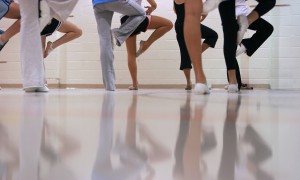
The latest installment from youMove, presented by Form Dance Projects, showed how this company has graduated to the next level. Previously being known in the community as a youth dance company, youMove has taken its place as a pre-professional company offering real opportunities, training and mentorship for its dancers. youMove has a very different vibe to that of other small companies of a similar nature. This can only be put down to its leadership under Kay Armstrong and her generational vision.

4Tell featured five small works, each very individual in theme visually and artistically. Interjected between each work were short solos that came out of the company’s blog. These were highly entertaining and well-rehearsed.

The show opener was Boundaries choreographed by Ian Colless. The work showed his Bangarra background. The dancers captured the style and the smooth quality of the movement and were really grounded into the floor.

Next, Kevin Privett’s work By Looking featured twisting and swirling effects created by the dancers’ movements. The creative lift work was an intriguing and integral part of the choreography.

youMove dancer Angela French choreographed and performed a solo work entitled 3rd Time Over. The movement had a repetitive nature but a very deep emotional element made the work very intense.

Last Pace to Go, danced by Anna Healey and Sean Marcs, was a virtual work choreographed by Davis Williams. The dancers and choreographer used Skype to bring the work together, showing how we can take advantage of technology to develop our art. The choreography was extremely intimate and showed many facets of a relationship. The work was performed so well that at times I felt like the moments created were really just for the pair, and not the audience. The feeling of looking into the pair’s relationship became very real.

Lastly, Anton’s Multiplicity was precision perfection. There was one section that had all of the dancers moving their arms frantically in a circular motion, incredibly fast. This alone had me on the edge of my seat.

4Tell is an exciting sign of what is to come from this company, going from strength to strength and producing some talented young artists. The only downside was that the season was so short and wasn’t seen by more audiences in Sydney, across NSW and the rest of the country.


Photo: Wendy McDougall

Posted in Australian Dance ReviewsComments (0)

Bangarra – Belong


Sydney Opera House  
July 2011

By Lynne Lancaster

Belong gives us two very strong, exciting and powerful works from Bangarra in a new double bill entitled featuring About by Emma Kris and ID by Stephen Page.

All the hallmarks of the Bangarra ‘house style’ are evident. The magnificent dancers are strong and powerful, performing a blend of modern/contemporary and traditional Aboriginal/Islander dance. David Page and Steve Francis’ music is haunting, evocative and quite complex, sometimes including speech and/or Aboriginal chants. Emma Howell’s wonderful costume designs are full of delicate, flowing lines integrating well with Matt Cox’s subtle atmospheric lighting. Jacob Nash’s sparsely, elegant set design and the audio-visuals by Declan McMonagle enchant the eye.

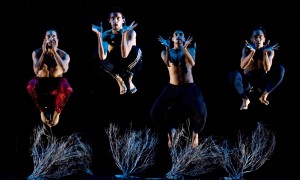
Kris’ About is in four parts, exploring the idea of the four winds or seasons that scurry through the lives of her people in the Torres Strait islands. There are four fluid, turbulent sections – Zey, Kuki, Naygay and Sager, linked by Kris as an eerie storyteller figure in white, who emerges rocklike from dry ice at the beginning . Zey, the south, wind has four female dancers in aqua tunics and another in a long feathery dress, all in cool, fluid motion. There are many strong, diagonal arms that can be quite angular, use of the Graham deep plié, and an interesting style of retire and straight foot. Kuki, the northwest wind, is thunder and lightning, and is far ‘earthier’ than the previous section. The dancers are in greyish/brown costumes with arm and body markings, with the men in distinctive feather necklaces. Bodies seethe in a sculptural mass, performing sailing and rowing like movements and mimicking the kangaroo and other land creatures. For this segment the design is a fascinating hanging linear twisted wire almost like calligraphy. Naygay, the north wind, is the calmest, gentlest, of the four. Here we see some magnificent bark painting designs and dramatic use of silhouette as the dancers whirl and fly in layers of sinuous movement. Sager, the final segment, is based on the south-east wind. We enjoy a ghostly pas de deux where the dancers represent the movement of the dust, sand and wind. 

After interval comes Page’s strong, powerful, thought provoking, but at times meandering, ID. Tracing bloodlines and reconnecting with traditional culture, it is a meditation on what it means to be an Aboriginal in this day and age. It has a timeless feel to it – at times futuristic, yet at others as if from the Dreaming .You can see the Graeme Murphy choreographic influence blended with traditional Aboriginal/Islander dance forms.

It is a searing, scathing comment on our society and Australian history, with the dancers ‘blacking up’ (with Vegemite) for the class photo, and shocking prison scenes where a dancer is eliminated, tortured and fumigated like an insect. Talented Patrick Thaiday has an extraordinary solo where he is trapped and asphyxiated. There is also reference to the Stolen Generation and the terrible laws of the time. Towards the end there are wonderful spooky scenes with forest-like totems, again demonstrating the link with the land and nature. We enjoy marvelous set design and lighting, as well as magnificent choreography.

The final scene builds from a winding, snaky conga line of dancers leading to a volcano like circle of energy where the dancers toss white chalk into the air. ‘Ashes to ashes, dust to dust’, or is it more hopeful? There are so many layers of meaning and so many issues to ponder. What a challenging visual feast.  


Photo by Jason Capobianco

Posted in Australian Dance ReviewsComments (0)

Audition Advice from the Pros!


By Rain Francis.

Audition season is almost upon us – are you ready?
Dance Informa wanted to give you a headstart with some top audition advice. And who better to ask than the directors of some of the best dance companies in Australia, and the world?

Advice from Stanton Welch, Artistic Director
Houston Ballet

www.houstonballet.org

What’s your most important piece of audition advice?
It’s very important in an audition that when you walk in you pay attention. The way that you engage the person and how you look are very important. You need to be dressed appropriately, you need to make sure that you learn the exercises with detail and that you show that you have a level of artistry. Don’t look fearful, and try to give them as broad a range of all the best qualities of you as an artist as quickly as possible.

What’s the biggest mistake dancers make when auditioning?
Trying to show off too much. In a few auditions that we’ve had, a teacher might set an exercise very specifically because we want to see a certain type of ports de bras or an arm or a jump, and then the dancer changes it so that they can show us their thing. Inevitably what they’re showing us is that they can’t learn in detail what you’re presenting.

What do you look for in auditions?
Of course you want a good dancer. I think there are many good dancers now so by the time you narrow it down, what makes you stand out is your work ethic and your artistry. You need to be a smart and intelligent dancer, as well as being someone who can completely transform into any role.

What can dancers do to be prepared?
Somehow I think it’s important that a young dancer gets through a process of practice auditions, so that by the time they walk into the real audition, they’ve somehow calmed their nerves down. I would suggest going to as many auditions as possible, put on as many numbers as possible, and do as many Eisteddfods as possible so that you’re so familiar with walking out and presenting yourself that it’s like a performance.

Advice from Rafael Bonachela,  Artistic Director
Sydney Dance Company
www.sydneydancecompany.com

What’s your most important piece of audition advice?
Wear the appropriate clothing, as a choreographer always likes to see the body of a dancer.  Don’t try to hide under a thousand jumpers and twenty pairs of leg warmers.  It shows confidence in yourself and who you are.

What’s the biggest mistake dancers make when auditioning?
Wearing too many clothes.

What do you look for in auditions?
There are different things I look for.  A strong classical and contemporary technique and being able to mix with a group but to have enough individuality and charisma to stand alone on a stage – after all, I only have 17 jobs on offer.
 
What can dancers do to be prepared?
The only way to be prepared is to work hard, be committed and focused.  To get to the highest level of quality, dance cannot be only a five day week commitment, it’s for life.

Advice from David McAllister, Artistic Director
The Australian Ballet
www.australianballet.com.au

What’s your most important piece of audition advice?
Don’t be nervous! All directors want you to be great and they want to see what you can bring to the company, so turn those nerves into excitement and just enjoy the experience. Always wear practice clothes that are neat and simple. Make sure you don’t cover legs with legwarmers and sloppy trousers as we will think you are trying to hide something. Ladies should always wear pointe shoes as the ladies in most ballet companies spend most of their time dancing en pointe.  

What’s the biggest mistake dancers make when auditioning?
Someone who cannot pick up the exercises and has difficulty with basic technical material will lose my attention quickly, and someone dancing off the music is definitely not destined for a contract.  For ladies, wearing a lot of makeup and too many accessories (hair and jewellery) is also distracting.

What do you look for in auditions?
Musicality is the thing that usually first attracts me to someone in an audition. Confidence in their ability and sureness of technique. I don’t mean that competition confidence, but an inner strength and grounded quality that draws the eye rather than acting as a beacon. Before the audition, I will look at their CV and preferably a DVD of them in action. I look at things like where they trained and who taught them, if they have had any previous employment and if not, any other stage experience. All these things count.

What can dancers do to be prepared?
Don’t do an audition if you don’t feel prepared both emotionally or physically as first impressions count; you’re better to reschedule if you are sick or injured. Do a good warm up and have a copy of your CV just in case.

Advice from Stephen Page, Artistic Director
Bangarra Dance Theatre

www.bangarra.com.au

Why do you choose to hand pick dancers rather than hold auditions?
All of our dancers are indigenous and they generally perform with the company for a minimum of four years, and sometimes for as long as twelve years. Sometimes we have a number of positions available in the same year so when this happens we do conduct auditions. We tend to be aware of indigenous students in tertiary institutions training at a professional level in contemporary dance and from time to time we offer secondments to graduates.

 What sort of process do you use for recruiting?
Because highly trained indigenous contemporary dancers are reasonably rare we are generally aware of them through their years of training and we are always open to hearing from dancers who are keen to work with the company.

What do you look for in potential dancers?
I look for someone with contemporary dance training who has an understanding of traditional Aboriginal and/or Torres Strait Islander culture. The dancers I find particularly interesting are those that respond well to Bangarra’s cultural philosophy and choreographic style.

What’s your advice to dancers hoping to find work in the industry?
I would advise all dancers, including indigenous dancers, to have a breadth of experience in all forms of dance so that they are creatively flexible and open to new ideas. Most important is for a dancer to have a great sense of themself as a person and as a performer.

Thinking of auditioning for a full time dance course? Check out our 2011 Full Time Dance & Auditions Guide! Click here

Posted in Features, TipsComments (5)

Huge Ticket Giveaway!


WIN A DOUBLE PASS TO….

Sutra – Sidi Larbi Cherkaoui / Antony Gormley with Monks from the Shaolin Temple
Win 1 of 3 Double Passes to Opening Night!
An extraordinary collaboration between celebrated Flemish/Moroccan choreographer Sidi Larbi Cherkaoui, esteemed British sculptor Antony Gormley, and 17 monks from the original Shaolin Temple in Henan, China. Seen by over 65,000 people across the world, Sydney is next.
Sydney Opera House, Concert Hall, September 16th-19th.

Bangarra Dance Theatre – Of Earth & Sky
Win a Double Pass!

Adelaide Festival Centre’s Pivot(al) program presents Bangarra Dance Theatre’s ‘Of Earth And Sky’, September 8th-11th.
Following the extraordinary success of their 20th anniversary tour in 2009, Bangarra Dance Theatre leaps into the next 20 with a stunning new double-bill.

Jersey Boys – Theatre Royal
Win 1 of 2 Double Passes!
Jersey Boys is the Tony Award-winning Best Musical that takes you up the charts, and across the country. Jersey Boys is the story of how four boys from the wrong side of the tracks became one of the biggest American pop music sensations of all time. Frankie Valli, Bob Gaudio, Tommy DeVito and Nick Massi – THE FOUR SEASONS! Opening Sept 3rd at Sydney’s Theatre Royal.

To Enter CLICK HERE

NSW Permit Number LTPM/09/00769 CLASS: Type B.

Posted in GiveawaysComments (0)

Moving with the heart of nations


The cultural dance phenomenon In Australia

By Paul Ransom.

Cultural dance; isn’t that what they used to call folk dancing? Or is it something else entirely? Or indeed, do the definitions matter? 

Marcia Percival, a native of Brazil now living and teaching Latin dance in Sydney isn’t one to fuss with the fine distinctions. “I feel that when you do cultural dancing it doesn’t matter if it’s belly dancing, Chinese, Flamenco or the Latin styles, when you have a chance to learn from a person from that culture you have a chance to learn more than just the dancing. You learn about the language and the music, even the lifestyle. That’s when cultural dancing plays a crucial role because it makes people curious and more intelligent about the world.”

Meanwhile, Stephen Page, the artistic director of Australia’s world renowned indigenous dance company, Bangarra, is a tad keener to drill down. “If you look at Aboriginal culture, in particular art, it’s a huge part of their life, whether it’s dance, story telling, painting or singing. It’s just embedded into their survival system because for them it’s part of spirituality. I bet you any money that you would find in most indigenous cultures around the world that dance is a huge part of their life.”

Courtesy of Bangarra Dance Theatre. Photo by Jason Capobianco

Courtesy of Bangarra Dance Theatre. Photo by Jason Capobianco

Whatever the differences, the consensus seems to be that ‘cultural’ dance is not a dance ‘craze’ but something that stems from and reflects social, spiritual and ceremonial traditions. Down here on the ground in 2009 that translates as a burgeoning interest in forms as diverse as samba and polka, which in turn has opened the doors to people like Marcia Percival to set up very successful schools and dance festivals.

“When I arrived here eleven years ago I felt quite sad,” she recalls, “because after a while it was, like, oh my, these people don’t go out to dance! There is no such thing in Brazil. When you go out you know you’re going to dance. If people are not dancing, there is no life.”

However, Australia’s increasingly multi-ethnic mix, together with the uptick in dance awareness triggered by popular TV staples, has helped to change that. Aussies are now embracing cultural dances from around the world.

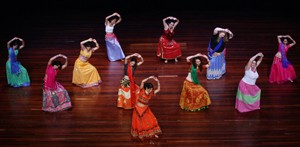
And one of the fastest growing styles is Bollywood. However, as Farah Shah from Mango Dance Studio in Sydney is quick to point out, Bollywood is anything but traditional. In fact, Indians are more likely to refer to it as ‘filmie’ dancing.

“It’s basically India mimicking the West,” Shah explains. “But what’s so cool about Bollywood dancing is that it’s a fusion of so many styles. So it’s modern Indian, not classical. There are elements of Punjabi style Bhangra and there’s jazz, funk, salsa, Arabic; there’s even popping and locking now. It’s very cheesy as well.”

Whereas the folk dancing troupes of yore were almost entirely based within a single nationality, (and indeed were seen as a way of preserving a link with the values and customs of the old country), the newer cultural dance communities are drawn from broader stock. Farah Shah’s Mango Dance Studio student population is “about seventy percent Westerners.” Across the road at Latin Dance Australia Marcia Percival reports classes made up of students from European, Anglo and even Asian backgrounds.

With the popularisation of dance forms, though, comes the inevitable debate about authenticity. For an instructor like Chante Evelyn Mordaunt, who teaches everything from tango to foxtrot with Dancecorp Studios in Adelaide, this poses an interesting challenge.

“You often find that the dance back in the countries where they come from isn’t what people teach in Western countries,” she notes. “But then there’s also a lot of conflict about what the original forms actually were.”

A tango aficionado herself, Mordaunt recently visited Argentina to explore the true origins of the dance. Her observations perhaps cut to the heart of what cultural dance is. “Tango wasn’t just a hobby,” she says. “It was a passion. People were born into it and that’s something that I don’t think any Westerner really understands. Argentineans just live and breathe dance, it’s in their culture. It’s how they grow up. They learn these dances like we learn old children’s stories.”

Here in Australia, of course, we have forty thousand years of cultural dance history, and Bangarra’s Stephen Page stands right on the line between the original and the modified form. Even though they present work in the contemporary milieu, Bangarra are very careful to observe what Page calls the cultural/creative protocols, seeking input from elders and communities before staging their productions. “We’ve been entrusted to be the sort of mainstream caretakers of stories, the traditional songs and dance,” he explains.

Cultural dance, he suggests, is a process of transforming tradition but maintaining integrity. “If you want to bring the true essence of what it’s like watching a dance at sunset in the bush somewhere, then how do you do that on a whitefella stage? Well, you transform it,” he concludes simply. “Then the elders will watch and then they’ll take it back to the community; and so for us it’s really a full cycle.”

Very top photo: courtesy of Mango Dance Studio

Posted in FeaturesComments (2)

Bangarra Celebrates 20 Years


Bangarra – Fire: A Retrospective
Sydney Opera House
August 2009

By Lynne Lancaster

Happy Birthday Bangara! It is hard to believe that the company has now been performing for twenty years. At twenty, it is appropriate to pause, reflect and celebrate, and Fire is a ravishing, spectacular retrospective analysis of the company’s work.

The word ‘Bangarra’ means ‘to make fire’. The company was founded in 1989 by Carole Johnson, the first director of NAISDA, Australia’s Indigenous dance school. Stephen Page, a former dancer with Sydney Dance Company became Bangarra’s Artistic Director in 1991, forging a creative core development team with performer and cultural advisor Djakapurra Munyarryun and Page’s two brothers. Bangarra has evolved into one of the leading contemporary companies in the world, blending the traditional Aboriginal and Torres Strait Islander styles with cutting edge contemporary dance to become revered internationally. This distinctive style tells the story of Aboriginal and Torres Strait Islander people everywhere in a modern day Dreaming, fusing the sacred myths and traditions of the past with the present.

Choreographers for Fire include Page and Bangarra stalwarts Frances Rings and Bernadette Walong- Sene. It combines some dramatic traditional dances with sequences from several of the company’s major works (eg Ochres, Bush and Fish) in a glorious celebration of land, country and Aboriginal life.

The work opens strongly with a solitary dancer emerging, descending upside down from a huge woven basket set hanging centre stage. This leads to some traditional dances that move into a dream-like ‘Brolga’ section from the 2001 Corroboree. It is an extraordinary piece with similarities in some ways to Matthew Bourne’s Swan Lake. The female dancers wear Jennifer Irwin’s glorious floaty white dresses and dramatic red and black makeup. The dancers wheel, cavort, hover and attack in feeding groups. The Graeme Murphy influence is also strongly visible in the choreography. This is followed by sections from the 1995 Ochres with the dancers abstractly representing the land. In one section the women are in yellow and are like darting fish. A very strong, powerful sequence follows, somewhat Lloyd Newson in style, from works where the company has looked at social issues such as deaths in custody, drugs and petrol sniffing. The ‘Victims’ section by the men is bleak, harrowing and despairing. This was complemented by another terrific section called ‘Veins’, by the women, where one of them is under the influence of drugs. She is itchy, scratchy, urgently restless, haunted by ghosts and driven to suicide.

Act Two includes a spectacular bungee jumping elastic sequence. There are also wonderful insect like sand creatures in brown costumes with ochre lines, alien-like red and black eye makeup and long poles for hands. There is another section where the dancers are like hooded underwater creatures. The texture of the costumes and the makeup are amazing.

There are some wonderful passionate duets as well as a quite sculptural water-sliding sequence. I enjoyed the vivid traditional Torres Strait dances. The men adorn feathered head dresses and carry bows and arrows as if to attack the audience and the women dance with pretty fans .The cast obviously have great fun in this section, before it all ends exuberantly with a short, explosive contemporary style show-off finale.

I adored Jennifer Irwin’s costumes, the use of film, and the photos of past productions and former company members. I marveled at the various textured and coloured backgrounds by Peter England, Rochelle Oshlack and collaborators.

No wonder there was a thunderous standing ovation with numerous curtain calls!
Congratulations Bangarra. I am looking forward to seeing many more performances in the years to come.


Very top photo: Courtesy of Bangarra Dance Theatre. Photo by Jason Capobianco

Posted in Australian Dance ReviewsComments (1)