Tag Archive | "Auditions"

Emma Clark stars in ‘The Addams Family’


By Linda Badger.

Emma Clark only graduated from her full-time studies in 2009, but she already has numerous theatre and television credits to her name. The young star is gracing the Australian stage again in The Addams Family musical, currently playing at Sydney’s Capitol Theatre. Dance Informa’s Linda Badger got the chance to chat with Emma between rehearsals.

What is your background as a performer?

I originally trained in classical ballet at the Jane Moore Academy of Ballet for 10 years. Then in my adolescence I took classes at Dance World Studios. To further hone my skills I completed two years of full-time dance at Patrick Studios Australia, graduating in 2009.

I always enjoyed singing in choir in high school, but I didn’t take my singing seriously until I was 18, when I began lessons with Susan Anne-Walker. I’ve seen a few teachers since then and have recently started vocal coaching with Peter Bodnar.

Tell us a bit about your role as an ‘Ancestor’ in The Addams Family musical.

I play the ‘Saloon Girl’ Ancestor.  My character is straight out of the Wild West in the 1850s. It’s a sassy role, and the beautiful costuming brings my ghostly quality to life.

The Addams Family musical, Australia. Dancer Emma Clark

Emma Clark (centre with arm raised) as ‘Ancestor’ in The Addams Family. Photo by Jeff Busby

What was the audition process like?

Like most auditions, The Addams Family audition process was extremely nerve racking. We have been blessed with an incredibly warm and nurturing creative team, so from the start of the audition process the energy of the panel was friendly, which helped make it not too daunting. There were quite a few dance rounds and lots of singing and scales to the highest of high notes. Most of the ensemble members cover the leads in the show, so there was also scene work to prepare and perform.

Were you an Addams Family fan growing up?

I wasn’t really allowed to watch TV growing up, so I have become a fan in my adult life. Since getting into the show I have caught up on the original black and white TV version that was filmed in the 1960s. My mum says she loved watching it as a kid. It is clever and darkly witty – a style that is a parallel to the musical.

What has been the best, and the most challenging part of the experience so far?

One of the most challenging things has been building up the stamina to sing the opening number, which includes some high-intensity dancing! There is also a fair amount of partner work in the show. It has also been extremely enjoyable, although challenging, to learn the infamous tango.

Any highlights of the show we should particularly look out for?

Without spoiling any of the magic of theatre, all I can say is that this show will surprise you. It is extremely touching and the family themes that run throughout the story line will make you realise that the Addams family, even though creepy and kooky, many not be too different from your family.

You have had quite a few roles in various shows, what is unique about this role?

I’ve never played a dead person before!

The Addams Family

The cast of The Addams Family. Emma Clark can be seen behind ‘Uncle Fester’. Photo by Jeff Busby.

What is the most exciting place you have travelled to so far in your career?

The most exciting place I have travelled to would be the Philippines. I went there on my first contract, which was with Cats. I was cast as ‘Cassandra’. I will never forget the excitement and nerves that I experienced in my first job. Everything was new; the wigs, the crazy makeup and the demands of an eight-show week. I relished in the challenged and I will never forget it.

If you could perform any show, what would be your dream role?

Chicago. I will play ‘Velma’ one day…fingers crossed.

Any advice for young performers who are hoping to chase the dream of performing in musical theatre?
A quote from Don Miguel Ruiz’ book ‘The Four Agreements’1 – this is the fourth agreement and something I live by: “Always do your best: Your best is going to change from moment to moment; it will be different when you are healthy as opposed to sick. Under any circumstance simply do your best, and you will avoid self-judgement, self-abuse and regret.”

We want to wish Emma and the cast of The Addams Family all the best with the show!

The Addams Family is currently playing at the Capitol Theatre Sydney. Tickets are available through Ticketmaster. Visit www.ticketmaster.com.au or call 1300 723 038 for bookings. For more information, visit www.addamsfamilythemusical.com.au.

Source:
Ruiz, Miguel: The Four Agreements: A Practical Guide to Personal Freedom

(A Toltec Wisdom Book), Amber-allen Publishing Inc.
Publication Date: November 7, 1997 | ISBN-10: 1878424319 | ISBN-13: 978-1878424310

Photo (top): Emma Clark. Photo courtesy of AB Publicity 

Posted in InterviewsComments (0)

Adam Scown on Dancing in London


By Linda Badger.

Adam Scown, a homegrown Aussie talent, made the trek to London about five years ago to give it a crack as a performer…and he hasn’t looked back! Dance Informa’s Linda Badger got the chance to catch up with Adam whilst he was back home for Christmas.

Why did you decide to move to London?
It was the one place I had the desire to work in. As much as I love New York City and Broadway, I just had no desire to move over or perform there. I visited a friend in London and I was walking around the West End thinking, ‘I’ve got to go here at some point.’ So after working in Australia for a while, I thought I’d make the executive decision to stop, rethink, plan my life and fulfill my desire to be on the West End.

How hard is it to make the move the London?
It was daunting to begin with. There is so much going on there, and you are moving your whole life. I gave myself two to three months to settle, set up my bank account and look for a good area to live (with help from my UK friends). I emailed my CV and etc. to agents, both in commercial and musical theatre, so I could gain work upon arrival. The shift was a slow process. It’s a life-adjusting period.

Australian performer Adam Scown

Adam Scown. Photo by Mug Photography.

What are three essential things you would suggest to do before making the shift to London? 
1. Pack…
2. Most Australians like to arrange their bank account before leaving. HSBC is good because it is both here and in London.
3. Contact agents so you can get work. I would recommend getting with someone who’s been there for a while already, who knows the good and the bad. There is a book called the ‘Contacts’ book which lists agents, but from that you can’t gauge who’s good, who’s bad, who’s going to work for you and who’s not. You need professional opinions from people who already work there.

Apart from physical items, I think the most essential thing would be to go over quite strong willed. It’s a different ball game and I think that’s probably one of the most helpful hints I could give. Know what you want to do. Know why you are going and what you want to achieve.

Does your Australian training give you an advantage in London?
I think that my overall training across the board in style, whether it be jazz, contemporary, ballet or tap [has given me an advantage]. We had to do everything in Australia. It’s the only way to survive in the industry here. I think having to learn everything, and attempt to be really good at everything, has enabled me to work successfully in London, across both musical theatre and commercial work.  You have to be able to do everything as there’s such varied work.

Adam Scown. Photo by Glenn Nutley.

You are now on casting panels and working as a choreographer. What have you gained from being on the other side of the table?
I’m gaining so much. I now understand what a panel at an audition thinks, says, and does before an auditionee walks in, and when they walk out. I now know how to prepare a lot more for my own auditions, and to not be so upset or annoyed if I don’t get the job. I don’t beat myself up about it because at the end of the day, if I went in and did the best I possibly could with no regrets, then I can’t do anything else. I am just not right for the job.

As a part of the panel, I’m all about giving people a fair go, no matter how experienced or not they are. It’s nice to sit back on that side of things for a change, and enable and encourage others to get the job. At the end of the day, I think a panel should really want an auditionee to get the job. They shouldn’t be ‘diva-ish’ or have an attitude about why they are sitting on that side of the table. You never know if one of those people who are auditioning for you will end up on a panel the next time you go into an audition. It is good fun, I won’t lie. I do prefer it, in a weird way. It’s a nice feeling, and I find it really interesting.

What’s coming out of London at the moment?
There are always people going really hard and getting new ideas and creative things out there. For example, the hip-hop group Blaze, who are here in Australia at the moment. It’s a new dance concept show. We generally have a few of those in London. They aren’t main stream West End, they are off West End. The dance industry itself goes to see these shows.  There are a lot of contemporary dance companies that always have shows going on, and it’s really refreshing because as much as everyone wants to go see a main stream musical, there is only so much you can gain from that. Being a dancer I get inspired by watching other dancers in all different styles.

What styles/trends are you seeing in London?
A style that is kind of ‘in’ at the moment is funk jazz, drawn back to the 80s and 90s, with modern elements. In musical theatre they’re tending to go old school, bringing back the top hats and that classic era of dance. Tap is getting out there more and more, which is really good. But I’m finding in both musical theatre and commercial, that acrobatics is really dominant. You need to flip!

So are you going to go and learn to back-flip?
I had a bad experience with a back-flip once, and now I can’t even look backwards, because it really freaks me out [laughing]. But one of my things to do this year is to go to acrobatic classes, because it’s one thing I don’t do.  I can do a couple of things, but nothing backwards. I am going to try and get over that….watch this space!

Top photo: Performer Adam Scown by John Oakley.

Posted in InterviewsComments (0)

Life as a Theme Park Dancer


By Emily Yewell Volin.

Dancing at a theme park seems like a lot of fun, but what is it really like? Here Dance Informa speaks to theme park performers about life at some of the world’s happiest places.

What performance skills do you need as a dancer in theme park productions?

Michael van Doorn
Worked at both Tokyo Disney Resort and Universal Studios Japan
Like any stage production, you need an abundance of performance and technical skill. Being incredibly versatile is a great attribute as you will usually get to be a part of special event performances throughout the year, plus perform in the show you were originally cast in.

Monique George
Worked at Disney’s Animal Kingdom, Disney’s Magic Kingdom, Disney’s Hollywood Studios, and Epcot, Florida USA

It is essential to have a moderate to strong dance background, as well as acting skills. There are many parts to play and different shows and parades to be a part of. As a performer you want to match roles as close as possible, whether it is how the character may talk or any key mannerisms they may have.

Jess Innes
Worked as a dancer at Luna Park, Sydney Australia

You need to be able to interact with the audience and involve them in the experience. This involves having a strong character and performing with larger than life expression and enthusiasm. Technique needs to be strong and unwavering as you are performing the same routines again and again in a varying environment (it could be boiling hot one day and raining the next).

dancer Dylan Hauck

Dylan Hauck performs at Busch Gardens

Dylan Hauck
Currently at Busch Gardens Williamsburg, Virginia USA
Theme park shows can vary greatly in terms of style and content. At Busch Gardens alone, we have many styles including ballroom, hip hop, tap, and even burlesque-influenced jazz and go-go dance. It helps greatly to be a versatile dancer and to always be energetic and passionate on stage, no matter what choreography you are handed.

Describe the theme park audition process.

Jess Innes
Auditioning for Luna Park was an exciting process as we learned two very stylized dances. This allowed us to show our versatility, ability to pick up choreography quickly and performance quality. We did a high energy jazz routine and a 1920s themed swing dance which was later included in our show.

Dylan Hauck
The process for singers and dancers can vary. Dancers are usually auditioned in cattle call situations, whereas singers are typically found through the common “best 16-bars” private vocal audition. Some performers, however, are able to book these jobs through video submissions. Every theme park job I have booked was through the Unified Professional Theatre Auditions (www.upta.org) which are held every spring in Memphis, Tennessee.

Monique George
The audition process for a theme park performer can be hectic, but enjoyable as well. There is paperwork to fill out, handing in your resume and lastly getting height measurements. After waiting for at least 150 people to get checked in, there is a basic movement part of  the audition. The movement that was given when I auditioned was a glimpse into what parade performing would be like. Then there is a characterization round where you are given a scenario and must act like a specific character in the park. Once the first two rounds are done, a select few are kept to dance more extensively. In this part of the audition the choreography is a bit more difficult and you are given a chance to show off any special skills you may have (tumbling, leaps, turns, etc.).

dancer Michael van Doorn

Theme park performer Michael van Doorn

Michael van Doorn
It’s a long, exhausting and really fun day! For my Universal Studios Japan audition, I first went into an open call dance round. They then made a cut and we went onto a callback dance round. In the callback we added onto the routine. It was fused with jazz, ballet and more street style sections to see our versatility as dancers. From there they made another cut and called us back for the vocal round. We started by singing a 16 bar cut of our own choice. They made a cut again after that round, then from there they put the people who were left into different groups and taught us different songs around the piano, before getting us to sing them one by one. They made one final cut and for those of us who were left we had an interview , were measured, and then told we had made it to the ‘final consideration process’. From there I waited to hear, and about two months later got a phone call saying I’d been cast in their production of Wicked for the following year!

How many performances do you dance a week at a theme park?

Michael van Doorn
It depends. At Tokyo Disney I would do five shows a day, five days a week – so 25 shows a week! At Universal Studios it would range from two shows a day in the winter season to four a day in the peak seasons – so roughly a 15 show week. It’s full on.

Monique George
Depending on how many shows or parades you are in, you could have anywhere from five to ten performances a week. These performances may not be at the same park when working for Disney. For instance, I would have a parade performance at Animal Kingdom during the day, and then a night parade at Magic Kingdom.

Do you have the time and opportunity to take technique classes while on contract with a theme park?

Dylan Hauck
It depends on the park and your personal schedule, but in many cases the answer is YES! Busch Gardens actually offers free classes to all performers led by dance captains. There are also excellent studios in the area and many performers become instructors during off-peak season.

Disney dancer Monique George

Monique George (right) in Mickey’s Once Upon a Christmastime Parade (2009)

Monique George
There are many opportunities between work to take dance technique class and even go to dance conventions. One of the perks that Disney has is that there are technique/master classes offered at Epcot where performers can take class and get to know each other outside of work. Some of the classes offered include musical theater, jazz, contemporary, tap, and hip hop.

Michael van Doorn
Yes, ample time. We had two days off a week and there are great places to take class all over Japan. We would also teach for each other in the rehearsal studios. That was most rewarding because there was this incredibly talented international community of performers right at your fingertips to learn from, whilst getting to be onstage performing all week too!

Where do you live while on contract at a theme park?

Monique George
While on contract it is left to the performer to find room and board. It is most convenient to try to find an apartment or townhouse close to the property where you work. However, if you are in the Disney College Program, room and board are provided. There are four special apartment complexes that Disney owns where only college program students can stay.

Michael van Doorn
I lived in a great studio apartment in a block not far from the park. It was fully paid for by the company. It was amazing to have all your workmates in the same complex, but still with your own space to live.

Luna Park dancer Jess Innes

Jess Innes performs at Luna Park, Sydney.

Jess Innes
Luna Park was the perfect theme park for me as it allowed me to stay living in Sydney. I am the director of 100 Percent Dance school in Clovelly and found that this job allowed me to keep my commitments in Sydney while still having the excitement and experience of immersing myself in the life of a dancer at a theme park.

Dylan Hauck
This depends on the park and the length of the contract. Some parks will offer housing, while others offer housing assistance and/or discounted rates.

What are some of the benefits of performing at a theme park? 

Michael van Doorn
I could go on forever! You get to perform onstage everyday, in some great quality productions surrounded by fabulously talented peers. You live in an all expenses paid apartment. You get paid a great salary and per diem. You get to live overseas in a different culture with time off to explore, shop and immerse yourself in a whole new world, all whilst performing and being paid. Some of my most memorable performances on and off stage were working at theme parks. It was a fabulous building block and training ground as a performer, it is well respected in the performing community and I got to meet some of the most incredible people and see some fantastic places. How often can you say you climbed Mount Fuji on your weekend from work?

Dylan Hauck
Theme parks are an amazing testing ground for new talent. Some say that if you can survive a theme park, you can perform anywhere. The stamina and energy required of theme park dancers really serves them wherever their careers take them after the contract. Additionally, theme parks are one of the longest contracts for a singer or dancer. Who doesn’t love guaranteed employment for the majority of the year?

Top photo: Monique George (front left) dances in Mickey’s Jammin’ Jungle Parade for Disney (2009).

Posted in FeaturesComments (0)

Audition DOs and DON’Ts


From industry leaders in full time dance education

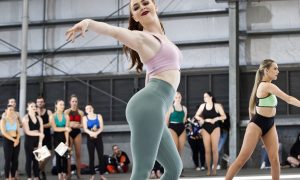
Are you looking to audition for a full time or part time dance course for next year, or anytime in the future? Have you checked out Dance Informa’s comprehensive Full Time Dance & Auditions Guide? As you prepare to audition in the coming months, take into consideration this valuable audition advice from the directors of some of Australia and New Zealands top dance courses.

By Rain Francis.

Pamela Apostolidis
Dance World Studios/APO Arts Academy

Do… your research! Establish exactly what the audition brief entails, what roles are available, your suitability for those roles and determine what you need to prepare.

Don’t…. just do auditions for the sake of doing auditions. It’s important for auditionees to make a good impression when attending professional castings – quite often, first impressions last!

Jason Coleman
Jason Coleman’s Ministry of Dance

Do… express who you are in the way you perform the choreography. It is extremely important to dance with feeling. You cannot convincingly portray choreography from looking in the mirror, it needs to come from your soul. Dance like your love it. You should dance like you do with every step, but particularly in an audition.

Don’t… hide up the back. Situate yourself up the front and as close to the centre of the studio as possible. Show the panel who you are. Hovering at the back of the room will only give you less time to impress and prove yourself.

Angus Lugsdin
Queensland Dance School of Excellence

Do… Be confident. An air of confidence enhances any amount of talent/ability.

Don’t… forget to prepare. Preparation leading up to the audition is vital. Arm yourself with as much knowledge as possible about the school or company and the associated personnel, so that you can demonstrate genuine interest in the interview.

Sarah Boulter & Lisa Bowmer
Ev and Bow Full Time Dance Training Centre

Do… show your individuality. We like to see a dancer who is quietly confident with who they are, somebody that displays qualities that endears us to want to work with them! We like to see that a dancer is one step ahead of us in every aspect, ready and willing for any challenges that may be thrown their way, and above all reliable. When auditioning, we want to know what a dancer will add to a team. A strong sense of creativity is high on our list!

Caroline O’Connor
Brent Street

Don’t… go in with a feeling of terror, thinking that the panel is not going to like you. Everybody on the panel always wants someone to turn up who is really good. So try and keep that positive attitude.

Do… be yourself. The more you are yourself, and remain individual, rather than trying to be a clone of someone else, the more you stand out. So be in touch with your strengths and be aware of your weaknesses, so you can work on them.

William A. Forsythe
ED5International

Do… bring a positive energy with you and give your all at the audition. Give every part of the audition a go, even if it is not your main talent. e.g. if you’re a dancer, give the singing and acting a go. You don’t need to be brilliant, you just need to show you’re willing to give it a go and learn.

Don’t… compare yourself to anyone in the room. You have your talent and they have theirs. People have different skills; just do YOUR best.

Dulcie Lee
Dance Factory

Do… think of your audition as a performance, rather than a trial by terror! Aim to entertain the panel as if they were an audience. A good first impression is a lasting impression.

Don’t… panic if you happen to slip along the way. Relax, pick up where you left off and treat it as an exercise in learning what to brush up on for your next audition. Remember it is also a learning experience.

Garry Trinder
NZ School of Dance

Do… consider the material you’re presenting within the audition as choreography, not merely classroom exercises. In any audition, the panel is looking for a sense of performance from you.

Don’t… think the panel is looking only at your dancing.  They will also be appraising how you conduct yourself with others, how conscientious you are in learning the material, how you respond to feedback and whether you can cope in stressful situations with grace and humour. During the audition, absolutely every minute counts!

Nicole Davis
Dance Force

Do… believe that you have something to offer and make the staff watch you. Listen and follow choreographers’ instructions carefully. How you learn and take on board corrections given to you is extremely important.

Don’t… forget to introduce yourself to the director and be courteous to staff and other students.

For information on Australia and New Zealand’s full time dance courses check out the 2013 Guide:
Full Time Dance & Auditions Guide


Top image: © Andrew Ross | Dreamstime.com

Posted in FeaturesComments (0)

Full Time Dance & Auditions Guide


Dance Informa provides your Guide to the best full time dance courses in Australia, NZ and even America.

The 2013 Full Time Dance & Auditions Guide outlines course details, subjects, teachers, requirements, audition dates and more.

If you’re serious about a dance career and your dance education, make sure to check out this guide. It’s a must read for any talented dancer who wants to take the next step into full time or part time training.

Full Time Dance and Auditions Guide

Posted in Guides, Top StoriesComments (0)

Auditions – Making the Cut


The DO’s and DONT’s of Auditions

By Laura Di Orio

Auditions. They’re like swallowing your vitamins. All they take is a little practice and some mental reassurance, and then you can come out stronger and, in this case, maybe with a job. Dance Informa spoke with leading working dancers and choreographers across the US to get their tips and audition do’s and don’ts.

Where to Look
Nowadays, audition listings, like most other information, can be found over the Internet. Dance Informa provides nationwide audition listings (click here to view the current listings) and even facebook offers dancers news on upcoming auditions and gigs. There’s also good old paper: most dance studios have a bulletin board with audition listings and job offerings. For some dancers, word of mouth and/or recommendations are also good audition hunting tools. And for those interested in company work, attending workshops or classes by prospective companies can be valuable. They often have company mailing lists, which inform recipients of upcoming auditions.

Audition Prep for the Mind and Body
It’s important to get enough sleep prior to an audition in order to stock up on ample energy and concentration levels. If nerves or other factors prevent you from getting the zzz’s, then help yourself with an energy drink, suggests choreographer Annabelle Lopez Ochoa. You need to be “on top of your game because you have to show in no time what you’ve got,” she says.

Nothing is worse than feeling unprepared. “If you can, research the project or company choreography,” says Clymene Baugher, a company member of Elisa Monte Dance in New York City. “Wake up early and give yourself time to orientate yourself to the day, not only preparing your body physically but also giving yourself time to mentally prepare.”

Mentally, it’s crucial that as an auditioning dancer you exude confidence. “Believe you are worth watching and that you have something to offer the company,” Lopez Ochoa says.

“Think of auditions as dress rehearsals, the more relaxed you are the better,” Baugher adds.

Christine Cox rehearsing with members of Ballet X

Show it Off!
Wear dancewear in which you feel good, something clean and neat and in a bright color. Unless it fits with the style, Lopez Ochoa says to avoid baggy clothes, “too sexy” looks and leg warmers. “A dancer should reveal his/her body because if you hide it in baggy clothes, the choreographer tends to be suspicious,” she says. “It’s all about honesty.”

Courtesy Goes a Long Way
During an audition, you’re being tested on more than just dance skills. How do you behave toward the director or choreographer and your fellow auditionees? “Being courteous to other dancers and the casting people is incredibly important,” says Drumlin Brooke, currently a trainee with First State Ballet Theatre in Delaware. “A lot of directors are looking for people who will mesh well with their company.”

How you behave in an audition also gives directors an idea of how you would work in the studio. “Listen very well to what a director or choreographer is asking you to do,” Lopez Ochoa advises. “Usually he/she does not expect you to be perfect, but he/she is just testing if you listen well and react to what he/she is saying.

“Don’t constantly look at the director to check if he/she’s watching you,” she adds. “That can be utterly annoying.”

Stay in your Comfort Zone?
There’s debate about whether or not to audition for something out of a dancer’s skill level or comfort zone. Lopez Ochoa says to avoid such auditions. “You’d be wasting the time of the choreographer,” she says. “It’s already hard enough for a choreographer to perceive all the qualities of the dancers in such a short time and in such big crowds.”

On the other hand, Christine Cox, co-founder of Philadelphia’s Ballet X, says go for it. “I think it’s important to know how to audition, and the more experience you can gain from it the better,” she says. “Who knows, you may get the job. If it starts to make you feel depressed and insecure, then stick to what you know and keep your confidence building.”

Likewise, Brooke says, “If you go you might get the job. If you don’t audition you definitely won’t.”

The Must-Haves 
Depending on the style of the company or specifics of the gig, choreographers and directors look for different qualities in dancers. Lopez Ochoa looks for generosity, a strong technique, versatility and, most of all, musicality when she’s auditioning a dancer.

For Cox, attributes like musicality, good work ethic and amazing technique make dancers stand out. “You can’t fake being a good dancer,” she says. “You either are or you aren’t.”

Bracing Rejection
“There’s no band-aid for rejection,” Lopez Ochoa says. “It’s always hard and disappointing when you’re not chosen.”

The key, then, is to trust that there’s a place out there that would be happy to have you as a dancer. “If a director does not hire you, it doesn’t mean that you’re a bad dancer,” says Lopez Ochoa. “It usually means that you don’t fit the style of the company.”

Most importantly, when faced with rejection, don’t give up. “Being a dancer is one of the hardest professions, and rejection hurts,” Baugher says. “If you want it bad enough, then you have to push on and continue to attend auditions and put yourself out there.”

#1 Do’s and Don’ts
According to these working dancers and choreographers, here are their number one do’s and don’ts:

Lopez Ochoa’s #1 DO: “Show that you love dancing. You’re not at an audition to get a job, you’re there to show how much you love your art. It’s a slightly different state of mind that makes a huge difference in how and what you radiate.”

Lopez Ochoa’s #1 DON’T: “Don’t stand in front if you don’t know the combination.”

Brooke’s #1 DO: “Pay attention! Nobody wants confused dancers who aren’t listening.”

Brooke’s #1 DON’T: “Don’t be late. Being early is both respectful and smart, and you want to be able to take your time to prepare.”

Cox’s #1 DO: “Show who you are as an artist in the audition. Be expressive and daring.”

Cox’s #1 DON’T: “Don’t show attitude.”

Baugher’s #1 DO: “Enjoy! Being a dancer is not easy. Think of auditions as miniature journeys.”

Baugher’s #1 DON’T: “Do not beat yourself up. Not getting the job often means absolutely nothing about you as a dancer, but most especially does not reflect your worth as a person.”

 Try to enjoy the audition experience and the journey, and work hard. Your persistence could someday soon pay off.


Top photo: Clymene Baugher, company member of Elisa Monte Dance. Photo by Cheryl Mann.

Posted in TipsComments (0)

Stage Presence: What Is It and How Can I Get It?


By Emily Yewell Volin.

You know it when you see it. Some call it star power, others say it’s an innate quality of the soul. Stage Presence. What is it, how important is it, and can it be trained?

To answer this question Dance Informa spoke with six leading professionals whose careers have spanned performance, choreography and direction in a variety of dance genres.

What is stage presence?

Homer Bryant, Founder & Director of Chicago Multi-Cultural Dance Center, The School of Homer Hans Bryant
www.cmdcschool.com
Stage presence is dancing in a relaxed manner from your heart. You can be dramatic, comedic, whatever. It’s when you transform yourself and the audience says, ‘wow, that’s amazing’.

Rhee Gold, Publisher Dance Studio Life
www.dancestudiolife.com

I think most people would believe that it is a smile or a personality on a stage, but to me, stage presence is being able to express an emotion that is felt by the audience; it’s more from the gut. I hear teachers say, ‘give me a smile’. Even if the students smile, it’s not necessarily stage presence.

Matt Kent, Associate Artistic Director Pilobolus
www.youtube.com/watch?v=aB_N0qHKOD0

It’s about displacement; the amount of water you spill out of the bathtub. There’s not an ‘x’ factor that you can read about in a book and get.

Thomas Lund, Principal Dancer Royal Danish Theatre Ballet
http://kglteater.dk/OmKunstarterne

I find from my experience that some people have star quality; they get on stage and people look at them. But I find that people who do not have that strength can work through the quality of the movement, how to sustain moments, and can actually look more interesting. I don’t always buy ‘she/he hasn’t got it’.

Susan Quinn (Williams), Associate Professor at University of Arizona School of Dance, Master Teacher & Choreographer
www.susanssight.com

Stage presence to me is when the whole body, head to toe, is at its highest point. It’s when everything comes together.

Pattie Obey, Master Teacher/Choreographer
www.pattieobey.com

It’s the ability to perform to an audience.

Thomas Lund in 'Swan Lake'. Royal Danish Ballet. Photo by David Amzallag

Why is stage presence important?

Matt Kent
It’s what makes people follow you where you are going to lead them. All the other things you have may be for naught if there’s no presence about. Dance always starts with imitation but you have to get beyond it.

Thomas Lund
If you don’t have stage presence, people won’t think there’s anything to watch. There won’t be anything special about your performance. Whatever you do, you have to make something.

Susan Quinn
You have to tell me a story. I can’t stand it when a choreographer/dancer dances the movement and then starts to walk. Why are you walking there? If you’re walking for no reason, I’m going to get popcorn. You must tell me a story. I want you to tell me what you are feeling.

Pattie Obey
It’s important because the audience wants to be entertained. It’s important because you learn to show why you dance. Open your heart, spread the love around. If you can’t live, eat, and drink dance, then don’t do it. It’s not 100% commitment, it’s a 200% commitment.

Is stage presence just something you are born with or do you develop it?

Homer Bryant
There are some people who are just born with it, it’s part of their DNA. Many others train. Dancers get better with time.

Rhee Gold
I think it is a case of overcoming inhibitions and the ability to let it go and not be intimidated to share who and what you are with the audience. I’ve seen many teen dancers who don’t ‘get it’ but then they pursue dance at the university level of performance and they learn.

Thomas Lund
Some are born with special abilities. And then, there are people you don’t notice in the studio who then get into the stage lights and there it is…it’s in the face. It’s not about being photogenic, it’s something to do with performance.

Susan Quinn
Yes; some people have natural stage presence. I’ll tell you, though, I’ve been teaching over 30 years and maybe ten or so people I know have natural stage presence. Stage presence must be taught.

Pattie Obey has presence! Photo: Andrea Hausmann

What can you do to improve your stage presence?

Homer Bryant
My school offers musical theatre and acting classes/coaching in addition to dance technique classes. I’ve found that these classes really help develop stage presence. Another way we are teaching stage presence is by having the students of every age perform for their peers during class time. They critique each other, without being harsh, and grade each classmate’s performance. As a teacher I ask the students how they feel about particular movements to help them make human and mental connections to what they are doing.

Rhee Gold
I think it comes with performing. It’s about explaining to your dancer what the story is about, what they are supposed to portray; really giving them the information they need to express the story. Sometimes dancers do not know what the choreographer is trying to express. The dancer needs to be fully aware of the choreographer’s intention.

Matt Kent
I’m a guy with no dance training who is working in the field because I brought something else. Part of the dancer’s job is to let the magnetism out; to displace the energy in the room into more and more circumstances. You first have to learn how to bring out what you have and then let that ooze and infect the rest of the world of movement and drama. And, it’s a practice. It’s not in your head. I come from a martial arts background so I see stage presence as an action thing. Get onto stage more. And, if you’re a student ‘fake it ‘til you make it’. It’s going to be difficult to develop stage presence if you are afraid to take a risk. Trust what you’re good at, trust your technique and then go out there, take a risk, and let it all hang out.

Susan Quinn
I think we tend to leave it up to the students and that does not work. Stage presence must be taught right when you teach the first demi plié. It has to do with épaulement, écarté, looking croisé; the body positions. You have to teach style and performance quality at the same time you teach technique. I also bring in commercial choreographers for mock auditions. They tell the dancers, ‘I don’t care if you can turn 50 times or how high your leg is in the air. If you are not selling the product I will not watch you’.

Pattie Obey
Watch other dancers – go to see professional productions and see how other people perform. Why are those dancers in that great company?

Would you rather hire a dancer with tremendous technique and average stage presence or a dancer with tremendous stage presence and average technique?

Homer Bryant
I have seen some beautiful but dry dancers whose performances didn’t cross the footlights. Dancers must invest in both stage presence and technique.

Rhee Gold
I’d definitely go with a medium level dancer with stage presence rather than a technician. My responsibility is to entertain and move the audience. Give me a dancer with energy, life, and passion. I think stage presence is the key to success as a performer, as a teacher and as a choreographer. Stage presence is present whether you are on the stage or not.

Matt Kent
Especially with the work I do, I have zero interest in a perfect technician who does not have anything to say or a voice of their own. I’m not interested in imitation.

Thomas Lund
It certainly depends on the field you are in. Classical ballet people must look at the instrument, the feet, the lines and turn out. But then you would also look at how they project and how they take the room. If I see two dancers and they are equally technically strong but one looks more interesting and more expressive, I’d probably choose that one. Dancers have a tendency to fall in love with their technique and what can be done with the body, but somebody in the front line must also have a personality. That’s one very strong part of the history of the Royal Danish Ballet. We’ve had ballerinas and males with great technique and quite a range of personality.

Pattie Obey
I would hire the dancer with tremendous stage presence and work on the technique. If I am the director of a dance company I need to get butts on the seats. I have to build an audience and sell tickets to more than just a dance audience. Leave the arabesque at 90 degrees but perform your heart out. It’s sometimes easier to improve upon technique than stage presence. I think as a performer you need to capture the audience. It’s a relationship you build from the moment you walk on the stage.

Posted in TipsComments (3)

HUGE GIVEAWAYS!


Readers, enter today to win tickets to two amazing dance shows, or the prestigious Australian Dance Awards!

Win a DOUBLE PASS to Ballet Revolucion
Melbourne or Brisbane

Click here to hear about Cuba’s Ballet Revolucion and the company’s Australian tour.

Win a DOUBLE PASS to Side To One in Adelaide.
Click here to find out more about this new contemporary dance work presented at the Adelaide Festival Centre.

Win a DOUBLE PASS to the 2011 Australian Dance Awards in Brisbane
Click here to find out more about the dance industry’s night of nights!

To Enter
Email Dance Informa at info@danceinforma.com  with:

Your Name, Date of Birth, Full Address, Phone Number and ‘Why you love Dance Informa’.

Good luck!

NSW Permit Number : LTPM/10/00971CLASS: Type B
Competition opens on July 2 2011. Competition closes on July 16. Winners will be selected at random on July 16 at 5:00pm EST and notified by email. All entrants must provide an email address, a postal address, full name and date of birth. All entrants who are not a subscriber to Dance Informa will be given a free subscription. All subscribers can unsubscribe at any time by visiting danceinforma.com/unsubscribe. Minimum entry age is 13 years of age. Prizes will be drawn in Highbury SA. Winners will be published at www.danceinforma.com after they are announced. If not all prizes are claimed, a Second Chance Draw will be held. This competition is held by Dance Informa Pty Ltd of SA. Phone 1300 783 120.

Posted in GiveawaysComments (1)

Telstra Dancer Award Nominee Karen Nanasca


By Grace Edwards.

Many local ballet students dream of becoming a nominee for the Telstra Ballet Dancer Award. For 22-year-old New Zealand-born corps de ballet member Karen Nanasca the dream has come true. “The announcement was made after our daily class one morning back in February. I was sitting on the floor at the back of the studio amongst my fellow dancers wondering who the last nominee was going to be. I couldn’t believe it when my name was called!”

Karen, who joined the Australian Ballet in 2009 upon graduating from the Australian Ballet School, will compete alongside colleagues Rudy Hawkes, Robyn Hendricks, Luke Marchant, Brett Chynoweth and Chengwu Guo for a cash prize of $20,000. The winner is to be chosen by an industry judging panel, who will assess the dancers on the quality of their dancing, personal development and potential for the future. Australian Ballet fans will also get their say, deciding by popular vote the winner of the equally coveted $5,000 People’s Choice Award.

As part of her nominee duties, Karen has already appeared in a mini-documentary about the Award and can look forward to the usual variety of photo shoots and interviews. To equip her for the task she has received some publicity coaching, including training in some rather less traditional areas: “I’ve had “twitter training” to teach me how to tweet about my TBDA nominee experiences!” The Awards are also an opportunity to look inwards. “The past TBDA winners have always commented on how much they have discovered about themselves during their time as a nominee,” explains Karen. “I’m excited to find out what I learn about myself!”

TBDA nominees Luke Marchant, Robyn Hendricks, Rudy Hawkes, Brett Chynoweth, Karen Nanasca & Chengwu Guo. Photo: C. L'Estrange

In addition, Karen and the other contestants will also have to submit a written piece to convince the judges why they should win. The process culminates in September when she and the other contestants will be interviewed by the judging panel. The winner will be announced in December. Last year the contest ended in an unprecedented tie, with winners Ty King-Wall and Dana Stephensen receiving $20,000 each.

Having made the transition to company life quite recently compared to the other nominees, Karen is more than ready for the journey. “There were only seven girls in my final year at The Australian Ballet School, and there are 35 girls in The Australian Ballet,” she recalls. “It was quite a change to work with a much larger group of dancers and subsequently receive less individual attention from ballet staff than I was used to at the school. But I’ve learnt now to work more independently and how to navigate my way around in such a big ballet class.”

Already she has had to cope with one of the art form’s biggest downsides. “I had a stress fracture in my second metatarsal going into my first year at The Australian Ballet School, and I re-fractured the bone after my initial recovery a few months later into that year,” says Karen. “Any dancer who has had an injury knows how frustrating it can be when you can’t dance. It was tough for me for all the months I was off. But I came out of it a stronger and smarter dancer. I think it’s important to stay positive, have family and friends around to support you, and always have a goal to work towards. The injury really put into perspective how important our bodies are for dance, and how important it is to look after them properly!”

We here at Dance Informa wish Karen the best of luck for her TBDA campaign and look forward to following her promising career. Her secret for success is simple:“’Ballet is hard, so always remember why you do it.’ My ballet teacher in New Zealand wrote this in a card she gave me before I left for The Australian Ballet School.”

Karen Nanasca. Photo: James Braund

Whilst it might be easy to focus on such potential pitfalls, Karen insists that the joy of dancing is worth the pain. She is quite clear about her favourite aspect of dancing with the Australian Ballet: “getting to do what I love everyday – and getting paid for it! I love the feeling of being on stage, the adrenaline rush and the emotion of it all. It’s also rewarding to hear the positive response from the audience.” This is fortunate, as the company’s hectic schedule doesn’t leave much time or energy for other interests. “After a performance and once I’m home, I usually have something to eat and watch TV or read until I start to get sleepy. This doesn’t normally take very long…”

A few fun facts about Karen

When I am not dancing I am…sleeping!
I have a personal weakness for…Chanel nail polish.
One day I’d like to…win the Telstra Ballet Dancer Award!
My idol is..Tamara Rojo, principal, the Royal Ballet.
A memorable stage moment…Last year I danced in Principal Artist Daniel Gaudiello’s South of Eden, as part of the Bodytorque.a.la.mode season. In the piece there was one lift where John-Paul Idaszak, the tallest male dancer in the company, lifted and tossed me over his head, and I was caught on the other side by dancer Matthew Donnelly. It felt like I was flying!

Vote for Karen or any of the other talented dancers in the TBDA People’s Choice Award by visiting

www.beinvolved.com.au

Top photo: Karen Nanasca and Jacob Sofer by Jeff Busby

Posted in Interviews, Top StoriesComments (0)

Artistic Vision


What it Takes to Be a Dance Company’s Artistic Director

By Laura Di Orio.

When an audience sees a performance, it notices the dancers, costumes, lighting, sets and music. But the driving force behind it all, is the artistic director. In a dance company, the artistic director’s role is to fuse all the business and artistic elements of the company and its productions to ensure they coalesce to portray the group’s vision. Dance Informa speaks with artistic directors from three established companies to find out what’s involved in being at the helm.

What qualities does it takes to be an artistic director of a dance company?

David McAllister, Artistic Director, Australian Ballet
I think that an artistic director needs to be a good communicator but an equally good listener. I believe that your motivation should be to facilitate the company to be the best it can be, rather than trying to big-note yourself. I love the fact that the company is the star and I am there to keep that flame burning as brightly as possible. You have to care about the people you work with and have a big ambition for the company you run. Both competing forces somehow need to be balanced.

Peter Boal, Artistic Director, Pacific Northwest Ballet, Seattle
Patience and perseverance. Clear vision helps, too.

Nan Giordano, Artistic Director, Giordano Jazz Dance Chicago
Your skills need to be very extensive and cover anything from finding the choreographers or being in rehearsal to working with the board – you have to wear a lot of hats. You have to be efficient and organized. You need to be an inspirational leader. That’s part of what I do – inspire. How I live is how I operate our company – good energy, high energy.

David McAllister and Karen Nanasca, The Australian Ballet. Photo by Jeff Busby

What do you look for in dancers for your company? Is it more than just dance ability? Is character a part of your decision?

Peter Boal
There are a few common denominators I look for in dancers, but what inspires me is the individuality of each dancer. Versatility and an ability to connect with the audience are also key.

Nan Giordano
Of course they have to be a wonderful dancer, but we look for a very specific type of person and the energy they exude during the audition process. We look at the whole picture.

How do you choose your season repertoire?

Nan Giordano
We want to be the trendsetters, to be ahead of the pulse. I like working with new cutting edge choreographers who are just being discovered. We try to do three new works a year. Then I look back at the rep we have and see how it’s all going to tie together. For the dancers, it’s important to keep them challenged and interested, and it’s important to me that they like the rep they’re doing. The more they like it, the more successful the piece will be.

Peter Boal
I look for a balance of respecting the traditions that PNB was built on and adding to the repertory by building collections of works by relevant choreographers – both world premieres and/or new works to PNB.

David McAllister
In an organisation where around 70 percent of our budget comes from box office, the audience needs to be front of mind, but I believe that context is always the way to take an audience on a journey. If you only mount works that are proven to be popular, then the audience never has an opportunity to be surprised and sometimes enlightened by something they may not have seen otherwise.

How do you keep inspired?

David McAllister
By surrounding yourself with wonderful people who challenge and motivate you to be better. The best piece of advice I got from someone when I became Artistic Director was to always employ people who are cleverer than you and could do your job. It is a great way in which to work as you can workshop solutions to problems that on your own seem insurmountable.

Peter Boal
I travel as often as possible to see new choreography and to see other ballet companies. Included in these travels is always a trip to the art museum of whatever city I’m in. It helps keep me inspired.

How do you keep your dancers motivated?

Giordano Jazz Dance Chicago. Photo by Cheryl Mann

David McAllister
That is the million-dollar question! I would say to try to provide a respectful, creative and supportive environment in which to work and a repertoire that inspires and is artistically diverse. It is integral to keep the flow of communication as open and transparent as possible and to be honest and timely with your feedback to the dancers individually and as a group.

Nan Giordano
We have a lot of fun together. They’re more than just employees. It’s a supportive environment. I feed them energy, they feed me energy.

Peter Boal
I think the repertory is a great motivator for the dancers. I also make a concerted effort to bring in coaches, stagers and choreographers who I know the dancers will benefit from working with.

What else should people know about being an artistic director?

Nan Giordano
You want to create a good arena so that you can create something great together. Our world really needs beauty, whether it’s on stage or in the classroom, so you need to focus on the positive.

David McAllister
Being an artistic director is the best job in the world. Each day is filled with unseen challenges and joys. To sit in an auditorium and see a dancer outperform their own expectations or to witness the premiere of a work that started with a conversation with the artists involved is a pleasure that has no price.

Top photo: Pacific Northwest Ballet Artistic Director Peter Boal with principal dancer Carla Körbes in a rehearsal for Boal’s new staging of Giselle. Photo by Angela Sterling

Posted in Features, InterviewsComments (0)