Tag Archive | "Alexei Ratmansky"

Is Ballet Dead?


By Rebecca Martin.

Talk about opening a can of worms.  With the release of Jennifer Homans’ book Apollo’s Angels, which charts the history of ballet, has come a flurry of debate about the epilogue included at the end of the book.  In it, Homans suggests that ballet is either dead or dying.  Such a statement is sure to inspire a response from ballet lovers, dancers, and students alike whether that response is a wise nod of agreement or a furious rebuttal. 

“After years of trying to convince myself otherwise,” Ms. Homans writes, “I now feel sure that ballet is dying.”

The crux of Homans’ argument centres on the idea that pieces like George Balanchine’s Divertimento No. 15 have become trivial and no longer have the ability to move audiences.  While many works of art fail to survive the passage of time, in the instance of classical ballet and modern ballet pieces that have lasted for decades and are still being performed and enjoyed to this day, it is not the piece which has become trivial.  It is the audience’s exposure to newer works, greater technique and more impressive staging of productions that has changed the way we view the older works.   Choreographer, dancer, ballet master, and director Robert Kelly says, “to say ballet is dying is the same as saying ‘classical music is passe’ or ‘surrealism is dead’. It’s an art form with a wonderful heritage and a rich history”.  Indeed, much like popular songs or fashion statements that were a big hit upon release and are now a source of ridicule and are mostly forgotten, many ballet pieces will be lauded upon premiere and just as quickly dismissed from memory.  They will become dated and trite.  Not every production will become a classic, nor will every performance be memorable. 

Australian Ballet performs The Possibility Space by Nicolo Fonte. Photo Jeff Busby

The Australian Ballet’s Artistic Director David McAllister feels that ballet is alive and well. “There are so many companies around the world creating a myriad of new works that explore the ballet technique and use it in completely new and innovative ways. Productions of the 19th century ballet canon are being updated and presented using 21st century technology and techniques in ways that inject new life for today’s audiences. Young dancers are still joining ballet classes around the globe and dance is being seen by an ever-growing audience thanks to an online world of Facebook, blogs and Youtube.” 

Technology is enabling smaller projects to get off the ground, receive exposure and funding.  Where once ballet was seen as an activity for the upper class and entertainment for the elite, ballet companies are reaching out to younger audiences and moving with the times.  However, the high cost of seeing a major ballet company remains beyond the reach for many families, students and adults alike. 

Homans neglects to point her assessment of ballet’s vitality to the modern day productions that are wowing audiences, challenging dancers and standing up to repeat performances.  Granted, it is too early to tell whether many, if any, of these pieces will become classics and will ensure the longevity of the art form.   She dismisses contemporary works outright as “gymnastic or melodramatic excess” suggesting that only the tutu ballets of old have any place in the current climate.  Such an opinion sounds an awful lot like the same criticism that was thrown at early rock and roll or Allen Ginsberg’s revolutionary poem Howl.  Groundbreaking art will always have its critics and there will always be an element of adjustment as dance moves forward.  Best it does that than stays stagnant and fades into oblivion. 

Certainly, ballet is a structured art form and there can only be so many variations before it stops being ballet, while other forms of dance such as hip hop or jazz can take many different forms and remain true to its origins.  This isn’t a criticism, rather an observation.  Ballet’s structure allows it to remain consistent over time and won’t fall prey to disintegration.  Having said that, in order to keep new and younger audiences who are exposed to such a vast array of mediums for entertainment interested in ballet, it is essential that the art embraces technology and utilises its various forms to engage people.  As our attitudes change towards entertainment, so too must the entertainment itself evolve.  McAllister sees ballet continuing to “evolve and develop to reflect the environment that we live in. In each generation there are people who innovate and bring new ideas and new energy to ballet. Their works add to the canon and their masterpieces become the classics of the future. While it’s important to maintain and present the great works of the past that are the foundation of ballet, it is equally crucial to develop and nurture the choreographers of today to keep the evolution of our art form vital and alive!”

Julie Kent and Marcelo Gomes of American Ballet Theatre in Romeo and Juliet. Photo Rosalie O’Connor

Ballet companies are employing more fashion focused advertising with bright colours, and an edgy take on a classical tradition.  A couple of years ago, San Francisco Ballet had the image of two dancers kissing in the back of a convertible car on their promotional posters.  Many bars and stores put up the posters, which for them was the first dance poster they had ever displayed.  The Australian Ballet’s dancers can be frequently seen between the pages of fashion magazines, as well as sports and other publications.  The idea is to present ballet dancers as sexy, vital and modern, in contrast to the outdated image of them as stuffy, one dimensional and old fashioned. 

Despite this, ballet still has limitations in this modern climate. As Sarah Keough from the Washington Post writes, “money problems weigh on ballet like a stone around its neck: salaries, rent, costumes, toe shoes, insurance, musicians, storage and so on. Debt is a big factor in all the conservative programming out there.  But the main problem is this: ballet suffers from a serious lack of confidence that is only growing more and more paralyzing.”  She goes on to say, “there’s nothing more boring than safe, pretty art. Nothing feels less relevant. Ballet needs to think bigger. Yes, money is tight, but ballet here has gotten itself into trouble by aspiring to opera-house prestige without the more stable budgets of its European counterparts. To survive into the future, I think the average ballet company would do better to downsize, aim for excitement, stir the pot — and drop the full-length ballets, which are better left to the few larger, richer operations”.

Alexei Ratmansky rehearsing with New York City Ballet. Photo Paul Kolnik

It’s not all doom and gloom for ballet lovers, however.  With choreographers like Twyla Tharp, Christopher Wheeldon, and Alexei Ratmansky amongst others, pushing the boundaries of ballet and creating works that blend abstraction with classical lines, ballet remains a living, breathing art form.  A glaring omission from Homans’ assessment of modern ballet is American choreographer William Forsythe who turned ballet on its head at the end of the 20th century and challenged dancers technically and audiences intellectually.

The people are telling us that ballet is as essential and popular as ever.  McAllister states that audiences for The Australian Ballet are growing every year, with subscription rates the highest they’ve been since the early 1990s. 

 Landestheater Coburg Ballet Master and international dancer Griffin Doug suggests that the pulse of ballet is strong in Europe. “I see (ballet) as the only ‘high-art’ that can be relied upon to bring constant houses. With the exception of well known musicals, dance programmes are the normally safe bet for a theatre intendant. Houses may not be sold out every night but performance for performance over a season the dance nights sell more seats than other performances.  For McAllister, however, “it’s not just about seat numbers (but) more about giving audience members a whole ballet experience.”

As Doug points out, ballet has the important asset of being a universal language which allows a production to traverse the globe without the barriers of communication.  And as all dancers can attest, a ballet class can be taken in any language anywhere in the world with little to no confusion.  The language of dance is the same wherever you go.  “Of all the live performance genres, ballet is the most adaptable to change. Dance is easily performed in large and small house settings, also in impromptu and carefully rehearsed productions. Dance can be performed with full symphony accompaniment, but is also accepted by audiences with pre-recorded soundtracks. Far from being a dying art form or a museum art form, dance is alive and well. It is the most adaptable of art forms with the widest audience base.”

Ballet itself is the foundation for all other forms of dance.  A jazz dancer with classical technique is more often than not far superior to someone without ballet training, and the same can be said for musical theatre, cabaret, tap and even hip hop dancers.  With the surge in popularity for dance thanks to the plethora of television shows, movies, and film clips showcasing the broad appeal, diversity and skill of the art, ballet is not going anywhere in a hurry.

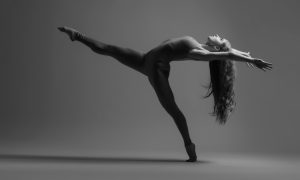
Top photo: Aurelie Dupont & Herve Moreau of the Paris Opera Ballet. Copyright Anne Deniau

Posted in Features, NewsComments (2)

The Australian Ballet – Concord


Sydney Opera House
November 13th

By Dolce Fisher.

Concord brought together three international choreographers – Spain’s Nacho Duato, Russia’s Alexei Ratmansky and England’s Wayne McGregor.

The evening opened with Nacho Duato’s, Por Vos Muero, a work inspired by Spanish music and poetry from the 15th and 16th centuries. Each section of choreography was separated by a piece of poetry, followed by beautiful Spanish music. Duato’s choreography has a simple yet elegant fluidity to it. There were many intricate lifts that created pleasing and sometimes unusual lines. The costuming by Duato himself, in conjunction with Ismael Aznar, was a contemporary take on period Spanish clothing – a Romeo and Juliet feel with a contemporary edge. There was interesting use of props including masks by the female ensemble that created a clever series of different pictures. The male ensemble danced with thuribles (incense burners used in the Catholic or Anglican Church). The use of thuribles created a somber mood but the scent from the burners seemed to spread throughout the auditorium and distract many audience members.

Por Vos Muero is a work that is beautiful and easy so watch. If I didn’t know that it was Duato’s choreography, I would have assumed that it was Jiri Kylian’s work. There are many elements of the work that were undeniably “Jiri”, especially the slow motion running on demi pointe. It is understandable that Duato’s work would have this feel as he is Kylian’s protégé, but it would be nice to see Duato’s own choreographic voice a little more. That aside, the technically demanding choreography was performed effortlessly by the Australian Ballet dancers.

Stephanie Williams and Andrew Killian in Dyad 1929. Photo by Jim McFarlane

Stephanie Williams and Andrew Killian in Dyad 1929. Photo by Jim McFarlane

Next was a new work for the company called Scuola Di Ballo (Italian for ‘the dance school’) which was originally a comedy by Carlo Goldini. Léonide Massine used the storyline to create a ballet for the Ballet Russe de Monte Carlo. As the title eludes, the work is based around a ballet school, including an array of characters that keep one entertained from beginning to end. Choreographed by Alexei Ratmansky, Scuola Di Ballo is just one of many forgotten ballets that he has brought back to life.

The characters in Scuola Di Ballo are well defined. The cast had to really put their acting abilities to work. There were many memorable characters including a very talented daughter, played by Reiko Hombo, who’s solo was faultless. The entire cast’s performances were impeccable in both their technique and character portrayal. The most enjoyable performance was by Gina Brescianini as ‘Felicita’, the bad student. She constantly stayed in character and her facial expression was superb. It must have been hard for such a talented ballerina to dance so convincingly badly for the entire ballet.

I was very impressed with Scuola Di Ballo.  The choreography is well suited to the style, era and storyline of the ballet and it was nice to hear the audience laugh throughout the work and really enjoy themselves.

The triple bill closed with a new work, DYAD 1929, by the Royal Ballet’s resident choreographer Wayne McGregor. The stimulus for the work was the period of time 1909 – 1929 when Sergei Diaghilev was the director of the Ballets Russes, the 1909 Antarctic expedition of Ernest Shackleton took place, and the 1929 first flight over the South Pole was successful. There is much history in the background of the work, displayed in an extremely abstract manner. Without reading the program one would have no idea of the historical facts taken into consideration by the choreographer when creating this work.

The stage was set with a creamy white marley floor with symmetrically placed black polka dots. The costumes reflected the colour scheme with a mix of designs for each couple. There was an unusual set of costumes for one couple with the female dancer dressed in a full cream unitard with a giant black dot on her stomach and her partner dressed in a similar unitard with polka dots all over that stuck out almost like pom poms. This costume was unfortunately quite distracting and a little unflattering.

DYAD 1929 is interesting, but the choreography would not appeal to a large audience. It has a feel of William Forsythe’s In the Middle Somewhat Elevated, from its fast paced and technically demanding choreography, but it seemed to fall short somehow. There was so much movement jammed into the music that the dancers didn’t ever seem to have enough time to extend each line to its fullest potential. This was distracting to watch and the movements seemed unfinished.

I can see how McGregor has tried to push the boundaries with DYAD 1929 in regards to set and costume design, the work’s overall look and the speed of the choreography. I commend him on his creativity, but I personally didn’t find the piece pleasing to watch.

Concord is the final chapter of the Australian Ballet’s tribute to the Ballets Russes. Each work in Concord was so different from one another, yet executed by the Australian Ballet with excellence and integrity. Having seen many of the works that have been performed in remembrance of, or inspired by the Ballets Russes, I feel that the company has definitely presented something for everyone. Congratulations to The Australian Ballet for their very fitting tribute to our rich dance history.


Top photo: Artists of The Australian Ballet in Scuolla Di Ballo. Photo by Jim McFarlane

Posted in Australian Dance ReviewsComments (0)