Tag Archive | "The Australian Ballet"

Celebrating Nureyev – Part 1


By Rain Francis.

Rudolf Nureyev was one of the single most influential people in the history of dance. This year marks 20 years since his untimely death, but also 75 years since his birth. In celebration of this great man, many special events, gala performances and tributes are taking place worldwide in 2013. There has been so much written about him, and he has become something of an enigma. But what was he really like? We ask two professional dancers who knew him personally, Frederic Jahn and Patricia Ruanne.

Jahn and Ruanne are both involved with The Nureyev Foundation, and worked with Nureyev for many decades during their illustrious careers. In Patricia’s case, this relationship began in 1964, when Raymonda was presented at the Spoleto Festival in Italy, during the epoch when Margot Fonteyn’s husband was shot. For Frederic, it began in 1969, when Rudolf staged Don Quixote for The Australian Ballet.

How well did you know Rudolf Nureyev?

Frederic Jahn
I began to know Rudi better when we were working on Romeo and Juliet. I had worked with him before, as a very young corps de ballet member of The Australian Ballet. I was cast as the Old Don in Don Quixote, as Helpmann’s second cast, so I was privy to a lot of personal information, which was a tremendous learning curve in stagecraft.

Rudolf advised me to go to Europe, indicating that I should benefit from a wider professional platform than could be found in Australasia. This interest in a young dancer’s future was typical of the generosity he showed to fellow artistes. In my mind, I didn’t understand why he should single me out, but he clearly recognised some potential in me that I didn’t know I had. These ‘good old days’ were the platform of our relationship.

We discovered that most of the time he was by himself in London when he was choreographing Romeo and Juliet. Everybody thought that being a celebrity, he was wined and dined every night, when in fact he was just in his flat by himself. We would drop by and go to lunch or dinner. We established a close relationship, but I don’t know if we could say we were real friends. I felt he had trouble trusting people, and rightly so, as many used him for their own political ambitions, and still continue to do so.

I once dressed him in Italy; the dressers were scared of him so the management asked me if I would do it. I was the interim Ballet Master in Naples for the time Nureyev was there. I felt I was a friend, and it felt just as if you were helping a chum next to you do up his costume. The performance was already 20 minutes late, and a public of 3000 excited Italians were all clapping in unison to get the open-air show going. Italians can be very rowdy. He wasn’t going to be rushed, and the more noise they made, the gigglier he became. The management was knocking at the door, and I had to keep telling them he needed a few minutes more, at which point he said, “Ricky, have you heard the story about Bear and Rabbit sitting on edge of the wood?” I said I hadn’t, and he proceeded to tell me this scatological tale. We both left the dressing room giggling like schoolgirls, passing the fuming theatre management. Needless to say, when he came on stage, the audience was in a frenzy. He had in fact calculated that being late would drive the audience to this point, and he would give a performance that would be, for many people, a life-long memorable event. I felt that incident bonded us, and became the origin for many dinnertime anecdotes.

Rudolf Nureyev and Patricia Ruanne

Rudolf Nureyev and Patricia Ruanne

Patricia Ruanne
I came to know him as well as he would allow. We had a good working relationship as dancers, and certainly he never gave me personally any ‘grief’ as a partner, which was not always the case with other dancers!

This agreeable understanding intensified once I went to join him in Paris. There was much discussion about the development of his dancers and I began to learn things on an entirely different level. Equally, he was always generous enough to listen to my thoughts on a subject, acknowledging that being on pointe was one asset he had never mastered. His demonstration of professional respect and affection to both myself and also to Frederic when he was there was naturally very helpful towards the Paris Opera dancers’ perception of us.

He frequently asked me to be hostess to his host at his home in Paris, so I met some fascinating people and we had a lot of fun. He couldn’t bear pretentious posturing; some folk were never invited back, or we would retire to the kitchen on the pretext of checking whether his cook was drunk yet, and try to dream up some plausible excuse for getting rid of someone who was boring him to tears. His proposals were generally along the lines of something dreamed up by Sweeney Todd; rather gory, but very funny. Lord knows what his guests made of the shrieks of laughter echoing from the back pantry!

He trusted me quite early on with the knowledge of his illness, and I spent every Sunday with him once he was obliged to be hospitalised towards the end of his life – something I remain glad to have been able to do.

What do you think is the biggest misconception about him?

Frederic Jahn
That he was bad tempered and rude and had no respect for others. He was not. It takes two to tango. Rudolf reacted to how people reacted to him, full stop.

Patricia Ruanne
I agree. I have seen him explode, but it was never without just cause. He had no time for laziness, indifference or lack of commitment to our profession. ‘Wasting time’ appalled him, given the brevity of a dancer’s performing life and he was incapable of understanding a lack of enthusiasm for anything related to the stage.

What was his greatest legacy?

Patricia Ruanne
This is an almost impossible question to answer. For my generation – and those who were able to see him perform at his best – there will forever remain the image of just how much can be accomplished by sheer hard work, dedication and never falling into the trap of believing your own publicity.

Personally, I think the strongest link to future generations will be the fact that he was also a great teacher, and instilled this care for others into so many younger dancers, some of whom are now directing companies. Watching them coach dancers in roles they once performed themselves, one can see the influence of Nureyev quite clearly.

He once said to me, when I was struggling with an exceptionally difficult company who appeared incapable of coping with his challenging choreography, “Are they doing the best they can? If so, and even if it’s not the standard you would like to see, you have to love and respect them for giving all that they are capable of.” I think that says a lot about the kind of man he was, and I try to apply this great advice always.

What can students today learn from him?

Patricia Ruanne
Don’t waste time – there’ll never be enough of it. Never give up on yourself. Always work to the best of your ability, but don’t let yourself sink into a depression when in a bad patch. Just keep at it – it will come back if you don’t frustrate yourself mentally. Keep your sense of humour and care about yourself.

Rudolf did not have a perfect physique and had to overcome many technical problems. Nonetheless, he had the most sensational career. It’s a perfect example of belief in self, dedication and determination.

For more information about Rudolf Nureyev and the list of tribute events taking place this year, visit www.nureyev.org.

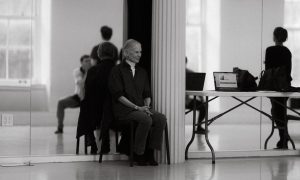
Photos courtesy of Frederic Jahn and Patricia Ruanne. Top photo: Rudolf Nureyev and Frederic Jahn in rehearsal.

Posted in Feature ArticlesComments (0)

Australian Ballet’s New York Tour: Reinventing Swan Lake


By Stephanie Wolf.

David H. Koch Theater, Lincoln Center, New York City
June 2012

Innovation is continuously on the minds of choreographers and dancers. Yet, what defines innovative dance is nebulous. Is it something that has never been seen or experienced before? Or is it taking something considered highly traditional and making it relevant to modern society? On the Australian Ballet’s recent New York tour, the company addresses these questions—leaving a lasting impression on the city’s dance-enthusiasts with Graeme Murphy’s bold, original interpretation of Swan Lake.

Swan Lake is the consummate classical ballet; the most recognized production was choreographed in 1895 by Marius Petipa and has been re-staged by ballet companies all over the world. Most dancers have come to expect a particular formula for the dramatic ballet; young Prince Siegfried celebrates his 21st birthday with joyous dances in Act 1; in the “White Act”, he encounters the Swan Queen, Odette, and the star-crossed lovers dance a heart-wrenching adagio; Act III’s Black Swan Pas de Deux, danced by the evil Odile and Siegfried, is famous in its own right; and Act IV unites the lovers in either death or happiness, depending on the production.

Murphy decides to create his Swan Lake for a new century. He maintains the title of the ballet and the black-and-white aesthetics, but takes artistic liberties on every other aspect, crafting a new storyline to string together his series of intricate partnering and difficult steps.

Adam Bull & Amber Scott in The Australian Ballet's Swan Lake. Photo by Jim McFarlane

The ballet opens to a woman in a white dress; her back faces the audience and her arms cross her chest. She begins to ripple her supple arms, prompting the first few chords of the overture. The main characters: Odette (Amber Scott), Siegfried (Adam Bull), and Baroness von Rothbart (Lana Jones), are introduced through a series of vignettes. It’s clear this is a darker Swan Lake, exploring love’s ability to consume and torment the psyche. The scene transitions into the wedding festivities of Odette and Siegfried.

Amongst the abundance of ensemble dancing, a love triangle between the newlyweds and the Baroness, unfolds. Odette drives herself mad over her jealousy and suspicions of Siegfried’s betrayal—reminiscent of the mad scene from Giselle. Scott is compelling in her frenzied state.

For those accustomed to a traditional staging, the first act can be jarring. Murphy’s choreography feels hurried—though executed seamlessly by the dancers—and he borrows music traditionally reserved for the Black Swan Pas de Deux in Act III. It moves slowly and Murphy makes odd choreographic choices, creating images that are sometimes unattractive. There is no balletic rule demanding visually appealing movement, but much of the choreography feels overly complicated and cumbersome. The highlight is the Hungarian Dance to the czardas, but the rest leaves the audience feeling anxious. It’s difficult to identify if the choreography would have resonated differently in another context or if it simply didn’t work.

Act II opens in a sanatorium; Odette is committed and, after a visit from Siegfried, has tormented dreams of swans. Here, Murphy finds his niche. Kristian Fredrikson’s minimalistic sets and costumes create a stunning contemporary vision of an isolated lake, teeming with maiden swans that take their time emerging from their positions perched atop a circular platform. They move authentically, often piked forward at the hips with their ‘wings’ caressing the length of their backs. Murphy’s choreography no longer feels laborious, but has a new freedom and fluidity. He wins the somewhat hesitant audience over with this iconic act, especially in the dance of the four cygnets—in which he plays on the traditional patterns and facings of the interconnected little swans. Danced supremely by Halaina Hills, Heidi Martin, Karen Nanasca, and Brooke Lockett, the difficult choreography is inventive and works well. Scott and Bull’s Act II adagio is poetic, plucking gently at the heartstrings of the audience. As the curtain falls, there is a new energy in the auditorium.

Act III opens with a party at the Baroness’s home. Odette, recovered from her insanity, arrives at the party in a white dress and gauzy overcoat, setting her apart from the dark scenery and costuming of the act. The effect is captivating, as she seems to eminent purity and glides from one party guest to another in a series of suspended lifts; thus, re-capturing Siegfried’s heart. Scott and Bull dance another tender pas de deux, drawing gasps from onlookers; followed by an enraged solo, danced passionately by Jones.

Odette flees the party to avoid being recommitted and Siegfried follows her to the lake. Again, Murphy’s choreographic strengths are highlighted. His interpretation of the ballet’s most powerful acts and perception of how a swan might actually move is mesmerizing. Now, the swans are black and the imminent sense of tragedy and desperation exists in their every move. Despite having re-won Siegfried’s love, Odette knows she will never feel at ease; she turns to the lake to find eternal peace in its watery depths. Her descent into the shimmering black lake, as Siegfried mourns at the edge, is stunning and haunting, drawing tears from several audience members.

While it took a while to warm up to the unique interpretation on this classic ballet story, Murphy and the Australian Ballet should be commended for taking risks and committing to the production. The ballet goes against the expected and stirs up powerful emotions in its viewers. Making society think and feel differently is the mission of most artists. Murphy and the dancers succeed on both fronts.

Top photo: Adam Bull & Amber Scott in The Australian Ballet’s Swan Lake. Photography Jim McFarlane.

Posted in Reviews - USAComments (0)

Dancing to Live Music


By Laura Di Orio.

George Balanchine said, “See the music, hear the dance.” The choreographer, like many dancers, found inspiration for movement within music. To be able to move one’s body to music can be magical enough. And to be able to dance to live music is, for many dancers, a dream.

Here, Dance Informa speaks with professional dancers who enjoy the privilege of performing to live music. The Australian Ballet’s Brooke Lockett, Miami City Ballet’s Rebecca King and Joffrey Ballet’s Fabrice Calmels share their expertise and the joy of making the music come alive.

Brooke Lockett, dancer with The Australian Ballet, backstage during a performance of Sugar Plum. Photo courtesy of Brooke Lockett

Do you prefer dancing to live or pre-recorded music?

Brooke Lockett, Coryphee with The Australian Ballet
The positive to recorded music is you get an inner rhythm and timing, and the work becomes very consistent, and in some cases, almost predictable. You can never assume anything when it’s to live music. The tempo can be faster or it can slow down parts you prefer faster, but all issues aside, nothing gives me goose bumps more than the sound of a sublime live orchestra playing Tchaikovsky’s Swan Lake. The curtain goes up and the music floods onto the stage from the pit. It goes through your bones and brings everything you have been rehearsing to life.

Fabrice Calmels, Principal Artist at the Joffrey Ballet
(View Fabrice’s website here)
For me, it is preferable to dance to live music, but there are actually times when I find pre-recorded scores a safe alternative, like in a very difficult performance on tour.

For you, what is the biggest challenge of dancing to live music?

Rebecca King, Corps de Ballet dancer with Miami City Ballet
The music’s tempo can be a challenge. Even though the conductor knows exactly what the dancers need, the speed can still vary from performance to performance. It is our job to be completely in tune with the orchestra because you never know what is going to happen. Because the musicians, like us, are susceptible to human error, sometimes the music can sound different, which can catch the dancers off guard. This is the beauty of live theater – you never know what you are going to get.

For you, what is the greatest reward of dancing to live music?

Brooke Lockett
When a ballet is extremely difficult or you are quite nervous about a role, music is an incredibly powerful escape that has the ability to take you away to another place on stage. Without it, I don’t know that my profession would be as powerful or as rewarding.

Fabrice Calmels, principal artist with the Joffrey Ballet, in Jessica Lang's 'Crossed'. Photo by Herbert Migdoll

Fabrice Calmels
Here’s what is going on with live music: You have a full orchestra with different instruments working together as a team, following a score and led by a conductor, who, in turn, is watching and observing every move from us, the dancers. With the conductor’s expertise, he is able to match the choreography with the music and create the flow. For me, it is communication at its best.

How does dancing to live music compare to dancing to recorded music?

Fabrice Calmels
The beauty of live music is the clarity of the sound, and performing at Chicago’s Auditorium Theater, we have one of the best engineered houses in the world. It was built for live music, and its acoustics are incredible. Live music is simply rich. There is something about the quality of instantly created sound and vibration that is priceless. Recorded music has so many factors that come into play, such as how well the track may be recorded, the quality of the player or speakers, static, or speakers that sometimes do not separate well the low-bass from the mid-bass.

Brooke Lockett
The sound is the biggest comparison. It’s like when I see a live music concert, and no matter how loud I play the CD after the show I can never recreate that same feeling or volume. You hear so many more elements and instruments when it’s live.

Rebecca King, dancer with Miami City Ballet. Photo by Susan Stocker, Sun Sentinel

For a piece that you will eventually perform to live music, what is the process of incorporating the musicians or conductor into the rehearsals?

Rebecca King
Our conductor, Gary Sheldon, spends a lot of time with us in the studio during rehearsals. He not only comes in the week before we take a program to the theater, but he also tries to be around when the choreographer or repetiteur is in town working with us. He has told me that he finds it very important to familiarize himself with our works as much as possible. This makes it easier for him to know when certain cues are coming up, or what tempos different dancers are comfortable with.

Do you usually try to build some kind of rapport with the conductor and musicians?

Brooke Lockett
Absolutely. Sometimes you are feeling a little flat or have an injury, and it’s important for them to know those things. And for those shows when you are on fire and loving it, you can really bounce off one another.

Rebecca King
I think all the dancers at Miami City Ballet have a great rapport with our conductor. He always makes an effort to say hello in the hallways, wish you “merde”, or good luck, before a show, and commend you on your performance after the curtain comes in. You can tell he really makes an effort to know the dancers, which we really appreciate. We don’t have a lot of interaction with the musicians, but we do always make an effort to thank them when we see them leaving the pit. Without them, their talent and extraordinary effort, we would not be able to do what we do.

What’s been a memorable moment of performing to live music?

Fabrice Calmels
The beginning of Lar Lubovitch’s production of Othello starts with a very powerful overture by the orchestra. This leads to the first dance, “The Prayer”, when Othello rises from a kneeling position for a stunning solo done only by creating circular movement with his arm. In every rehearsal and performance, I become Othello in that moment, located near the first panel of the stage, waiting for the main curtain to go up. I am already kneeling with both hands gathered as a prayer resting against my forehead. The orchestra is playing the score, the drums become explosive and so powerful that I feel my hand bouncing up and down from the vibration they create from underneath me. It completely gets in me, my heart begins to beat like a drum. It’s an experience unlike any other.

Brooke Lockett
We had a guest conductor for a season of Swan Lake once and we had all been talking about how slow it was, and in our final Act II entrance as a Cygnet it was like we were doing Willies from Giselle, it was so slow. We had the giggles for the entire entrance and had to quickly pull ourselves together.

Rebecca King
My first year in the company, we were performing Balanchine’s Symphony in 3 Movements, with a score by Stravinsky. Ask any dancer and he/she will tell you that the complexity of Stravinsky’s music has no doubt kept them up at night. Trying to memorize every note and count is no small feat. During a section of the first movement, the three principal couples were on stage, and there was a brief pause followed by a change in the music. Something was missing. The dancers suddenly realized that the instrument that was, at that moment, in charge of keeping the beat was nowhere to be found. They started counting aloud to each other to keep themselves in sync. Thankfully, this confusion only lasted a few bars before another change in the music arrived. We found out later that the musician playing the instrument in question had fallen asleep in the pit!

Top photo: Fabrice Calmels, principal artist with the Joffrey Ballet, in Edwaard Liang’s Age of Innocence. Photo by Herbert Migdoll.

Published by Dance Informa digital dance magazinedance news, dance auditions & dance events for the professional dancer, dance teacher and dance students.

Posted in Feature ArticlesComments (0)

Stephanie Williams joins American Ballet Theatre


By Rebecca Martin.

Dancer Stephanie Williams has gone from strength to strength since leaving The Australian Ballet in 2011 and joining Het Nationale Ballet in Amsterdam for six months before settling into her new home of New York where she is one of American Ballet Theatre’s (ABT) newest recruits.

Since commencing her ballet training at the age of 8 with the Marie Walton-Mahon Dance Academy in Newcastle, Australia, Stephanie has been a dancer to watch. Moving to Melbourne as a teenager to train at The Australian Ballet School, she received the Gold Medal at the 10th Asian Pacific International Ballet Competition in Tokyo, graduated at the top of her class, and performed the dual role of Odette/Odile in Swan Lake. In 2007, Stephanie joined The Australian Ballet as a Corps de Ballet member before being promoted to Coryphee the following year. While with The Australian Ballet, Stephanie performed many Soloist and Principal roles and was a guest artist with Christopher Wheeldon’s Morphoses, again performing Principal roles.

In the lead up to the world premiere of Ratmansky’s Firebird in California, Stephanie found time to speak with Dance Informa about life since leaving Australia…

You’ve done quite a bit of travelling lately, having gone from The Australian Ballet to Het Nationale Ballet in Europe, and now with American Ballet Theatre in New York. How are you managing so far away from friends and family?

The past year has been a whirlwind of travel, exploration and life change. At times it’s been wonderful and exciting and at other times scary and daunting, but all part of an incredible journey that has given me a fresh perspective on life and dance. The beautiful people that have come into my life have had a huge impact on me and they have helped me with the major changes that come with moving to the other side of the world. I have to say I am extraordinarily fortunate to have the most beautiful, supportive family whose love and belief in me has never wavered, even when I’ve felt lost at times. And although I miss them terribly, I am in an extremely positive, motivating, passionate and inspiring environment every day at ABT. This fills me with a sense of happiness and allows me artistic fulfillment, of which I couldn’t have ever imagined and appreciate so much. And thank goodness for Skype!!

Stephanie Williams of American Ballet Theatre. Photo James Hooper

Any interesting cultural differences you’ve come across?

New York is incredible in that I feel like it’s so open to different styles and foods and that’s why it’s so exciting because there is always something new and interesting to try and seek out. I’m not a good sleeper so the fact that I live in ‘The city that never sleeps’ works perfectly for me!

Amsterdam is like no other place, with canals and bikes everywhere you look. I used to love seeing an entire family on a bicycle – the mum riding with the two kids on the front, baby in arms, perhaps an umbrella and mobile phone in hand and some groceries hanging off the handle for good measure. All executed without a care in the world! And then parked amongst another hundred bicycles so the street looks like a twisted metal junkyard! What a truly amazing sight and the epitome of Amsterdam.

Is living in New York and dancing in one of the world’s best companies a dream come true?

I have to admit I do pinch myself most days. I have found a happiness and an appreciation for what I am fortunate enough to do every day. Living in New York is incredible. It is a city to get totally lost in, to explore and to dream. American Ballet Theatre is a very special organisation and to be a part of it is very humbling and inspiring. But over the course of the last 15 months I have grown up a lot (as stereotypical as that sounds). I have found such beauty in people, places, dance and life and to be able to recognise and appreciate it. That, to me, is the dream I have journeyed to.

What shows do you have coming up with ABT?

At the moment I am in Costa Mesa preparing for our triple bill which consists of Merce Cunninghams’ Duets, Christopher Wheeldons’ 13 Diversions and the world premiere of Ratmanskys’ new Firebird. I will be dancing in 13 Diversions and Firebird which I am really excited about! Being involved in the creation of Firebird has been incredible and inspiring each and every day. Working with Ratmansky and seeing this ballet come together has been amazing and I’m so excited about the premiere this week!

Top photo: Stephanie Williams dances in La Bayadère with American Ballet Theatre. Photo Gene Schiavone.

Published by Dance Informa digital dance magazinedance news, dance auditions & dance events for the professional dancer, dance teacher and dance student.

Posted in InterviewsComments (0)

Dancing Through Pregnancy


By Laura Di Orio.

For dancers, who are so in control of their body and used to being intensely self-focused, the idea of a dramatically changing body and shift in priorities may seem like a shock. For dancers who have faced these changes and now have a young life to add to their own, however, the journey is well worth it. Nowadays, more and more dancers have found that, with some hard work and patience, it is possible to raise a family and return strong to their performing careers.

New York City Ballet Principal Jenifer Ringer, who is already a mother of a young daughter and is almost eight months pregnant with a little boy, says the most important thing for pregnant dancers is to listen to their bodies. During each of her pregnancies, Ringer’s doctor ensured her that any activity her body was used to doing would be safe and healthy, as long as she felt comfortable. For Ringer, that meant performing up until about three months into her pregnancy, but even now, she continues to take partial ballet class.

NYCB Principal Jenifer Ringer in The Four Seasons. Photo: Paul Kolnik

“I cut back depending on how I feel,” Ringer says. “I’ve heard of some dancers doing grand allegro up until they give birth, but I was never comfortable with that. Now, I’m basically just doing barre and then adagio and tendus in center and then I’m done.”

Each dancer’s body will feel different during this time of change. Laura Tong, a soloist with The Australian Ballet, whose son Henry is about six months old, performed until she was 19 weeks pregnant and took class or barre in some form until she was 8 months along. “In the later months, I spent most of the time giggling about my attempt at an arabesque and the fact that I’d forgotten what a stomach muscle was,” Tong says, “but it was nice to still be able to spend that time in the studio with my friends and colleagues.”

Tong also recalls the last partnering role she performed while pregnant, as Kate in Madame Butterfly, at about 15 weeks. “Poor Rudy Hawkes had to lift me above his head and twirl me around,” she says. “I think that pas de deux work during pregnancy is sometimes more daunting for the man, as they feel completely responsible for the safety of all three of you!”

Abby Silva Gavezzoli, a dancer with Parsons Dance, worked together with her doctor (she had to promise to wear a heart rate monitor during physical activity), company directors and fellow dancers to ensure she could safely tour and perform with the company for as long as possible during her pregnancy. At the time, Parsons Dance was preparing for their season at The Joyce, and while some of Gavezzoli’s more rigorous parts were understudied, she said she still danced a good bit.

Abby Silva Gavezzoli of Parsons Dance, backstage with her son, Marcello, during Parsons' 2012 season at The Joyce.

“I toured and performed until I was about six months along,” says Gavezzoli, whose son, Marcello, was born in August 2011. “I took full class, including jumps and pirouettes, which were hilarious, until seven months. I remember at the end of that month just feeling like, ‘Okay, enough!’ I just wanted to sit in my new rocking chair and read with a fan blowing on me!”

As dancing gets harder further into the pregnancy, dancers often rely on lighter activities, such as yoga, walking and some Pilates, to keep themselves in shape.

Gavezzoli says she did a lot of walking and core-stabilizing exercises like planks. She also went to prenatal yoga up until the week she delivered. “That was great for meeting other expectant mothers and to share what we were experiencing,” she says. “It focused more on getting you ready for the delivery, which I was having so much fear about.”

Once an expectant mother does give birth, it is important that she talks with her doctor about what’s healthiest during her return to the stage. Dancers should embrace the process, which will most likely be a gradual one, as it takes time for a woman’s body to recover. And again, each dancer’s experience will be different.

Ringer says her first child hardly slept, so that left no time for exercise for the first three months, but her physical therapist recommended waiting that long anyway. After six months, Ringer was back on stage, although she says she wasn’t at her optimum performance weight until about one or two months after that.

Tong started her rehab with Pilates about six weeks after giving birth, and she progressed to simple barre exercises a few weeks later. She will return to the stage in May, when she performs Onegin at the Sydney Opera House.

Gavezzoli says she felt anxious to move her body after giving birth and that her family had to remind her to not push herself. Once she did get the all clear from her doctor, she went back to the studio in November (she brought Marcello along every day) and performed in Parsons’ season this past January.

Laura Tong, soloist with The Australian Ballet, with her son Henry. Photo courtesy of The Australian Ballet

Aside from the process of getting the body strong and in shape again, a struggle for many new mothers is the time away from their baby.

“Ballet class is in a lot of ways a very self-involved thing,” Ringer says, “and I had been giving so much love and care to this baby, it felt strange to go back and do something that was so self-focused. It didn’t feel as important as raising a life.”

“I was always active, not only dancing but also running, swimming and doing yoga,” adds Gavezzoli, who says that a 10 a.m. ballet class can no longer be her first priority. “It’s hard not being able to just drop everything and go for a run. I miss that freedom sometimes, but then there’s a little giggle or smile from Marcello and the feeling passes.”

Ringer says that her realization of what is most important in her life has actually translated into making her a better dancer. “There’s something really freeing about dancing now for me because it’s not the most important thing in my life,” she says. “My children are the most important thing in my life, and now when I dance it feels like a joy and a privilege to do, and I give myself more of a break. I allow myself to make more mistakes, and I think that’s made my dancing better because I don’t worry about being perfect all the time.”

As far as advice for other dancers who want to have a baby and return to stage careers afterwards, all of these women say to go for it.

“It’s a beautiful thing,” Ringer says. “Seeing my body change and gain weight over these 40 weeks is a miracle. So embrace it, enjoy it and know that you’ll be able to get your body back with just a little bit of hard work and time. It’s all worth it.”


Top photo: A pregnant Laura Tong, soloist with The Australian Ballet. Photo by Jasmin Tulk
Published by Dance Informa
dance magazine dance news, dance auditions & dance events.

Posted in Dance HealthComments (1)

Paul Knobloch to dance for the King


Australian ballet star Paul Knobloch is dancing his way to America. After eight years as a leading dancer with The Australian Ballet, Paul left at the invitation of Artistic Director Gil Roman to join the prestigious Béjart Ballet Lausanne in Switzerland. Now the US is calling as Paul has landed himself a position to dance in San Francisco with the renowned Alonzo King LINES Ballet.

Alonzo King is a bona fide visionary in the ballet world today. He communicates ballet as a science – founded on universal, geometric principles of energy and evolution – and continues to develop a new language of movement from its classical forms and techniques. He is one of few known for connecting audiences to a profound sense of shared humanity in dance and it’s no wonder Paul’s creative energy is being pulled to his realm.

Knobloch’s exceptional artistic talents have propelled him from a young age to achieve national and international recognition as an outstanding dancer, artist and partner of the highest caliber. His continued success as one of the few elite world-class Australian dancers is highly acclaimed by critics and peers alike in both classical and contemporary dance. He has graced the stages of the world and danced throughout Australia, the United Kingdom, Europe, China, America and Japan.

Paul made his mark as a choreographer with The Australian Ballet in 2006 whilst still in high demand as a leading dancer within the company. He continues to enjoy the benefits as both a dancer and choreographer on the international stage, having created works for the Australian Ballet and the Australian Ballet School as well as new works entering the repertoire of Canada’s Ballet Victoria. Paul hopes his exposure to the American dance scene will also open up new opportunities for future choreographic collaborations.

But for now, dancing is his priority and the excitement of “working with the King” is what he most looks forward to.

 “Alonzo is a true master of dance, equal to that of Balanchine, Kylian, Forsyth or Béjart. His philosophy about dance and his knowledge appears endless. He brings the best out of his dancers and has given me a new breath of inspiration and love for dance that I thought was not possible. I can’t wait for the new journey that lies ahead”, said Paul.

Photos: Silas Brown

Posted in Top StoriesComments (0)

Lana Jones: Ballerina on Fire


By Rain Francis.

At this year’s Australian Dance Awards in June, Australian Ballet Senior Artist Lana Jones scooped the award of Outstanding Performance by a Female Dancer, for her role in Firebird. No stranger to taking home the big accolades, she also has a Green Room Award, two Helpmann Awards and the Telstra Ballet Dancer Award under her waistband. It would seem this ballerina is unstoppable.

Not surprisingly, Lana has always dreamt of dancing with the Australian Ballet, since beginning her training at the Canberra Youth Ballet School. I ask her what she’d say if she were to meet her ten year-old self. “I’d probably be annoyed at her and think ‘oh my gosh’, you’re an over-ambitious little thing,” Lana laughs.

That ambitiousness is certainly paying off. “I’ve had so many amazing experiences and opportunities with this company. Just recently I went to London to the Royal Ballet for a month on scholarship and that really made me appreciate what I’ve got here, and the opportunities I’ve had and how much I’ve been able to experience all across the board – ballet and contemporary”.

She names 2009’s Firebird, and creating the title role with choreographer Graeme Murphy and creative associate Janet Vernon, as one of the highlights in what has so far been an incredible career. Being handpicked by such artistic heavyweights is a dream challenge for a dancer, and as anyone who saw the resulting performances would agree, one that Lana conquered.  Immersing herself 110 per cent in physicality and character, she brought a combination of fragility, magic and raw power to the role. It is no wonder the Australian Dance Awards panel named it the Outstanding Performance.

Another of her career highlights has been dancing Swanhilda in this year’s revival of Coppelia. “I danced with my husband [fellow Senior Artist, Daniel Gaudiello]. That was pretty special. I think I’ll always remember that moment”.

Having her ‘soul mate’ with her at work helps to make up for the hardest part of Lana’s job: “Ballet is very committed, you can’t half do it, you have to give it your whole self, so sometimes you might miss out on family obligations and events. You can’t always be a good family member and be in a ballet company”.

It’s hard to imagine someone so accomplished having off-days, but Lana assures me she has them. 

“Sometimes I’m really nervous in the wings and I step out on stage and I can find the calmness and serenity that I’m looking for, and other times it’s freaky, because it’s all going wrong. If I’m nervous before a show, whatever I’m doing I really play it down and think simply about it. I go home, walk the dogs, carry on my normal life and try not to put too much pressure on myself , even though I do”.

So having landed and excelled in her dream job with several major dance awards, what’s still on the wish list for Lana Jones?

“I definitely want to do Giselle, Juliet and Manon, they’re the big ones at the moment. And William Forsythe’s In The Middle, Somewhat Elevated –  that would be cool.”

The good news for her fans is that the passion and ambition that once drove ten-year old Lana will continue for years to come. So, what would she say to, for instance, to her eighteen year-old self? “Still, I’d probably say, just be patient, don’t fret,  it will happen”. And, present day, accomplished twenty-seven year old Lana Jones would be right.

QUICK-FIRE

My favourite tutu is…. The Rose Fairy in Peter Wright’s The Nutcracker

My ultimate role to dance would be… Manon

The last show I saw was… The King and I

My favourite choreographic process has been with…. Wayne McGregor

If I wasn’t dancing I’d love to… be a nurse or do photography

 Top photo:  James Braund

Posted in Feature ArticlesComments (0)

Coppelia – The Australian Ballet


State Theatre, The Arts Centre, Melbourne
June 22nd

By Deborah Searle.

Coppelia is an enchanting traditional ballet with a fun story line and lovable characters. For the Australian Ballet’s rendition of the famous classic, Leanne Stojmenov played the curious and cheeky ‘Swanilda’ with Yosvani Ramos as her mischievous suitor ‘Franz’.

The ballet is light hearted and perfect for all ages. The costumes are stunning and the sets are exquisite, displaying Kristian Fredrikson’s incredible artistic flair. The choreography draws from national character dancing and blends with traditional classical ballet. It is light and bouncy, creating a joyous atmosphere in the theatre.

Stojmenov made an ideal Swanilda. She was every bit the naive, young village girl she needed to be,  bringing the doll ‘Coppelia’ to life and tricking both Franz and the doll’s creator, ‘Dr Coppelius’. Her acting was textbook and her dancing was of course, flawless. I very much enjoyed watching Stojmenov embrace her character.

The performances by Swanilda and Franz’s friends, danced by the Corpyphees, with the addition of Corp dancers Halaina Hills, Chengwu Guo, John-Paul Idaszak and Jarryd Madden, were jubilant and danced with strength and clarity.

Act 2, inside the house of Dr Coppelius with his weird and wonderful toys, was the highlight of the show for me. Stojmenov’s dancing as the doll was cute, isolated and very convincing. Damien Welch, playing Dr Coppelius, was not as quirky as I would have liked, but it was nice to see him return to the stage after retiring from his role as Principal dancer last year. However, at the end of Act 2 there was a curtain call just for Damien Welch, which I found a little strange, considering that there was still an entire act to go.

The Australian Ballet's Coppelia. Photo Branco Gaica

Act 3 was a feast of dancing, as we were treated to the show’s pas de deux, solos by the two leads and fabulously fun group numbers in the celebration of Swanilda and Franz’s wedding.  We enjoyed a solo by Ramos where he showed us his skills as a Principal dancer, and Stojmenov proved why she is climbing the ranks. Gina Brescianini, dancing ‘Dawn’, was breathtakingly beautiful in a soft pink and yellow costume and Juliet Burnett as ‘Prayer’ highlighted her training and control.

The Corp de Ballet were all strong dancers, however at times they were a little out of line or synchronization. My only other gripe was the lack of chemistry between Stojmenov and Ramos. They seemed more like friends than lovers, and so the wedding scene at the end seemed a little forced.

The orchestra were very tight. The timing is so regular in Delibes’ score for Coppelia that it would be very obvious if they weren’t. Most importantly though, the music was well catered to the needs of the dancers. The conductor slowed the score, sped it up slightly or made the music softer or louder for the dancers as need be. This was not to help the dancers technically or with timing, but to help them communicate dramatically. Orchestra Victoria provided us with an independently enjoyable musical experience.

Dame Peggy van Praagh and George Ogilvie’s 1979 production of Coppelia is a delight. The talented 2010 cast of dancers and musicians brought the work to life and back into the hearts of many ballet lovers.

Posted in International ReviewsComments (0)

Australian Ballet’s Tzu-Chao Chou


By Rebecca Martin.

Tzu-Chao Chou commenced his dance training on weekends and after school in Taiwan with traditional Chinese dance around the age of nine.  Being a very active child, his parents thought dance would be a good outlet for his energy and a useful hobby.  He had only been there for two weeks when the owner of the dance studio decided to incorporate classical ballet into the school.  Russian teachers from the Vaganova School were invited to Taiwan to train the dancers and Tzu-Chao was literally grabbed from the adjacent studio by the Russian teachers and enticed into joining the classical ballet classes.  Being the only boy at the dance school, Tzu-Chao was dubbed the “Billy Elliot of Taiwan”. 

Tzu-Chao is well known for his incredible flexibility and strength. Many people would be surprised to learn that Tzu-Chao has had to work hard at his flexibility which didn’t come naturally. He recalls his initial physical assessment at his first Chinese dance class: “they made me do a back bend and the first time I was crying, it was so painful”.  He was almost put off by the forced stretching and thought “I don’t know if this is what I want to do!”  Fortunately for us, he persevered and fell in love with ballet from the first class.  The Saturday ballet classes in Taiwan ran from 2-8pm with downtime used to watch videos of ballets which inspired the young Tzu-Chao to pursue a career in ballet which he has found exciting and challenging.

Tzu-Chao Chou. Photo by Branco Gaica

While his ballet teacher wished to take Tzu-Chao back to Moscow to further his training, his parents advised against such a move and instead allowed the young dancer to accompany his brother who was going to Australia to studying geography and history.  Without knowing about The Australian Ballet School, Tzu-Chao enrolled at The Victorian College of The Arts in Melbourne at the age of 13, where he trained for one year. Despite the high level of training he received there, Tzu-Chao was unsatisfied by the amount of ballet in the course and returned to Taiwan, much to the relief of his worried mother. 

With little opportunity for a dancer to pursue a career in Taiwan, Tzu-Chao again returned to Australia, and this time joined The Australian Ballet School after another stint at VCA. 

Despite some initial boundaries with language, Tzu-Chao’s bubbly personality enabled him to pick up English and quickly settle into the new culture and way of life.  As he says, “ballet is universal.  You can say ‘tour en l’air’ and everyone knows what it is.” 

He graduated from the ABS in 2004 and joined The Australian Ballet the following year.  His performance in The Flower Festival in Genzano prompted a journalist to compare his “buoyancy, power and fluency” to that of a young Baryshnikov.  Promoted to soloist in 2008, Tzu-Chao was nominated in the Telstra Young Dancer of the Year Award, the highest accolade of its kind available to an Australian ballet dancer.

As much as Tzu-Chao loves the traditional classical ballets, he also enjoys performing more modern works, and nominates Wayne McGregor’s Dyad 1929 as a highlight to dance.  He listens to classical music and is constantly inspired by it, and can often be found daydreaming with a pair of headphones on.  At the young age of 24, Tzu-Chao feels that he is able to push his technique in classical roles and challenge his body while the freedom of contemporary ballets will be more of a focus later in his career.

In 2009, Tzu-Chao performed as a guest artist with English National Ballet and in New York, and during his Christmas holiday, he travelled Europe on scholarship attending classes and watching shows from many of the best ballet companies in the world.  He enjoys the opportunities to travel that The Australian Ballet presents and thoroughly loves Australia and the company here.  Having first arrived in Australia at such a young age, Tzu-Chao now considers Australia home and rarely misses Taiwan. 

Tzu-Chao Chou will be appearing as Franz in The Australian Ballet’s season of Coppelia.
http://www.australianballet.com.au

Top photo: Photo by Justin Smith for The Australian Ballet

Posted in InterviewsComments (0)